The Forensic Scene: When the Invisible Becomes Structural
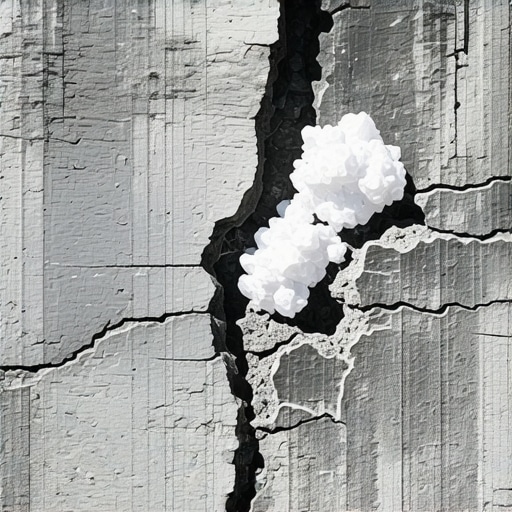
The homeowner in the damp lowlands of the valley thought it was just a hairline crack, a minor blemish on a concrete block foundation repair job. She called me in because a ‘handyman special’ fix involving a smear of caulk had failed within a month. But when I slid my fiber-optic scope into that 1/16th-inch fissure, the reality was grim. Behind that seemingly innocent line, the structural steel rebar was already weeping rust, expanding with enough force to eventually blow the face off the block. It wasn’t just a crack; it was a hungry mouth drinking the groundwater. This is the nightmare every third-generation mason knows: by the time you see the damage on the surface, the interior chemistry is often a lost cause.
The Micro-Physics of Failure: Why Concrete Cracks
Concrete is a beast of burden, incredible in compression but a failure in tension. As it cures, it undergoes a complex hydration process where water molecules react with calcium silicate to form a crystalline matrix. But here is the catch: concrete is inherently brittle. The moment the temperature swings or the soil heaves, the matrix snaps. These micro-cracks act as highways for moisture. Through capillary suction, water is pulled deep into the ‘mud,’ carrying salts and oxygen that ignite the fuse of rebar corrosion. Even the most meticulous soldier course or perfectly executed brick column repair can be undermined by a foundation that cannot handle its own internal stresses.
“Water penetration is the single greatest threat to masonry durability, leading to efflorescence, freeze-thaw damage, and structural degradation.” – ASTM C1080 Standards for Masonry Integrity
The Biological Revolution: Enter the Bacteria
We are now entering an era where we can stop ‘buttering’ over the symptoms and start treating the cause. Bacteria-infused concrete, or ‘Bio-concrete,’ utilizes a specific strain of extremophiles, usually Bacillus pseudofirmus, mixed directly into the concrete matrix during the initial pour. These aren’t your garden-variety bacteria. They are packaged in biodegradable capsules alongside a nutrient source, typically calcium lactate. They sit dormant for decades, waiting. The second a hairline crack forms and water enters, the capsule dissolves. The bacteria wake up, consume the calcium lactate, and through a metabolic process, convert it into solid limestone (calcite). This isn’t just a patch; it’s a structural regeneration of the matrix itself.
Micro-Zooming into the Chemistry of Calcite Precipitation
To understand why this is a ‘game-ender’ for the tuckpointing cost estimation industry, you have to look at the chemistry. When the Bacillus spores activate, they release an enzyme called urease. This catalyzes the hydrolysis of urea into ammonia and carbonate. In the presence of calcium ions within the concrete, this carbonate precipitates as calcium carbonate crystals. These crystals grow and interlock within the crack, essentially ‘sewing’ the concrete back together. This process closes the ‘honeycombing’ effect often seen in poorly vibrated pours and prevents the concrete block foundation repair cycle from ever beginning. Unlike a ‘cold joint’ where new material fails to bond to old, this biological growth is chemically identical to the surrounding stone.
The Practical Reality for Traditional Masonry
Does this mean the full repointing services of the world are obsolete? Not quite. While bio-concrete is a miracle for new infrastructure and foundations, our existing stock of historic buildings still requires the ‘old world’ touch. If you are looking at brick quoin repair on a century-old facade, you can’t just inject bacteria and hope for the best. The physics of cracked brick wall repair in older structures often involves a soft lime mortar that needs to be ‘sacrificial.’ If you put a modern, high-strength bio-concrete fix into a soft 1920s brick wall, the fix will stay and the bricks will shatter around it. You have to respect the ‘suction’ of the original material.
“The mortar should always be weaker than the masonry units it binds, ensuring that stresses are relieved within the joints rather than through the face of the stone or brick.” – BIA Technical Note 1B
The Economics of the ‘Forever’ Foundation
For the homeowner or commercial developer, the tuckpointing tools for DIY are a hobbyist’s distraction compared to the long-term ROI of self-healing materials. Consider the commercial parapet wall repair or outdoor masonry fountain restoration. These structures are constantly battered by thermal expansion and hydrostatic pressure. In a hot climate like Arizona, the ‘flash setting’ of traditional mortar leads to micro-cracking before the job is even finished. Bio-concrete acts as a built-in insurance policy against these invisible failures. While the upfront cost is higher, you are essentially eliminating the need for brick patio restoration or structural shoring every fifteen years.
Why We Still Need the Hawk and Trowel
Despite the tech, there is still no substitute for a mason’s eye. I’ve seen ‘self-healing’ concrete used in projects where the drainage was so poor that no amount of bacteria could keep up with the volume of water. You still need a proper slicker to strike a joint that sheds water, and you still need to understand how a brick column repair transfers load. The bacteria can fix a crack, but they can’t fix a lack of craftsmanship. We are looking at a future where we combine the gritty reality of ‘mud’ and muscle with the precision of microbiology. For those of us who have spent our lives with lime-dust in our lungs, it’s a welcome shift from fighting nature to working with it.
The Forensic Inspection Checklist: When to Call the Pros
- The 45-Degree Stair-Step: This isn’t a hairline fix for bacteria; it’s a sign of soil settlement. You need helical piers, not just a patch.
- Horizontal Shearing: If your basement wall is bowing inward, the hydrostatic pressure has exceeded the wall’s tensile strength.
- Efflorescence: That white powder on your brick isn’t just salt; it’s a sign that water is moving through the wall and leaching out the binder.
Ultimately, the goal is to build something that outlasts the person who commissioned it. Whether we’re using Bacillus or a hand-mixed Type O mortar, the physics of water remains the enemy. Do it once, do it right, or you’ll be paying me to come back with my scope in ten years to tell you what went wrong. The ‘living wall’ is a tool, but the mason’s integrity is the foundation.