
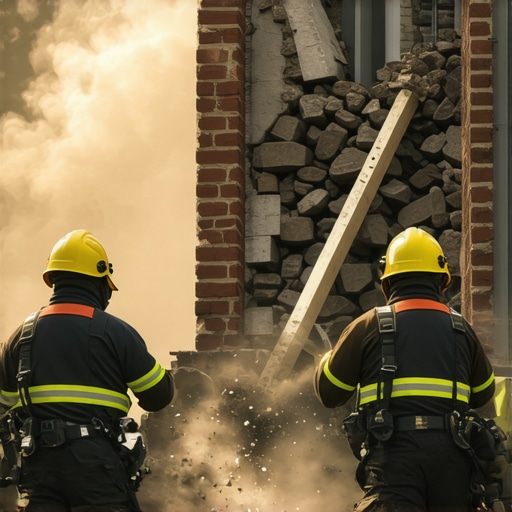
The sound of a masonry wall failing isn’t a sudden bang; it’s a series of sharp, rhythmic cracks followed by a low, guttural groan that vibrates in your marrow. I remember standing in a cold rain at 2:00 AM, looking at a 15-foot commercial parapet that had pancaked onto a sidewalk in the historic district. The owner was white-faced, stammering about how it looked fine yesterday. But when I looked at the debris, the story was clear: someone had applied a waterproof coating over a crumbling core, essentially gift-wrapping a corpse. The wall hadn’t been able to breathe for decades. I stood looking at a $150,000 failure that lay in a pile of rubble because the contractor forgot one thing: the physics of moisture migration. This is the reality of commercial parapet wall repair when it’s done too late. In the forensic world, we don’t look at what’s on the surface; we look at the chemistry of the bond and the integrity of the structural skeleton.
The Anatomy of a Collapse: Why Walls Give Up
A masonry wall is a living thing, constantly expanding and contracting with the thermal cycle. When we talk about brick spalling prevention, we’re really talking about managing the vapor pressure within the unit itself. In northern climates, the freeze-thaw cycle is the primary executioner. Water enters the brick through capillary suction, filling the micropores. When that temperature drops, the water undergoes a phase transition to ice, expanding by roughly 9% in volume. If the mortar is too hard—say, a high-strength Portland cement used on old, soft clay bricks—that pressure has nowhere to go but out the face of the brick, blowing the ‘fire-skin’ right off. This is why flush pointing services must be performed with a mortar that is physically softer than the brick it surrounds. It acts as a sacrificial lamb, allowing the wall to move and the water to escape through the joint rather than the unit.
“Water penetration is the single greatest threat to masonry durability.” – BIA Technical Note 7
When a wall begins to lean or bow, we enter the realm of foundation underpinning. Often, the failure isn’t in the brickwork itself but in the soil’s inability to support the dead load. Hydrostatic pressure—the weight of water-saturated soil pushing against a subterranean wall—can exert thousands of pounds of force. Without proper drainage, even the thickest stone wall will eventually succumb. We see this often in failing landscapes where retaining wall capstone replacement was ignored. The capstone is the umbrella of the wall. When it cracks or shifts, water enters the vertical joints, saturating the core and leading to a catastrophic blowout during the first deep freeze.
The Forensic Deep Dive: Micro-Zooming into Masonry Physics
To understand a collapse, you have to understand the ‘tooth’ of the material. When a mason ‘butters’ a brick, they are relying on the suction of the dry unit to pull the ‘mud’ into the pores, creating a mechanical bond. If the brick is too wet, you get a ‘swim’—no bond. If it’s too dry, it sucks the hydration out of the mortar before the cementitious crystals can grow, leading to a ‘burned’ joint that crumbles like sand. This is particularly critical during stone balustrade restoration. These architectural elements are often top-heavy and rely on precise masonry birdsmouth cuts to distribute weight. If those cuts aren’t perfectly seated, the point-loading will snap a stone rail like a dry twig under the weight of a leaning pedestrian.
Then there is the modern plague: stone veneer over brick. This is the ultimate ‘handyman special.’ Contractors take a perfectly good, albeit weathered, structural brick wall and slap a heavy layer of lick-and-stick stone on top without installing a drainage plane or weep holes. You’ve now created a moisture trap. The original brick begins to rot behind the veneer, and because you can’t see it, the first sign of trouble is when the entire 20-ton facade peels off and falls into the bushes. In my forensic inspections, we use thermal imaging to find these hidden pockets of water before the gravity takes over.
Restoration vs. Repair: The Chemistry of Longevity
Restoring a failing structure isn’t about making it look new; it’s about making it work again. This often involves masonry cleaning to remove carbon crusts that trap moisture, followed by a careful analysis of the existing mortar. We don’t just guess the mix. We perform an acid-digestion test to see the aggregate-to-binder ratio. If I see a 100-year-old chimney, I’m looking at the chimney damper repair needs and the internal flue health. If the heat from the fireplace is leaking into the masonry through a cracked liner, it accelerates the thermal expansion of the inner wythe, causing the chimney to ‘fishmouth’ or split down the corners. This is a fire hazard and a structural death sentence if left untreated.
“The choice of mortar should be based on the strength of the masonry unit and the exposure conditions.” – ASTM C270
Using the right tools is just as important as the materials. A ‘slicker’ or a jointer tool isn’t just for aesthetics; it’s used to compress the mortar into the joint, closing the micropores and creating a weather-tight seal. When we do high-end restorations, we are often ‘striking’ the joints with surgical precision to match the original profile, ensuring the building sheds water as the original architect intended. This level of detail is the only way to prevent the eventual need for a rapid response team to stabilize a collapsing facade.
When to Panic: Identifying Structural Red Flags
Not every crack is a catastrophe, but some are warnings from the grave. A stair-step crack following the mortar joints usually indicates settlement. While serious, it’s often slow. However, a horizontal crack—especially one that is wider at the top than the bottom—means the wall is bowing under pressure. If you can see daylight through a crack in a load-bearing wall, it’s time to call the pros. We look for ‘honeycombing’ in concrete and ‘cold joints’ where the pour was interrupted, creating a weak point that will eventually shear. My job is to see these things before the laws of physics do the talking for me. I’ve spent my life in the mud, with a hawk in one hand and a trowel in the other, and if there’s one thing I know, it’s that gravity never sleeps, and water always wins if you don’t give it a path out. Stay ahead of the spall, keep your caps sealed, and never, ever trust a man who says he can ‘seal’ your brick wall with a bucket of hardware store silicone. It’s a death sentence for your masonry.