
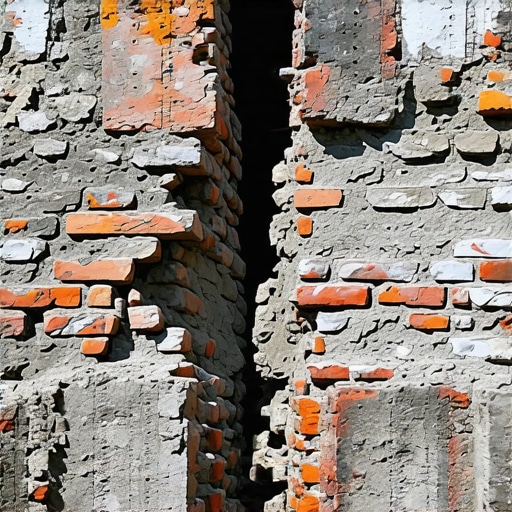
The Anatomy of a Fracture
The homeowner thought it was just a hairline crack, a minor cosmetic blemish on a century-old facade. But when I put my scope inside that fissure, I saw the structural steel was rusted to dust. What looked like a simple aesthetic fix was actually the final gasp of a building’s skeletal system. In the world of forensic masonry, there is no such thing as ‘just a crack.’ Every split in the mortar and every sheared brick header is a diagnostic symptom of a deeper, more violent physical process at play. We are talking about forces—hydrostatic pressure, thermal expansion, and oxide jacking—that can move thousands of tons of earth and stone without breaking a sweat.
“Water penetration is the single greatest threat to masonry durability. Once the moisture-resistant barrier of a masonry wall is breached, the internal structural integrity begins to degrade at an exponential rate.” – BIA Technical Note 7
When we look at brick wall restoration, we aren’t just slapping mud into a gap. We are performing a delicate balancing act of material science. If you live in a region where the thermometer swings across the freezing point, your masonry is a battlefield. Water enters a crack, it freezes, and it expands by 9% in volume. That expansion exerts internal pressure that exceeds the tensile strength of the brick itself. This is why you see the faces of bricks popping off like scabs—a process we call spalling. If your contractor suggests a ‘lick-and-stick’ fix with high-strength Portland cement on a historic home, run. You need mortar matching services that respect the original chemistry of the building. Using a hard, modern mortar on a soft, historic brick is a death sentence; the brick will break before the mortar does, and you’ll be looking at a total brick veneer installation replacement within a decade.
The Physics of the Stair-Step: Settlement vs. Heave
Identify the geometry of the failure. A stair-step crack following the mortar joints often indicates foundation settlement. The earth beneath your feet is shifting, and the masonry, which has zero flexibility, is trying to find a new equilibrium. However, a horizontal crack is often a sign of hydrostatic pressure or lateral soil loading. This is where tuckpointing cost estimation becomes secondary to structural stabilization. If the wall is bowing, it’s not a masonry problem; it’s a physics problem. We look at the ‘tooth’ of the remaining mortar. If the bond is gone, the wall is essentially a stack of dry-laid blocks waiting for a shove. In chimney rebuild services, this is exacerbated by the constant thermal cycling of the flue. The interior expands while the exterior stays cold, creating massive internal shear stress.
“Mortar should always be weaker than the masonry units it binds, acting as a sacrificial element that allows for movement and moisture evaporation without damaging the stone or brick.” – ASTM C270 Standard Specification
The Art of the Repair: From Mud to Metallic Finishes
When we get down to the actual mortar repointing services, the process is surgical. We don’t use a grinder to blow out joints on tuckpointing curved walls; that’s how you lose the original profile. We use hand-chisels and pneumatic scrapers to preserve the historic brick salvage. Once the joints are cleaned to a depth of at least twice their width, we start the hydration process. You have to ‘butter’ the brick with the right ‘mud.’ This isn’t a job for a handyman with a bag of pre-mix. We’re looking for the right suction. If the brick is too dry, it sucks the water out of the mortar before it can hydrate, leaving you with a brittle, dusty mess that will fail within two winters. We might even introduce metallic masonry finishes for modern architectural accents, but the core structural work remains the same: manage the moisture, or the moisture will manage you.
Consider the stone coping installation on a parapet wall. If those stones aren’t pitched perfectly, or if the sealant has failed, you are funneling a river of water directly into the core of your wall. This leads to efflorescence—those white, salty stains that look like a rash on your building. That salt is the ghost of your building’s structural integrity, being pulled to the surface by evaporation. Once that salt crystallizes inside the brick, it’s game over. You’ll need a brick wall restoration expert who understands the capillary action and the pore structure of the material. A master mason doesn’t just look at the crack; they look at the roof, the grade of the soil, and the age of the kiln-fired clay. We don’t just fix the symptom; we kill the disease.