
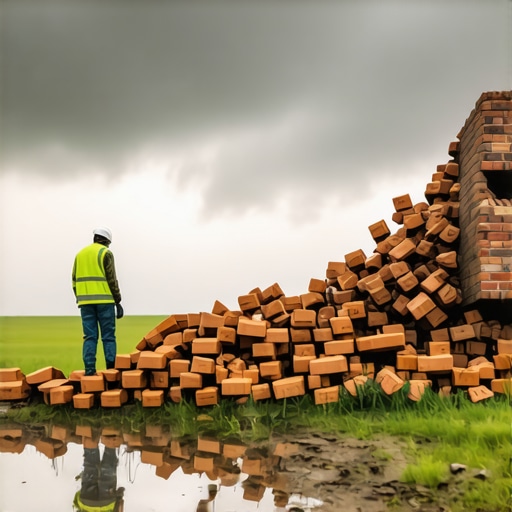
The Ghost in the Foundation: A Forensic Reality Check
The smell of a damp basement after a storm isn’t just ‘old house smell.’ It is the scent of active chemical degradation. I once stood in a flooded crawlspace after a Nor’easter, the kind of storm that turns backyards into bogs. The homeowner pointed to a tiny, hairline fissure in the corner of the foundation, barely wide enough to slip a credit card into. They thought it was just a cosmetic settlement issue, a byproduct of the house ‘stretching its legs’ after forty years. But when I threaded my fiberscope into that void, I didn’t see soil or sound concrete. I saw a structural steel lintel that had oxidized so severely it resembled a stack of burnt leaves. The storm’s hydrostatic pressure—the sheer weight of water-logged soil—had finally pushed that rusted steel to its breaking point. This is the reality of masonry emergencies. They don’t always start with a bang; they start with a whisper in the dark, wet corners of your home.
The Physics of the Surge: Why Storms Kill Brickwork
When a storm hits, your home’s masonry isn’t just a wall; it’s a sponge. Every clay brick has an Initial Rate of Absorption (IRA), a measure of how much water it can ‘suck’ out of the mud (mortar) during construction. After a heavy downpour, that IRA works in reverse, pulling gallons of rainwater into the core of the wall. In Northern climates, the physics becomes even more violent. Water expands by 9% when it freezes. If that water is trapped inside a dense, modern Portland cement mortar joint that has no ‘give,’ it has nowhere to go but through the face of the brick. This results in spalling, where the front of the brick literally pops off, leaving the soft, vulnerable interior exposed to the elements. This is the core of freeze-thaw damage restoration: you aren’t just fixing a crack; you are managing a material’s inability to breathe.
“Water penetration is the single greatest threat to masonry durability.” – BIA Technical Note 7
The Crack Whisperer: Reading the Language of Failure
Not all cracks are created equal. As a forensic inspector, I look for the ‘tells.’ A stair-step crack following the mortar joints often indicates a footing that is settling or soil that is heaving due to moisture saturation. This is common after storms when the soil loses its bearing capacity. However, a horizontal crack is a red alert. This usually signifies that the wall is bowing inward under the crushing weight of hydrostatic pressure—essentially, the earth is trying to reclaim the space of your basement. Before you reach for tuckpointing tools for DIY, you need to know if you’re looking at a cosmetic blemish or a structural collapse. Using a slicker to pack mud into a wall that is actively moving is like putting a band-aid on a broken femur. You might hide the problem for a season, but the physics of the earth will eventually win.
The Salt Ghost: Understanding Brick Efflorescence Removal
After the storm clouds clear and the sun bakes the wet masonry, you’ll often see a white, powdery substance blooming across the facade. Homeowners panic, thinking it’s mold. It’s not. It’s efflorescence. These are water-soluble salts—sodium, potassium, and calcium sulfates—that have been leached out of the brick or mortar by the passing rainwater. As the water evaporates, it leaves the salts behind. Brick efflorescence removal isn’t just about scrubbing; it’s about chemistry. If you use a high-pressure power washer, you are just driving more water into the wall, which will bring more salt to the surface tomorrow. Professional masonry cleaning requires low-pressure application and specific surfactants that neutralize the salts without ‘burning’ the face of the brick with harsh acids.
The Restoration Reality: Mortar and Breathability
In the wake of a storm, you might see a soldier course (bricks standing on end) leaning or an outdoor fireplace rebuild becoming necessary after thermal shock meets heavy rain. The temptation is to use the strongest mortar available. This is a fatal mistake in historic restoration. Old bricks, especially those fired before the mid-20th century, are ‘soft.’ They were designed to work with lime-based mortars. If you use a modern, rock-hard Type S mortar for tuckpointing, the mortar will stay rigid while the brick expands and contracts with the sun. The result? The brick crumbles while the mortar stays perfect. This is why mortar matching services are critical. We analyze the sand-to-lime ratio to ensure the new mud is sacrificial—meaning the mortar should be softer than the brick so it fails first, protecting the more expensive masonry units.
“The selection of mortar should be based on the strength of the masonry units. A mortar that is too strong can cause the units themselves to fail during thermal expansion.” – ASTM C270 Standard Specification
Hardscape Havoc: Brick Paver Driveway Repair
Storms don’t just hit walls; they attack the ground. A brick paver driveway repair is rarely about the bricks themselves; it’s about the four to eight inches of compacted aggregate underneath. When a storm saturates the base, the soil can undergo ‘pumping,’ where the fine particles are forced up through the gravel, destabilizing the entire surface. If your driveway looks ‘wavy’ after a storm, the base has failed. You can’t just butter the edges and hope for the best. You have to pull the pavers, re-compact the base with proper sustainable block cutting techniques to minimize waste, and ensure the drainage flow is directed away from the house, not toward it.
Digital Twins and the Future of Forensic Masonry
We are moving into an era where we don’t just guess at movement. Digital twin masonry projects allow us to create 3D scans of a failing structure and overlay them with new scans after a storm. This shows us exactly where a wall is shifting, even if the movement is only a few millimeters. This high-tech approach, combined with brickwork sealants application that uses silane-siloxane ‘breathable’ technology, ensures that we aren’t just reacting to emergencies—we are predicting them. In a world of ‘lick-and-stick’ veneers that trap moisture and cause rot, the true Master Mason uses science to defend the ‘Old World’ craft. When the storm hits, you don’t want a handyman with a bucket of premix; you want a forensic expert who understands the tooth of the stone and the relentless physics of water.