
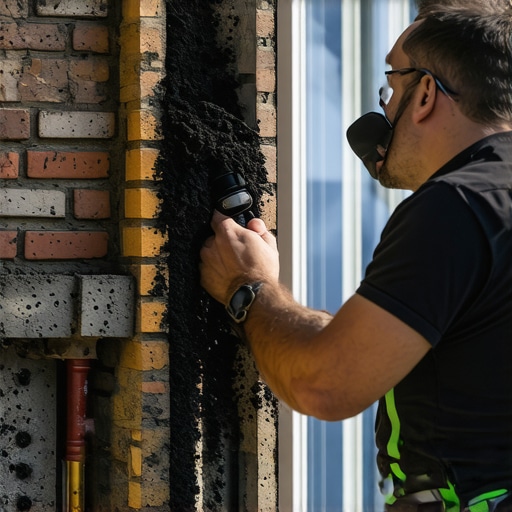
The Invisible Decay: A Forensic Look at Chimney Failure
The homeowner in the Hudson Valley thought it was just a hairline crack on the exterior brickwork, a minor blemish on a century-old colonial. But when I fed the high-definition scope down the throat of the flue, the reality was terrifying. The structural clay tiles had undergone a process of thermal shock so severe that they had shifted, leaving a two-inch gap directly against the dry timber of the house’s framing. The structural steel support was rusted to dust from decades of acidic condensation. This is the reality of masonry: it doesn’t shout when it’s dying; it whispers, and if you aren’t listening, it burns the house down.
The Chemistry of Combustion and Corrosion
To understand why an annual inspection is mandatory, you have to look at the chemistry of what happens inside that dark, soot-caked tunnel. When you burn wood, you aren’t just creating heat; you are initiating a complex chemical reaction that produces water vapor, carbon monoxide, and a nasty cocktail of organic compounds known as creosote. In the colder climates of the North, where the freeze-thaw cycle is a relentless hammer, that water vapor is your worst enemy. As it rises, it hits the cold upper masonry and condenses. This moisture mixes with sulfur and nitrogen oxides to form dilute sulfuric and nitric acids. Over years, this ‘acid rain’ eats the lime out of your mortar, a process we call leaching. It turns your hard joints into a sandy mush that can no longer support the weight of the stack.
“The inner chimney liner shall be capable of withstanding the temperature fluctuations and the corrosive effects of flue gases.” – NFPA 211: Standard for Chimneys, Fireplaces, Vents, and Solid Fuel-Burning Appliances
Thermal Expansion and the Heat Shield
Inside the flue, physics is always at work. Your chimney is a vertical engine, and like any engine, it deals with extreme heat gradients. A chimney heat shield installation is often the only thing standing between a safe fire and a structural disaster. Without a proper shield or liner, the heat transfer to the surrounding masonry is uneven. Clay tiles expand at a different rate than the surrounding brick and mortar. This differential expansion leads to ‘spalling,’ where the face of the tile or brick literally pops off. In my forty years of buttering bricks, I’ve seen flues where the tiles have collapsed like a deck of cards because they weren’t allowed to breathe. If your inspector isn’t checking for these fractures, they aren’t doing their job.
The Structural Connection: From Foundation to Crown
A chimney doesn’t exist in a vacuum. It sits on a footing, often the most overlooked piece of concrete in the building. I’ve seen foundation wall bowing repair jobs where the primary cause was actually the chimney stack pulling away from the house, creating a lever effect that crushed the basement walls. When the stack leans, it’s usually because the soil has heaved or the masonry has been compromised by moisture. We look for structural repointing needs not just for aesthetics, but to restore the compression strength of the wall. If the mortar is gone, the bricks are just stones stacked in a line, waiting for gravity to take over. This is especially critical for chimney structural repair where the stack might be thirty feet tall; if the base is soft, the top is a pendulum.
Restoration and the Art of the Joint
When we get into historic pointing styles, we aren’t just playing with mud to make it look pretty. Old houses used lime-based mortars that were designed to be ‘sacrificial.’ They were softer than the brick, allowing the house to move and breathe. When a modern handyman slaps hard Portland cement into a 19th-century chimney, he’s signing its death warrant. The hard cement won’t give, so the old, soft brick breaks instead. Stone facade restoration and structural repointing require a deep understanding of the original mix. We even see this in specialized tasks like tuckpointing curved walls or restoring an outdoor masonry fountain restoration; the mortar must match the substrate’s porosity and strength. If you use the wrong ‘mud,’ the first freeze of winter will blow the face off your stonework.
“Masonry units shall be laid in mortar of a type that is compatible with the physical properties of the units and the environmental exposure.” – ASTM C270: Standard Specification for Mortar for Unit Masonry
Advanced Diagnostics: Drone Chimney Inspections
We’ve come a long way from just dropping a lead weight down a flue to see if it’s clear. Today, drone chimney inspections allow us to see the ‘crown’—the concrete cap at the very top—without the risk of scaling a 12-pitch slate roof in the wind. The crown is the first line of defense. If it’s cracked, water gets behind the brick. In the North, that water freezes, expands by 9%, and starts the slow-motion explosion of your masonry. I’ve seen retaining wall capstone replacement projects that were necessary solely because the homeowner ignored the chimney crown; the water traveled down the interior of the wall and blew out the landscaping masonry ten feet away.
The Verdict: Do It Once, or Do It Twice
Every year, I get called to scenes where a ‘lick-and-stick’ stone job has failed or a chimney has started to lean like the Tower of Pisa. Most of these disasters could have been caught with a simple, professional eye. Whether it’s stone facade restoration or a simple flue sweep, the goal is the same: managing moisture and heat. Don’t trust a guy with a bucket of premixed mortar and a ladder. You need someone who understands the suction of a brick and the way a wall breathes. Inspecting your flue isn’t just about fire safety; it’s about the forensic health of your entire home’s structure. If you ignore the signs today, you’ll be paying for a full-scale rebuild tomorrow. And believe me, the sound of a chimney being torn down is a lot more expensive than the ring of a mason’s trowel checking for a solid course.