
The Ghost in the Wall: Why Your Brick Looks Tired
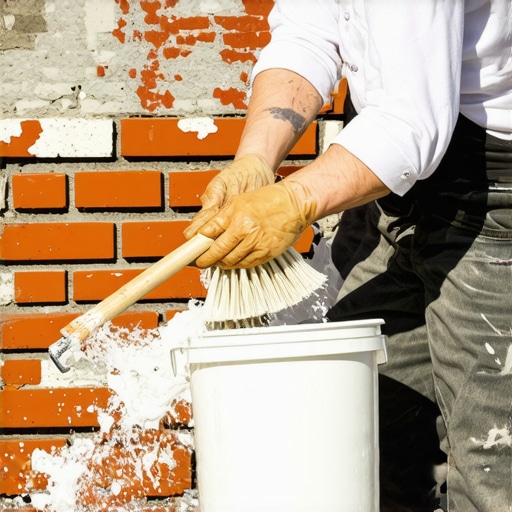
I remember the first time my old man took me to a job site in Philadelphia; I was barely twelve. He pointed at a row of 1880s red-clay beauties that looked like they’d been dusted with flour. I reached for a wire brush, but he slapped my hand away. ‘You don’t scrub a history like that,’ he told me. He took a simple spray bottle of vinegar and water, spritzed a small section, and watched the ‘ghost’ vanish. He was teaching me about the delicate balance of brick efflorescence removal before I even knew the word for it. Most folks today see a dull wall and think they need to blast it into submission with a 4,000 PSI pressure washer. That’s the quickest way to turn a century-old facade into a pile of porous dust. When you hit old brick with high-pressure water, you aren’t just cleaning it; you are performing a microscopic lobotomy on the fire-skin—that hard, protective outer layer baked in the kiln. Once that skin is gone, the brick’s ‘tooth’ is exposed, and it will soak up water like a sponge, leading to a cycle of decay that no re-pointing services can easily fix.
“Water penetration is the single greatest threat to masonry durability. The use of high-pressure water cleaning can damage the masonry units and the mortar joints, leading to accelerated deterioration.” – BIA Technical Note 20
The Chemistry of the Bloom: Understanding Efflorescence
To restore luster, you have to understand the ‘bloom.’ Efflorescence isn’t just dirt; it’s a migration of soluble salts to the surface. When water moves through the masonry—perhaps because of a faulty retaining wall installation or poor drainage—it dissolves salts within the brick or the concrete block foundation repair materials. As the water evaporates, it leaves the salt behind. If you use a pressure washer, you’re often just driving those salts deeper into the core, only for them to reappear two weeks later, thicker than before. The forensic approach requires a ‘poultice’ or a low-pressure chemical application that neutralizes the salt without shattering the brick’s mineral structure. We look for the ‘suction’—how fast the brick pulls in moisture. If the brick is ‘thirsty,’ we pre-wet it with low-pressure mist so the cleaning chemicals don’t dive too deep and stay there, causing brick infill panel repair issues down the line.
The Restoration Reality: Why Softness Wins
In the world of historic restoration, we live by the sacrificial principle. The mortar must be softer than the brick. If you’ve got old, soft-mud bricks and you or a ‘handyman special’ contractor slaps in some modern Type S Portland cement, you’ve signed the wall’s death warrant. Modern cement is too hard; it doesn’t breathe. When the wall expands in the sun, the hard mortar won’t give, so the brick faces ‘spall’ or pop off. This is why re-pointing services must use lime-based ‘mud’ that mimics the original 19th-century mix. When we are buttering a joint, we aren’t just filling a hole; we are restoring the lungs of the building. We use a slicker or a jointer tool to compress the mud, ensuring there are no cold joints where water can sneak in. If the structural integrity is already compromised, we might even look at foundation underpinning to stabilize the soil before we even think about the aesthetics of the facade.
Micro-Zooming into Mineral Sheen and Metallic Applications
Sometimes the ‘luster’ isn’t just about cleaning; it’s about the original mineral palette. I’ve seen metallic brick colors application on mid-century modern projects where the goal was a subtle, pearlescent glow. You can’t get that back with a scrub brush. We use specialized masonry stains that chemically bond with the silica in the brick, rather than sitting on top like a film of plastic paint. This maintains the ‘breathability’—the vapor permeability—of the wall. If you’ve got a chimney that looks like it’s seen better days, the luster isn’t just on the outside. A chimney heat shield installation or a ceramic sealant can prevent the heat-induced ‘micro-cracking’ that dulls the exterior masonry over time. We also see this in industrial settings where fire-rated masonry installation is required; the materials are denser, and the cleaning agents must be specifically pH-balanced to avoid weakening the fire-resistant properties.
“Mortar should be designed to be breathable and flexible, allowing for the natural movement of the masonry units and the escape of moisture vapor.” – ASTM C270 Standard Specification for Mortar for Unit Masonry
The Mechanics of Repair: From Base to Parapet
When I walk a site, I’m looking for the ‘honeycombing’ in the concrete or the soldier course that’s beginning to lean. If a driveway or patio has gone ‘wavy,’ it’s usually a failure of the compaction physics in the base. It’s all about the ‘mud’ and the ‘base.’ For interior floors or large-scale commercial masonry, we might employ self-leveling masonry lifts to ensure a dead-flat surface before the decorative work begins. This prevents the ‘pooling’ of water that leads to the very efflorescence we’re trying to avoid. Whether it’s a retaining wall installation that needs proper weep holes or a complex brick infill panel repair on a high-rise, the physics remain the same: control the water, respect the material, and never, ever mistake ‘faster’ for ‘better.’ You want that ‘ring’ like a bell when you tap a brick; that’s the sound of a structural element that’s going to outlive your grandkids. Blasting it with a power washer is just a loud way to say you don’t know what you’re doing. Real restoration is a quiet process of chemistry, patience, and a hawk full of the right lime-rich mud.