The Forensic Scene: When the Porch Becomes a Liability
I recently stood on a porch in an old neighborhood where the homeowner thought they just had a ‘cosmetic’ issue. They saw a hairline gap between the limestone steps and the brick facade. But when I fed my fiber-optic scope into the void behind the cracked brick wall repair site, the reality was much grimmer. The structural backfill had vanished, replaced by a cavernous hollow where the soil had simply washed away over forty years. The massive concrete slab was hanging by a prayer, putting thousands of pounds of sheer stress on the wall anchors. This wasn’t just a trip hazard; it was a structural collapse in slow motion.
The Physics of Settlement: Why Porches Sink
Porches are notorious for settlement because they are often treated as afterthoughts during the initial build. While the main house sits on deep footings, the porch often rests on ‘disturbed’ soil—the loose earth backfilled against the foundation. Over decades, foundation crack repair becomes inevitable as that soil undergoes consolidation. In regions with heavy freeze-thaw cycles, the physics is brutal. Water enters the sub-grade, expands by 9% as it turns to ice, and heaves the slab. When it thaws, the soil turns to a slurry, losing its load-bearing capacity. This cycle leads to foundation wall bowing repair needs in the basement and tilting slabs on the exterior.
“Differential settlement in masonry structures is frequently caused by the lack of uniform soil bearing capacity or the introduction of moisture into expansive clays.” – BIA Technical Note 18A
Micro-Zooming into Slab Jacking: The Polyurethane vs. Mudjacking Debate
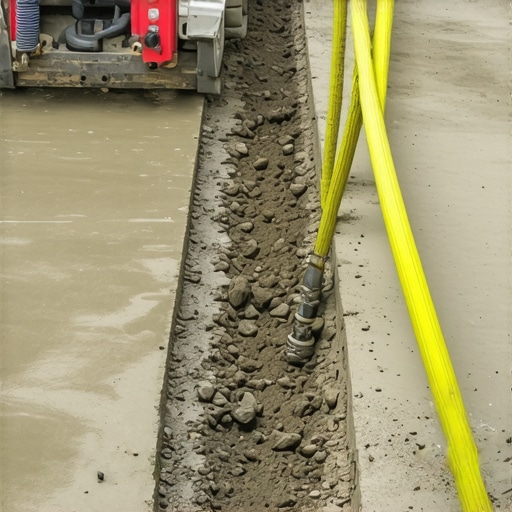
To fix a listing porch, we don’t always need to tear it out. We use slab jacking—a process of injecting high-density material beneath the concrete to hydraulically lift it back to its original elevation. Traditional ‘mudjacking’ uses a slurry of Portland cement, limestone dust, and water (often called ‘mud’ in the trade). While effective, it adds massive weight to already failing soil. I prefer the modern approach: structural polyurethane foam. As the two-part liquid enters the void, a chemical reaction occurs. It expands rapidly, seeking out every ‘honeycombing’ pocket in the soil. The physics of the lift is precise. Because the foam is lightweight and closed-cell, it doesn’t just lift the slab; it seals the underside against future moisture, acting as a permanent brickwork sealants application for the foundation itself.
The Critical Chain Reaction: Brickwork and Joints
When a porch sinks, it doesn’t go alone. It pulls on the adjacent masonry. This is where commercial tuckpointing and historic brickwork repointing enter the forensic picture. As the slab drops, it creates stair-step cracks through the mortar joints. You can’t just ‘butter’ these cracks with new mortar and call it a day. If you don’t address the underlying settlement through slab jacking, the new ‘mud’ will just pop out in the next season. For older homes, we must use a ‘sacrificial’ mortar—typically a Type O or Lime-based mix—to ensure the historic brickwork repointing doesn’t crush the soft, 100-year-old clay bricks when the house breathes.
Beyond the Slab: Parapets, Chimneys, and Efflorescence
A sinking porch is often a symptom of larger water management failures. If your chimney cap replacement was neglected, or if your commercial parapet wall repair wasn’t handled with proper flashing, water is likely migrating down through the wall cavities. This moisture eventually manifests as brick efflorescence removal becomes necessary. That white, powdery salt on your bricks? That’s the building’s way of crying. It’s the mineral salts being pushed out of the masonry by internal moisture. When we perform tuckpointing curved walls or complex architectural repairs, we have to ensure the ‘tooth’ of the old joint is properly cleaned with a slicker or a jointing tool to create a mechanical bond that resists this salt pressure.
“All masonry walls should be designed to prevent the accumulation of water within the wall system, as trapped moisture is the primary cause of masonry deterioration.” – ASTM C270 Standards
The Repair Protocol: A Master Mason’s Approach
If you’re dealing with an uneven porch, the protocol is clear. First, we address the soil stability via slab jacking. Second, we tackle the foundation crack repair to ensure the envelope is sealed. Third, we perform the cracked brick wall repair using matching mortar profiles. We don’t use ‘lick-and-stick’ methods. We grind out the joints to a depth of at least 3/4 inch, wash the ‘mud’ off the brick faces to prevent staining, and strike the joints to a weather-tight finish. Whether it is commercial tuckpointing for a storefront or a delicate historic brickwork repointing job for a Victorian home, the goal is the same: Do it once, do it right, and respect the physics of the stone.