
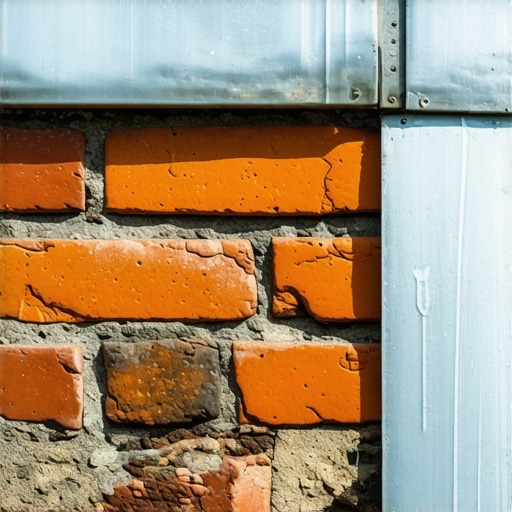
The Forensic Scene: When Walls Talk Back
The homeowner called me out because of what they described as a ‘nuisance leak’ near the baseboard in the dining room. They thought a bit of caulk would fix it. But when I pulled my borescope out and fed it through a 3/8-inch hole in the mortar joint, the truth was uglier than a cold joint in July. Behind that ‘pretty’ brick veneer, the structural steel studs had rusted to orange dust, and the OSB sheathing was a mushy colony of black mold. The culprit wasn’t a hole in the wall; it was the wall itself. The installer had treated brick like a waterproof skin. It isn’t. If you want a brick veneer to last 50 years without triggering a cracked brick wall repair nightmare, you have to understand the physics of the air gap and the relentless nature of hydrostatic pressure.
“Water penetration is the single greatest threat to masonry durability.” — BIA Technical Note 7
The Physics of the Rainscreen: Why Brick Is a Sieve
Most modern builders treat masonry like it’s a solid, impenetrable barrier. That’s the first lie. Brick is essentially a hard sponge. Under a driving rain, a standard clay brick can absorb a massive amount of moisture through capillary action. This is the ‘wicking’ effect. In northern climates where we deal with the freeze-thaw cycle, this moisture is a ticking time bomb. Water expands by 9% when it turns to ice. If that water is trapped inside the pore structure of the brick or, worse, between the brick and the house wrap, it will pop the face right off the masonry. We call this spalling, and it’s the death knell for any facade. To prevent this, we build a drainage wall system, not a barrier wall. This requires a minimum one-inch air space behind the brick. This gap allows the back of the brick to breathe and provides a path for water to drop straight down to the flashing.
The Anatomy of the Mud: Chemistry Over Convenience
Don’t let some ‘handyman special’ tell you that ‘stronger is better’ when it comes to mortar. If you use a high-strength Type S mortar on a soft, reclaimed brick, you are signing its death warrant. The mortar must always be slightly weaker and more vapor-permeable than the unit it holds. I prefer a high-lime Type N mix for most residential veneer. The lime provides a ‘self-healing’ property through carbonation; as small hairline cracks form over decades, the lime reacts with CO2 and moisture to slowly seal the gaps. When you’re tuckpointing brick walls or laying new ones, the ‘tooth’ of the mortar depends on the sand gradation. Use sharp, angular sand, not that round-beaded play sand. You want the mud to have enough suction to grab the brick but enough plasticity to be ‘buttered’ smoothly without sagging.
“Brick masonry is not waterproof; it is a drainage wall system.” — ASTM C1088
The Critical Failure Point: Flashing and Weeps
If the air space is the lungs of the wall, the flashing and weep holes are the bladder. You must install high-quality, 20-mil stainless steel or copper-clad flashing at the base of the wall, above all windows, and over every door lintel. Plastic flashing is a joke; it becomes brittle and cracks within fifteen years. The flashing must extend from the sheathing, down the wall, and slightly past the face of the brick with a drip edge. Then come the weeps. I see guys spacing them every four feet, or worse, plugging them with mortar drippings. You want weeps every 24 inches on center. These aren’t just for drainage; they allow air pressure to equalize, which stops the vacuum effect that sucks rain through the mortar joints during a storm. If you’re dealing with chimney leak detection, nine times out of ten, the flashing at the roofline was ‘counter-flashed’ with cheap silicone instead of being let into a reglet joint. It’s lazy, and it’s why basements get wet.
Micro-Zooming into the Freeze-Thaw Cycle
In the North, we fight the expansion of water. If you haven’t used porous stone sealers correctly on your sills, the stone will soak up water like a biscuit. When that water freezes, the internal pressure exceeds the tensile strength of the stone, causing it to shatter. This same logic applies to concrete masonry unit restoration. If you’re doing a concrete block foundation repair, you can’t just slap some hydraulic cement on the inside and call it a day. The water is still outside, building up hydrostatic pressure. You need a retaining wall drainage upgrade mindset: get the water away from the wall using perforated pipe and washed stone. For exterior brick, this means ensuring your mortar joints are ‘struck’ properly. A concave joint, compressed with a steel ‘slicker,’ is the only joint that truly sheds water. Avoid ‘raked’ joints unless you enjoy watching your wall rot from the inside out.
Foundation and Retaining Walls: The Structural Backbone
A brick veneer is only as stable as what it sits on. I’ve seen outdoor kitchen masonry build projects collapse because the slab was only four inches thick with no thickened edge. For a 50-year wall, you need a frost-protected footing. If you’re building a structural retaining wall to hold back a slope, pay attention to the retaining wall batter correction. A wall that stands perfectly vertical is a wall that is waiting to tip. You need a slight lean back into the hill, usually one inch for every foot of height. Use sustainable block cutting techniques to minimize waste and ensure every ‘soldier course’ or header is tied back into the drainage stone with geogrid. Without drainage, the wall becomes a dam, and no amount of steel will hold back a saturated hillside.
The Long Game: Maintenance and Restoration
If you’ve built it right, your main job for the next five decades is keeping the ‘mud’ intact. Every twenty years, you might need a pro to come in for some tuckpointing brick walls. This isn’t just cosmetic; it’s structural maintenance. Use a hawk and trowel to pack the joints tight. Never use a pressure washer on a brick wall; you’ll blow out the cream of the brick and open up the pores, making it even more susceptible to water. Respect the material, understand the physics of moisture movement, and your masonry will outlast the mortgage. Anything less is just a ‘lick-and-stick’ disaster waiting for a forensic inspector like me to find it.