The Ghost of a Cracked Hearth
I’ve walked up to more than my share of backyard disasters where a homeowner’s weekend project turned into a pile of expensive rubble. Just last month, I stood in a suburban yard looking at a six-thousand-dollar outdoor kitchen that was literally splitting at the seams. The culprit wasn’t the design or the high-end stainless steel grill—it was the ‘red’ bricks they used for the firebox. My father, a man who could tell the moisture content of a clinker just by the way it sat on the hawk, always told me: ‘Son, if the stone doesn’t respect the fire, the fire will eat the house.’ He used to take a refractory brick and drop it onto a granite slab. If it didn’t give off a high-pitched metallic ‘sing,’ it was too porous. It had no ‘tooth.’ He knew that firebrick isn’t just about surviving heat; it’s about the physics of thermal mass and the violent expansion of trapped molecules. When you are undertaking an outdoor oven rebuild, you aren’t just stacking blocks; you are building a thermal battery that has to survive a 900-degree temperature swing in less than an hour. If you get the material science wrong, the expansion will shear your brick lintel replacement right off the face of the oven.
“Refractory brick must withstand temperatures exceeding 2000 degrees Fahrenheit without significant deformation or chemical change.” – BIA Technical Note 44
The Alumina Micro-Zoom: Why Your Red Bricks Explode
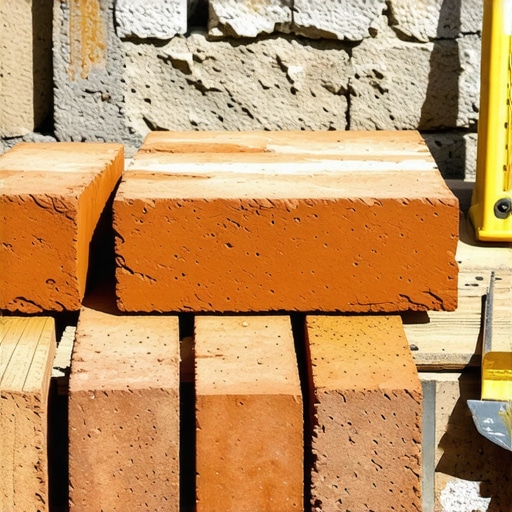
To understand why we use firebrick, you have to look at the chemistry of the ‘mud’ and the bake. A standard clay brick you find at a big-box store is fired at around 1800 to 2000 degrees, but it is designed for structural load, not thermal cycling. It contains a high amount of silica and various metallic oxides that give it color. When you hit that brick with a localized flame, the face expands while the core stays cool. This creates a shear plane. Because the brick is ‘tight’—meaning it lacks a proper capillary network for rapid moisture escape—the interstitial water turns to steam and pops the face off. This is called spalling, and in a pizza oven, it’s a death sentence for your crust. In my years of forensic masonry, I’ve seen standard bricks literally liquefy and turn to glass because they couldn’t shed the heat. True firebricks, or refractory bricks, are loaded with Alumina (aluminum oxide). We’re looking for a ‘Low-Duty’ or ‘Medium-Duty’ brick for backyard ovens, typically containing 25% to 35% alumina. If you go to ‘High-Duty’ (over 40% alumina), the brick becomes too dense, losing its ability to absorb and hold heat quickly, which is what you need for that perfect sourdough spring.
The Physics of the ‘Mud’ and the Heat-Set Bond
You can have the best firebrick in the world, but if you slop it together with Type S mortar from a bag, you’ve failed before you started. I see guys trying to use tile grouts on masonry inside an oven because they like the color. It’s a joke. Standard mortar is a hydraulic bond—it sets by reacting with water. Firebrick requires a ceramic bond. This is where re-pointing services for ovens get tricky. You need a refractory mortar, often called ‘fire clay’ or ‘heat-set mud,’ which actually vitrifies (turns to glass) when exposed to high heat, fusing the bricks into a monolithic structure. When you are buttering the head joint of a firebrick, you aren’t looking for the thick, half-inch joint you see on a garden wall. You want a 1/16th inch ‘tight’ joint. You ‘butter’ the brick with a thin veneer of mud, press it home, and ‘slick’ the joint until it’s flush. If those joints are too thick, the mortar will shrink, crack, and eventually fall into your food. This is the same reason why tuckpointing machine services have no business near a refractory build; the precision required for these thin joints is a hand-tool game only.
“ASTM C64 classifies refractory bricks based on their resistance to thermal spalling and chemical attack at elevated temperatures.” – ASTM Standards for Refractory Materials
Structural Integrity: From Lintels to Flues
The most common failure point I find during a forensic structural inspection of an outdoor oven is the arch. People try to bridge the opening with a piece of angle iron and some decorative brick. Within two seasons, the steel expands at a different rate than the masonry, pushing the corners out and causing a 45-degree stair-step crack. If you’re doing a brick lintel replacement during your rebuild, you must use a refractory-grade lintel or, better yet, a self-supporting masonry arch. Higher up, the chimney flue liner installation is equally critical. You can’t just vent an oven into a hollow brick box. You need a clay or stainless liner that can handle the creosote and the heat. I’ve seen chimney crown repair jobs where the ‘pro’ just smeared some Portland cement on top. In a high-heat oven environment, that cement will crack in a month. You need a floating crown with an expansion joint to allow the flue to grow as it heats up. Even with modern AI masonry assessment tools that can simulate heat flow, the basic physics of ‘give and take’ remains the same.
The Aesthetics of the Shell: Staining and Sealants
Once the core is built, homeowners get obsessed with the look. They want masonry staining to match their patio or brickwork sealants application to keep it looking new. Here is the cynical truth: most sealants are plastic. If you seal a firebrick oven, you are trapping the moisture that must escape during the firing. You’ll end up with a cloudy, peeling mess. If you want color, use modular masonry construction for the outer ‘cold’ shell, leaving a two-inch gap filled with ceramic fiber insulation between the firebox and the exterior. This ‘breathability’ is what separates a master’s work from a handyman’s nightmare. Do it once, and your grandkids will be baking in it. Do it cheap, and you’ll be calling me for a demolition estimate by next summer. Related services like re-pointing services and chimney crown repair are part of the long-term maintenance, but the core firebrick selection is your foundation. Never compromise on the alumina, and never trust a brick that doesn’t sing.