The Forensic Scene: The Wall That Breathed Its Last
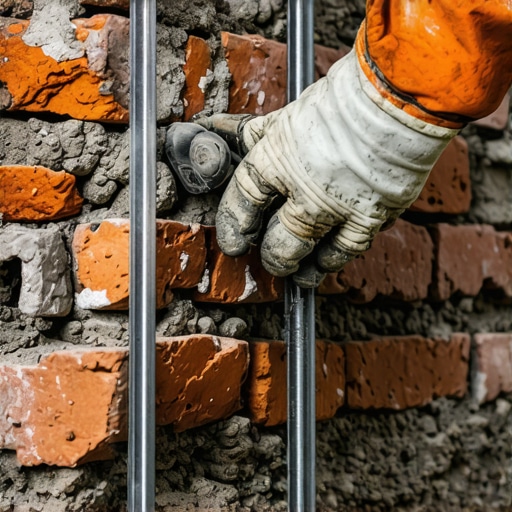
The homeowner called me out because of a “minor cosmetic bulge” in the front facade of their 1980s commercial office. They thought it was just a loose brick or two. But when I put my digital scope into a tiny gap near the soldier course, I didn’t see solid masonry. I saw a cavern of rusted dust where the wall ties used to be. The entire outer wythe was standing by sheer luck and gravity, disconnected from the structural backup. One heavy wind load or a minor seismic tremor and three tons of brick would have been on the sidewalk. This wasn’t a repair job; it was a masonry rescue after disaster waiting to happen.
Understanding brick veneer detachment repair requires more than just a bucket of mud and a trowel. You have to understand the silent war between moisture, metal, and mortar. Modern veneer isn’t structural; it’s a raincoat. And when that raincoat loses its buttons—the wall ties—the results are catastrophic. We are talking about the physics of hydraulic jacking and the chemical failure of the anchoring system. This guide is for those who want to fix it once, fix it right, and stop pretending that a bit of caulk solves a structural nightmare.
The Anatomy of Failure: Why Brick Veneers Detach
In a standard brick veneer system, the masonry is tied to a wood or steel stud backup with metal anchors. These anchors are the lifeblood of the wall. In the North, where the freeze-thaw cycle is a brutal reality, these walls face a relentless assault. Water is a liquid crowbar. When moisture penetrates the brick—which it always does, because brick is a sponge—it must have a way out. If your commercial masonry maintenance plan hasn’t included retaining wall weep hole cleaning or checking the drainage of your veneer, you are trapping water in the wall cavity.
“Water penetration is the single greatest threat to masonry durability. Proper drainage systems, including weep holes and flashing, are essential to prevent structural degradation.” – BIA Technical Note 7
When water gets trapped, the freeze-thaw cycle takes over. Water expands by 9% when it turns to ice. That expansion happens inside the mortar joints and, more dangerously, behind the brick. This creates a outward pressure known as hydraulic jacking. Over twenty winters, this pressure bends the wall ties. If those ties are the cheap, corrugated zinc-coated variety often found in “handyman specials,” they eventually snap or pull out of the mortar bed. Once the tie fails, the brick starts to lean. You’ll see it first as brick quoin repair needs or stair-step cracking, but the real rot is hidden.
Micro-Zoom: The Chemistry of Corrosion and Mortar Selection
Let’s talk about the “mud.” Many modern masons reach for Type S mortar because it’s high-strength. They think harder is better. They’re wrong. In structural repointing, particularly for older veneers or chimney structural repair, you need a mortar that is sacrificial. If the mortar is harder than the brick, the brick will spall (pop its face off). I’ve seen thousands of beautiful historic bricks destroyed because a contractor used a rich Portland cement mix on a wall designed for lime-based breathability.
The carbonation of lime is a process that takes decades. Unlike Portland cement, which reaches its full strength quickly, lime-based mortars allow for micro-movements. In tuckpointing brick walls, we use a hawk to hold our mud and a slicker to drive it deep into the joint. But if the joint hasn’t been ground out to at least one inch, you’re just “buttering” the surface. That thin layer won’t have the “tooth” to stay attached, and it will flake off in two seasons. Real structural repointing requires mechanical bonding, ensuring the new mortar is packed tight against the clean, dampened surface of the original brick to prevent “flash setting.”
The Hard Truth About Retaining Walls and Weep Holes
A failing retaining wall repair is often a lesson in hydrostatic pressure. A retaining wall is a dam that happens to have a stone face. If you aren’t performing regular retaining wall weep hole cleaning, you are allowing thousands of pounds of water weight to press against the back of that wall. I’ve walked onto sites where the retaining wall reinforcement—the geogrid or the deadmen anchors—has been completely compromised because the drainage was clogged with silt and organic debris. When I see honeycombing in the concrete backup or mineral deposits (efflorescence) blooming like white moss on the face, I know the wall is drowning.
“The design and construction of masonry chimneys shall provide for the resistance of all vertical and lateral loads.” – ASTM C1283
For chimney structural repair, the stakes are even higher. A chimney is a freestanding pillar of masonry subjected to the most extreme thermal expansion. The interior flue heats up while the exterior stays cold. This differential causes the masonry to expand at different rates. Without proper tuckpointing brick walls and a solid crown, water enters the top and migrates down, rotting the structure from the inside out. I often find that the brick quoin repair on a chimney is the first sign that the entire stack is beginning to twist.
The Fix: From Mechanical Ties to Helical Anchors
So, how do we stop the collapse? We don’t just patch the cracks. We re-establish the connection. For brick veneer detachment repair, we often use stainless steel helical ties. These are driven through the brick and into the structural backup, then pinned into place with high-strength resin or mechanical expansion. This creates a bridge that bypasses the failed original ties. Once the wall is stabilized, we begin the structural repointing. We grind out the failed joints, clean the cavity, and ensure the retaining wall weep hole cleaning is done so the wall can finally breathe again.
Don’t fall for the “asphalt gypsy” approach of just slapping some mortar over a crack. If the wall is moving, the crack is a symptom, not the disease. You have to address the retaining wall reinforcement or the veneer anchoring first. Use a slicker to finish the joints with a concave profile; this sheds water most effectively. A flat or “weathered” joint might look okay, but it creates a shelf for water to sit on, and water is the enemy that never sleeps. Do the job once, do it with the right chemistry, and you’ll never have to watch your investment crumble into a pile of red dust.