
The Tragedy of the Rigid Joint
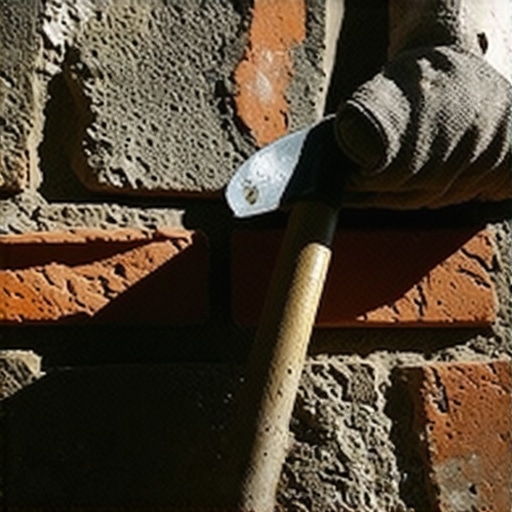
I recently walked past a 1920s Tudor that had been ‘restored’ by a contractor who clearly spent more time on TikTok than in a stone yard. The entire facade was weeping. Huge chunks of the original red clay brick were popping off like scabs, leaving raw, orange wounds exposed to the elements. The culprit wasn’t age. It was a bag of modern Portland cement. When you slap a hard, impermeable Type S mortar into a joint designed for soft lime, you aren’t fixing the house; you’re signing its death warrant. Historic masonry is a living, breathing system. If you choke it with modern materials, the physics of freeze-thaw damage restoration becomes your new full-time hobby. My mentor, a man who could feel the moisture content of a brick just by the weight of it in his palm, used to say that the mortar is the ‘sacrificial lamb’ of the wall. If the mortar is harder than the brick, the brick breaks. If the mortar is softer, the mortar breaks, and you can always replace the mud. It’s a simple law of the trade that many modern ‘pros’ have forgotten.
“Mortars for restoration should be weaker in compression than the masonry units and should have a high vapor permeability to allow for moisture movement.” – BIA Technical Note 2
The Chemistry of Breathability: Why Lime Wins
The secret to eco-friendly mortar isn’t just about being ‘green’; it’s about the carbonation cycle. Unlike modern cement which sets through a rapid chemical hydraulic bond, traditional lime mortar cures by absorbing CO2 from the air over months, even years. This process creates a microscopic pore structure that allows water vapor to escape. In the trade, we call this the ‘suction.’ When rain hits a historic wall, the brick absorbs it. In a proper structural repointing job using lime putty or Type O mortar, that water is pulled out through the joints and evaporated. If you use a modern ‘lick-and-stick’ approach with high-strength cement, that water gets trapped behind the face of the brick. When the temperature drops and that water expands by 9%, it exerts thousands of pounds of pressure. This is the root cause of spalling. We see it constantly during concrete masonry unit restoration where old world meets new world without a proper transition. The lime doesn’t just sit there; it migrates. This ‘self-healing’ property is something modern concrete only dreams of. When a hairline crack forms in lime mortar, rainwater dissolves a bit of the free lime and redeposits it into the crack as it evaporates. It’s a biological-like response from a supposedly ‘dead’ material.
The Forensic Reality of Efflorescence and Salt
If you see a white, powdery crust blooming across your foundation, you’re looking at brick efflorescence removal in your near future. This isn’t just an aesthetic ‘stain.’ It’s the sound of your wall crying. Salts are carried by water. In a historic home, if you’ve used the wrong ‘mud,’ those salts get trapped inside the brick’s pore structure (sub-florescence) and crystallize with enough force to shatter the clay’s internal matrix. This is why brick quoin repair on corner stones is so delicate. You aren’t just replacing a block; you’re resetting the structural balance of the entire corner. I’ve seen robotic masonry repair systems try to automate this, but a machine doesn’t have the ‘feel’ for the ‘tooth’ of the stone. It doesn’t know when the tuckpointing curved walls requires a slightly different mix to handle the uneven stress of the radius. You need a slicker and a hawk, and a pair of hands that have felt the difference between a ‘hot’ mix and one that’s ready to butter the joint.
“The use of lime-based mortars ensures the longevity of masonry by providing a flexible and permeable medium that accommodates the natural movement of historic structures.” – ASTM C270 Standards Commentary
Modern Applications: From Chimneys to Outdoor Kitchens
The logic of eco-friendly, soft mortars extends beyond just the facade. Consider chimney flue liner installation. The thermal shock inside a chimney is extreme. If the exterior masonry is locked tight with rigid cement, the expansion has nowhere to go but out, leading to vertical ‘thunderbolt’ cracks. We apply the same principles to an outdoor kitchen masonry build. People want that ‘old world’ look but often use ‘new world’ materials that fail after three winters. Using a lime-rich mix allows the outdoor structure to heave and settle with the soil without snapping the stones in half. Even in self-healing concrete foundations, the industry is finally circling back to the Roman methods of using volcanic ash and lime to create a material that doesn’t just sit there and rot. When you’re structural repointing, you have to grind out the old, failing joints to a depth of at least 3/4 of an inch to ensure the new ‘mud’ has a mechanical key to grab onto. Anything less is just a ‘smear job’ that will peel off in a season. You want the new joint to be ‘struck’ or ‘profiled’ to shed water—whether it’s a weather joint or a concave joint, the goal is always the same: keep the water moving away from the core. Don’t let a handyman tell you that ‘cement is cement.’ It’s the difference between a house that lasts 200 years and one that becomes a pile of rubble in twenty. Do it once, or do it twice; the physics don’t care about your budget.