The Ghost of Craftsmanship Past
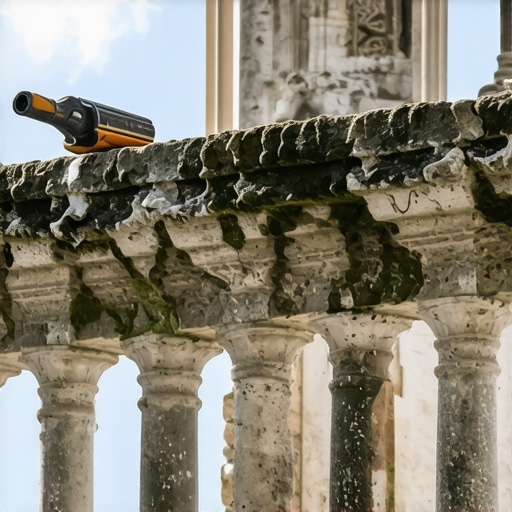
I remember a man named Silas, a mason who worked until his knuckles were as scarred and pitted as the Indiana limestone he carved. He didn’t use a level for every stone; he said he could feel the gravity in his marrow. One afternoon, he pointed to a sweeping balustrade on a 1920s estate that was beginning to bow like a tired horse. He didn’t just see a crack; he saw the invisible hand of water working its way through the capillaries of the stone. ‘If the stone can’t breathe, it’ll scream,’ he told me, ‘and a stone screams by shedding its skin.’ That balustrade eventually collapsed because a handyman had ‘fixed’ it by smearing high-strength Portland cement over the soft lime joints, effectively suffocating the structure. This is the reality of historic masonry preservation: it is a battle against physics, chemistry, and well-intentioned ignorance.
The Anatomy of Decay: Why Balustrades Fail
A stone balustrade is not just a fence; it is a complex assembly of top rails, spindles (balusters), and base rails, often held together by internal pins. In the world of historic pointing styles, the joint is the sacrificial lamb. It is designed to be softer than the stone so that moisture evaporates through the mortar, not the masonry itself. When you see spalled concrete steps repair needs or crumbling stone, you’re usually looking at a failure of the ‘breathability’ cycle. In northern climates, the freeze-thaw cycle is a relentless sledgehammer. Water penetrates the stone’s pores, and when it freezes, it expands by roughly 9%. This creates internal tensile stress that the stone—strong in compression but weak in tension—cannot withstand. This is why tuck pointing services are not merely cosmetic; they are a structural necessity to keep the water out of the core.
“Mortar should always be weaker than the masonry units it binds, ensuring that stresses are relieved through the joints rather than the units themselves.” – ASTM C270 Standard Specification for Mortar for Unit Masonry
The Micro-Physics of Stone Hydration
Let’s micro-zoom into the chemistry. Historic stone often relies on lime-based mortars. The carbonation process of lime is a century-long journey where calcium hydroxide reacts with atmospheric CO2 to become calcium carbonate—essentially turning back into stone. When a modern contractor uses a ‘hot’ mix of Type S Portland cement on an old balustrade, they create a hard, brittle barrier. The stone expands in the summer heat, but the mortar won’t budge. This leads to masonry birdsmouth cuts at the base of the spindles cracking under the pressure. The moisture gets trapped behind that hard ‘mud,’ and the next freeze pops the face of the stone off. We call this spalling, and once it starts, the clock is ticking.
The Forensic Inspection: Reading the Cracks
Before you reach for advanced masonry adhesives, you have to diagnose the ‘why.’ Are the cracks vertical? That’s usually thermal expansion. Are they ‘stair-stepping’ through the joints? That’s settlement, often related to concrete block foundation repair issues beneath the porch or terrace. If the spindles are bulging, the internal iron dowels are likely ‘jacking.’ As iron rusts, it expands up to ten times its original volume. This creates ‘hoop stress’ inside the stone baluster, eventually blowing it apart from the inside out. In these cases, chimney rebuild services techniques are often applied to balustrades: we must dismantle, replace the rusted ‘bone’ with stainless steel, and reassemble with the proper ‘butter’ on the joints.
The Restoration Process: Beyond the Band-Aid
Saving a balustrade requires more than a bucket of caulk. First, we address the ‘cap.’ Much like a chimney cap replacement, the top rail of a balustrade must be perfectly shed-functional. If water sits on the rail, it migrates down the spindles. We use a ‘slicker’ to profile the joints, ensuring a ‘weathered’ or ‘grapevine’ joint that sheds water away from the stone’s heart. For structural cracks, we don’t just ‘smear’ mortar. We use advanced masonry adhesives like injection epoxies or breathable lithic binders that match the stone’s modulus of elasticity. If the base is sinking, we may need to look at concrete block foundation repair to stabilize the entire assembly before the masonry work even begins. This isn’t a ‘weekend warrior’ project; it’s a surgical intervention.
“Water penetration is the single greatest threat to masonry durability, and horizontal surfaces like balustrades are the most vulnerable exposure points.” – BIA Technical Note 7
The Master’s Touch: Materials and Methods
When we ‘butter’ a stone, we aren’t just applying glue. We are creating a bond that must withstand 100 years of sun and ice. For commercial smokestack repair or high-exposure balustrades, we often use Type O or K mortars—high-lime mixes that are self-healing. If a hairline crack forms in a lime mortar, the next rain dissolves a bit of the free lime and redeposits it into the crack, effectively ‘healing’ the joint. You don’t get that with a bag of pre-mixed ‘junk’ from the big-box store. We also look at masonry birdsmouth cuts—the V-shaped notches where the baluster meets the rail. If these are cut poorly, they act as water funnels. A master mason will ensure these are sealed with a lead T-cap or a high-performance breathable sealant to prevent ‘honeycombing’ of the stone base.
Preserving Value vs. Destroying History
I’ve seen $200,000 historic facades ruined by a ‘cheap’ tuck pointing services crew who used grinders and destroyed the ‘tooth’ of the stone. A real mason uses hand chisels or small pneumatic tools to remove the old ‘mud’ without scarring the masonry. If you’re dealing with spalled concrete steps repair or a crumbling balustrade, remember that the most expensive repair is the one you have to do twice. Do it once, do it right, and use the materials that the original builders intended. Whether it’s a chimney rebuild services job or a delicate stone rail, the physics remain the same: respect the water, respect the expansion, and never, ever suffocate the stone.