
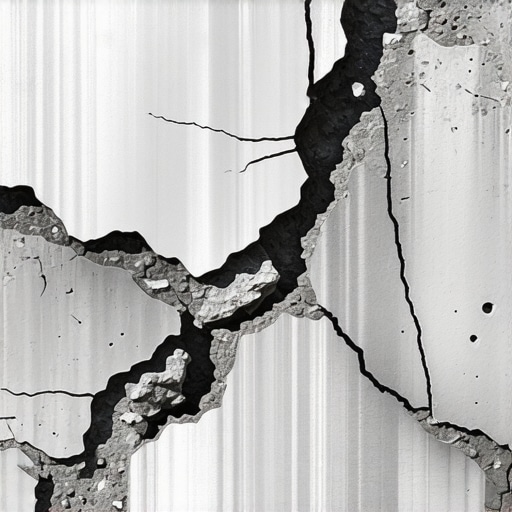
The Forensic Scene: Beyond the Surface
The homeowner thought it was just a hairline crack. But when I put my scope inside, I saw the structural steel was rusted to dust. This is the reality of forensic masonry inspection. What looks like a simple fracture in the mud often masks a catastrophic breakdown of the building’s skeletal integrity. For three generations, my family has been reading the language of stone and clay, and if there is one thing I’ve learned, it’s that walls never lie—they just wait for someone who knows how to listen. Most modern contractors will slap some advanced masonry adhesives over a gap and call it a day, but that’s like putting a Band-Aid on a compound fracture. You have to understand the physics of the load and the chemistry of the mortar to know if you’re looking at a house that’s settling or a house that’s failing.
“Water penetration is the single greatest threat to masonry durability.” – BIA Technical Note 7
The Physics of Settlement and the Geometry of Failure
When I walk a property, I’m looking for the ‘why’ before I look for the ‘how.’ Structural cracks are usually the result of movement in the soil or the foundation itself. If you see a stair-step crack following the mortar joints in a brick wall, you’re looking at differential settlement. One part of the footing is sinking faster than the rest. This isn’t just an aesthetic issue; it’s a sign that the ground beneath has failed. In these cases, we often look toward foundation helical pier installation. These steel shafts are screwed deep into the earth, past the unstable topsoil, to reach load-bearing strata. It’s a surgical process that transfers the weight of the structure from the failing soil to the pier, effectively halting the movement. Without this, any tuck pointing services you perform will just crack again in six months.
Conversely, a horizontal crack in a basement wall is a different beast entirely. This is often the result of hydrostatic pressure. When the clay soil around your foundation becomes saturated, it expands and pushes against the wall with thousands of pounds of force. If you see the wall start to ‘belly’ or lean inward, you are in the territory of foundation wall bowing repair. We don’t just patch these; we stabilize them with carbon fiber straps or steel I-beams. The physics of a bowing wall are unforgiving—once the center of gravity shifts beyond the footprint of the foundation, the risk of total collapse increases exponentially.
The Chemistry of the Joint: Why Softness is Strength
In the world of historic restoration, especially for buildings constructed before the 1940s, the biggest enemy isn’t time—it’s Portland cement. Old bricks were fired at lower temperatures, making them softer and more porous than modern units. They were designed to work with lime-based mortars that are flexible and ‘breathable.’ If a ‘handyman’ uses a modern, high-strength Type S mortar to perform mortar repointing services on a 100-year-old wall, they are signing the building’s death warrant. The mortar must be a ‘sacrificial lamb.’ It needs to be softer than the brick so that when the wall expands and contracts, the mortar takes the stress. If the mortar is harder than the brick, the brick face will pop off in a process called spalling. This is why professional tuckpointing machine services must be handled with extreme care to avoid damaging the arris of the historic brick during the grinding phase.
“The mortar should always be weaker than the masonry units so that any movement is taken up in the joints.” – ASTM C270 Standard Specification for Mortar for Unit Masonry
Chimneys and Curved Walls: The High-Stakes Inspection
Chimneys are the most exposed part of any structure, taking a beating from wind, rain, and extreme temperature swings. A crack in a chimney isn’t just a leak risk; it’s a fire hazard. We use chimney leak detection techniques that involve thermal imaging and internal cameras to find where the flue tiles have separated. If the exterior masonry is crumbling, it’s usually because the crown has failed, allowing water to ‘wick’ down into the heart of the stack. For more complex structures, like tuckpointing curved walls, the craftsmanship requirements go up ten-fold. You can’t just ‘butter’ the brick and move on. You have to strike the joints with a specialized slicker to ensure the radius is maintained and the mud is packed tight to resist moisture ingress. Similarly, stone wall repair requires an eye for the ‘tooth’ of the stone, ensuring the new mortar bonds to the irregular surfaces of the rubble fill.
The Hardscape and the Horizon
It’s not just the walls that tell stories. Look at your retaining wall capstone replacement needs. When a capstone loose, it’s usually because the advanced masonry adhesives used previously couldn’t handle the thermal expansion. In the heat of the summer, a long stone wall can expand significantly. Without proper relief joints, that energy has to go somewhere, and it usually blows the caps right off the top. When we rebuild, we ensure the soldier course is level and the drainage behind the wall is clear. If you don’t manage the water, the water will manage you. Whether you are dealing with a tuck pointing services project on a historic facade or a complex structural stabilization, remember: cheap work is expensive in the long run. Do it once, do it right, and respect the material.