
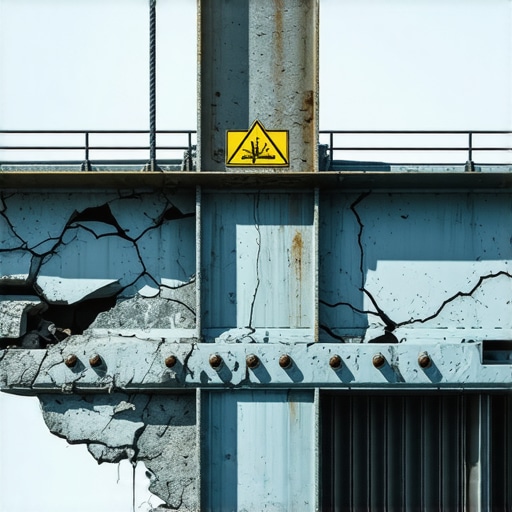
The Ghost in the Wall: A Forensic Inspection
The property owner called me out because he noticed a slight bulge in the brickwork of his 1930s warehouse, nothing more than a gentle wave in the soldier course. But when I slid my fiber-optic scope through a crumbling mortar joint, the reality hit like a sledgehammer. The structural steel ties weren’t just rusted; they had vanished into a pile of oxidized dust. The entire brick facade was standing purely by its own weight and a prayer, completely detached from the backup wall. It was a forensic scene of structural negligence. When those ties snap, you aren’t just looking at a repair; you are looking at a potential collapse that ignores the laws of gravity until it doesn’t. Structural brick ties replacement is the only way back from that ledge.
The Physics of Oxidation and Tie Failure
To understand why ties fail, we have to zoom into the chemistry of the wall. In older masonry, ties were often made of ungalvanized or lightly coated carbon steel. When moisture penetrates the envelope—and it always does—it triggers a reaction. Iron reacts with oxygen and water to form iron oxide. This isn’t just a surface stain; it is a volume-expanding disaster. Rust occupies up to seven times the volume of the original metal. This expansion, known as ‘rust-packing,’ exerts thousands of pounds of pressure per square inch against the surrounding brickwork. It literally jacks the bricks apart from the inside out. This is often the root cause behind why you need brick column repair or why you see horizontal cracking at regular intervals.
“Water penetration is the single greatest threat to masonry durability, leading to the corrosion of metal ties and the subsequent loss of lateral stability.” – BIA Technical Note 7
Identifying the Warning Signs Before the Snap
You don’t need a degree in structural engineering to see the signs, but you do need an eye for the ‘tell.’ Look for the ‘Stair-Step’ crack. This isn’t just settling; it is the wall telling you it is losing its grip. If the crack follows the mortar joints in a diagonal pattern, the wall is shifting. If you see ‘bowing’ or ‘bellying,’ where the wall looks pregnant, the ties have already snapped. Another sign is crumbling mortar joint repair that never seems to stay fixed. If you keep repointing the same spot and the mortar pops out, the wall is moving behind your back. We use tuckpointing weatherproofing to seal the exterior, but if the internal ties are gone, you’re just putting a fresh coat of paint on a sinking ship. In some cases, we see failure in the concrete masonry unit restoration where the CMU backup has shifted, shearing the ties clean off.
The Solution: From Mechanical Anchors to Slab Jacking
When the ties are gone, we don’t tear down the whole wall unless we have to. We use helical ties or stainless steel mechanical anchors that we ‘butter’ into the backup material. These ties are bored through the mortar joint and driven into the structural frame, then tensioned to pull the facade back into alignment. If the problem starts at the bottom, we look at foundation slab jacking to stabilize the earth before we even touch the brick. You cannot fix a leaning wall if the floor is sinking. For those looking at high-end finishes, metallic masonry finishes and metallic brick colors application can be used to hide the scars of these repairs, providing a modern aesthetic while maintaining the structural integrity of the restored facade.
“Metal ties must be protected from corrosion by zinc coating or by being manufactured from stainless steel to ensure the design life of the masonry assembly.” – ASTM C91 Standards
Waterproofing and the Longevity of Restoration
Once the ties are replaced, masonry waterproofing solutions are the next line of defense. We aren’t just talking about a bucket of sealer from a big-box store. We use silane-siloxane penetrating water repellents that allow the wall to breathe. If you trap moisture inside with a cheap film-forming sealer, you’ll cause spalling within two seasons. This is especially true for outdoor masonry fountain restoration, where the stone is constantly saturated. You have to manage the ‘wicking’ action of the mud. If the mortar is too hard—like a modern Portland mix on old soft bricks—the brick will fail first. We mix our mud to be ‘sacrificial,’ ensuring the mortar takes the brunt of the environmental stress, not the structural units. Use a slicker to compress the joints and ensure a tight seal that sheds water like a duck’s back. Don’t let a ‘handyman special’ ruin your heritage; do it once, or you’ll be doing it twice at triple the cost.