
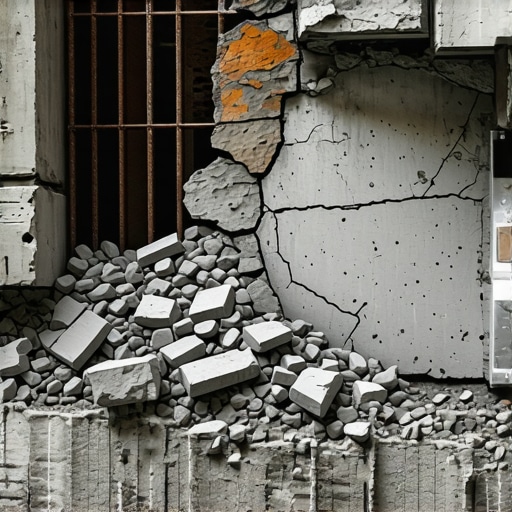
The Forensic Scene: When the Steel Turns to Dust
The homeowner thought it was just a hairline crack, a minor blemish on a twenty-year-old facade that merely needed a bit of tuck pointing services to look new again. But when I put my borescope inside that eighth-inch fissure, the light didn’t hit solid masonry. It hit a graveyard of orange flakes. The structural steel ties, the very skeleton holding that heavy brick veneer installation to the stud wall, were rusted to dust. It was a 2,000-square-foot curtain of clay waiting for a stiff breeze to turn it into a pile of rubble. This isn’t just bad luck; it’s a failure of physics, chemistry, and craftsmanship. In my forty years of swinging a hawk and mixing mud, I’ve seen more walls leaning on hope than on engineering.
The Mechanics of the Tie: A Microscopic War
Masonry is an exercise in managing gravity and moisture. A brick wall isn’t a solid block; it’s a living system that breathes, expands, and contracts. The brick tie is the invisible bridge that connects the veneer—the skin—to the structural backup. When we talk about brick veneer installation, we are talking about a system where the bricks themselves carry their own weight vertically, but they cannot resist lateral loads like wind or seismic shifts without those ties. The physics of failure usually starts with the ‘wicking’ effect. Brick is a sponge. It absorbs water through capillary action. If the air cavity behind the brick is choked with mortar droppings—a common ‘handyman special’ mistake—that moisture travels directly to the metal tie.
“Water penetration is the single greatest threat to masonry durability. Proper drainage and the integrity of the moisture barrier are paramount to preventing structural degradation.” – BIA Technical Note 7
This is where the chemistry turns ugly. When oxygen and water meet the galvanized coating of a cheap, undersized tie, the zinc sacrificial layer is eaten away. Once the bare steel is exposed, iron oxide (rust) forms. Here’s the ‘Micro-Zoom’ on the physics: rust occupies up to six times the volume of the original steel. This expansion, known as ‘oxide jacking,’ doesn’t just weaken the tie; it actually pushes the brick away from the wall, widening the crack and letting more water in. It’s a feedback loop of destruction.
Thermal Expansion and the Freeze-Thaw Trap
In the North, we fight the 9% expansion of freezing water. If your brick spalling prevention strategy isn’t up to snuff, that trapped moisture in the mortar joint freezes. In a wall with failed ties, the brick has nowhere to go but out. We see this often in brick arch restoration projects where the weight of the arch is no longer being transferred back to the frame. The arch begins to ‘kick,’ and suddenly the soldier course above the windows looks like it’s bowing. This is why stone coping installation at the top of a wall is so critical. If that coping isn’t shedding water away from the cavity, you’re essentially pouring water into the lungs of the building. The moisture eventually leads to brick spalling, where the face of the brick literally pops off because the internal pressure of the ice is greater than the tensile strength of the clay. We use self-leveling masonry lifts in modern high-rise work to try and mitigate these shifts, but in residential forensic work, we’re usually just looking at the wreckage of cold joints and poor drainage.
The Anatomy of a Foundation Failure
If the wall isn’t falling out, it’s sinking. I’ve seen foundation crack repair jobs where the contractor just smeared some epoxy on a stair-step crack and walked away. That’s like putting a band-aid on a gunshot wound. A stair-step crack follows the mud joints because the mortar is the path of least resistance, but the root cause is usually hydrostatic pressure or soil subsidence. When the earth under a footing becomes saturated, it loses its bearing capacity. We are now seeing the rise of self-healing concrete foundations, which use calcifying bacteria to bridge microscopic gaps, but for the millions of existing homes, we rely on mechanical intervention. If you don’t address the soil, the wall will continue to rotate. This rotation puts immense shear stress on the ties. A tie is designed to handle tension and compression (pulling and pushing), but it has almost zero resistance to shear (sliding). When the foundation drops an inch, it shears those rusted ties like a pair of scissors. Suddenly, the only thing holding your brick veneer installation up is the friction between the bricks and the butter on the joints. That’s a recipe for a catastrophic wall collapse.
The Restoration Reality: From Chimneys to Arches
Let’s talk about chimney interior parging. A chimney is the most exposed part of any structure, hit by wind and rain from all four sides. If the internal flue gasses are leaking through a cracked liner, the acidic condensate eats the mortar from the inside out. This is why a proper parging coat is vital—it’s a sacrificial layer of high-lime mortar that protects the structural masonry. When we do a brick arch restoration, we aren’t just replacing bricks. We’re often reinstalling the structural lintels and ties that the original builders neglected. I’ve seen ‘restoration’ experts try to hide structural issues with metallic brick colors application, thinking a fancy finish will distract the eye. It’s a joke. You can’t paint your way out of a structural tie failure.
“The stability of a masonry veneer is dependent upon the transfer of lateral loads to the backing through the use of ties. Failure to maintain these connections results in a loss of structural integrity.” – ASTM C1088 Standards
When I’m tuck pointing, I’m looking for the ‘ring.’ I tap the brick with my slicker. A solid brick with a good bond sounds like a bell. A brick with a failed tie sounds like a hollow thud. That thud is the sound of a wall that has detached from its soul.
The Fix: Engineering the Cure
So how do we fix a wall where the ties have turned to dust? You have two choices: the ‘Strip and Rebuild’ or the ‘Helical Tie Retrofit.’ The retrofit involves drilling through the mud joint into the backup stud or masonry, then spinning in a stainless steel helical tie that grips both layers. It’s surgical. We then use tuck pointing services to hide the entry points. But even the best ties won’t save a wall if the foundation crack repair wasn’t handled first. You have to stabilize the base, manage the water with proper stone coping, and ensure the brick veneer installation has adequate weep holes. Without weeps, the cavity becomes a stagnant pond, and the cycle of corrosion starts all over again. Masonry isn’t about being ‘seamless’ or ‘nestled’; it’s about acknowledging that the earth wants to reclaim your house and building something that says ‘not today.’ Do it once, do it right, or get used to the sound of falling bricks.