
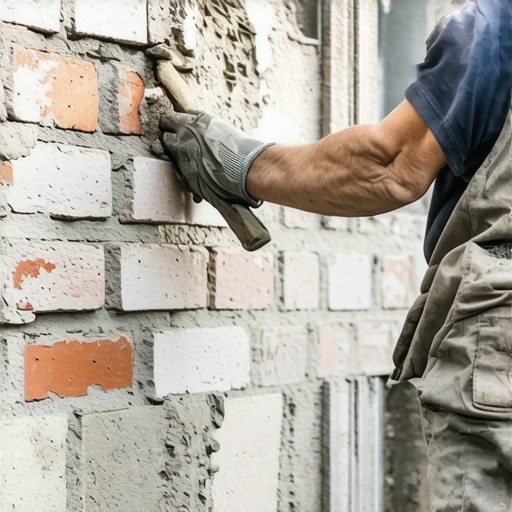
The Ghost of Mortars Past: A Forensic Look at Failing Facades
I remember my first mentor, a man who smelled eternally of tobacco and damp sand, pointing his calloused finger at a 1920s bungalow in the dead of a Chicago winter. The brickwork was weeping. Not just wet—the actual faces of the clay units were shearing off like stale pastry, littering the sidewalk in a red, dusty mess. He told me, ‘Someone tried to save this wall with a bag of modern Portland cement. They didn’t realize they were signing its death warrant.’ That was the day I learned about the sacrificial nature of masonry. When you see a wall losing its face, it is almost always because a handyman used a mortar that was harder than the brick itself. In the masonry world, we call this a lack of breathability, and in a freeze-thaw climate, it is the ultimate sin.
“Water penetration is the single greatest threat to masonry durability. Proper selection of mortar and joint profiles is critical to ensuring the longevity of the structural assembly.” – BIA Technical Note 7
The Physics of the Freeze: Why Your Brick is Exploding
To understand why your home needs full repointing services or specialized tuckpointing, you have to understand the microscopic war happening inside the wall. If you live in a region where the temperature swings across the freezing mark, you are dealing with the expansion of water. When liquid water enters a masonry joint and freezes, it expands by approximately 9% in volume. In a wall built with sustainable tuckpointing mortars—typically lime-based—the mortar is porous enough to allow that moisture to migrate out and evaporate. However, modern high-strength high-performance mortar mixes (like Type S or M) create a vapor barrier. When that water can’t escape through the ‘mud,’ it gets trapped behind the face of the brick. When it freezes, the pressure is exerted outward, popping the face of the brick off in a process we call spalling. This isn’t just an aesthetic issue; it is a structural failure of the building envelope.
Tuckpointing vs. Repointing: The Expert Distinction
People use these terms interchangeably, but they are as different as a structural weld and a paint job. Repointing is the process of grinding out the old, failing mortar to a specific depth (usually twice the width of the joint) and injecting new mud into the void. Tuckpointing, however, is an aesthetic craft designed to mimic the appearance of expensive gauged brickwork. It involves using two different colors of mortar—one that matches the brick and a thin, contrasting ‘fillet’ or ‘bead’ that creates a perfectly straight line. When we perform brickwork pointing styles such as the weather joint or the grapevine joint, we are manipulating how water sheds off the wall. A poorly struck joint, like a ‘recessed’ joint in a rainy climate, is just a shelf for ice to sit on. As a forensic inspector, the first thing I look at is the profile of the joint. If the slicker didn’t create a proper ‘tooth’ or seal against the brick edge, that wall is destined for structural brick ties replacement within a decade because the internal framing will eventually rot from the inside out.
“The mortar should always be weaker than the masonry units it binds, acting as a sacrificial element that accommodates movement and moisture.” – ASTM C270 Standards
The Micro-Chemistry of Lime and Carbonation
Modern cement cures through hydration—a chemical reaction that happens fast and stays hard. Historic lime mortar, however, cures through carbonation. It absorbs CO2 from the atmosphere over months and years, slowly turning back into limestone. This ‘slow-set’ is what allows old buildings to move and settle without cracking. When we talk about sustainable tuckpointing mortars, we are looking for that autogenous healing property. If a micro-crack develops in a lime joint, rainwater can actually dissolve some of the free lime and redeposit it into the crack, effectively ‘healing’ the wall. You don’t get that with a $5 bag of premix from the big-box store. Using the wrong mud on an old wall is like putting a ceramic plate in a sandwich; one is flexible, the other is brittle, and when the sandwich bends, the plate shatters.
Chimneys: The Vertical Battlefield
The most abused part of any masonry structure is the chimney. It is attacked by acid rain from the outside and thermal shock from the inside. A chimney crown repair is often the first line of defense, but many contractors just smear a thin layer of mortar on top and call it a day. A real crown needs a drip edge and a bond break. When the heat from the fireplace rises, the masonry expands. Without a chimney heat shield installation or proper chimney structural repair, the expansion cracks the flue liners. We are now seeing the rise of robotic masonry repair and 3D printed masonry repairs to reline these structures where human hands can’t reach, but the fundamentals remain the same: you must manage the heat and the moisture. If the crown is cracked, water runs down the interior of the brickwork, rusting out the structural brick ties replacement and causing the entire stack to lean. It’s not just a masonry problem; it’s a gravity problem.
Modern Innovations: Robots and 3D Printing in Masonry
We are entering a strange new era where the ‘old world’ meets the ‘new world.’ While I value the hawk and trowel, robotic masonry repair is becoming essential for stabilizing high-rise facades where the cost of scaffolding is prohibitive. These units can grind out joints with sub-millimeter precision, ensuring no damage to the ‘skin’ of the brick. Similarly, 3D printed masonry repairs allow us to recreate custom-shaped bricks or ornaments that haven’t been manufactured since the 19th century. We can scan a crumbling gargoyle or a unique soldier course and print a replacement that matches the original density and porosity. But even with a robot, you still need a master mason to mix the mud. If the chemistry of the repair material doesn’t match the host wall, the robot is just helping the building fail faster.
The Forensic Inspection: When to Call the Pros
If you see ‘stair-step’ cracking, don’t just butter over it with some caulk. That is a ‘handyman special’ that hides a foundation issue. Stair-step cracks in the mortar joints usually indicate settlement. If the crack goes through the brick itself, you have a structural shear. This is where we look at full repointing services combined with helical piers or structural reinforcement. Masonry is incredibly strong in compression but weak in tension. The moment your wall starts to pull apart, the mortar joints are the first to tell the story. Listen to them. Look for ‘honeycombing’ in the joints—those tiny holes where the mud didn’t pack in tight. That’s a gateway for insects and water. A proper mason uses a ‘slicker’ to pack the joint so tight it rings when you tap it. That’s the sound of a wall that will last another hundred years.