
The Forensic Eye: What the Storm Left Behind
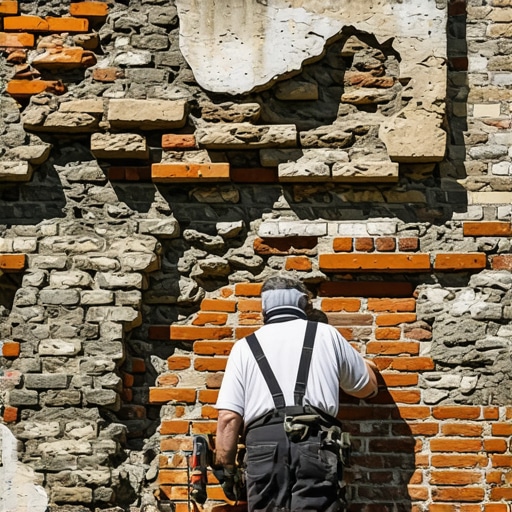
The sky had turned the color of a bruised plum, and by the time I arrived at the estate on the coast, the wind-driven rain had already done its work. The homeowner pointed at a small, dark patch of dampness on the interior plaster, barely the size of a dinner plate. He thought it was a roofing issue. But when I pulled out the borescope and looked behind the brick infill panel repair that a ‘handyman’ had performed the previous year, the reality was much darker. The structural steel lintel was so heavily oxidized it looked like flaky pastry, and the insulation was a sodden mess of black mold. This wasn’t a roof leak; it was a systemic failure of the masonry envelope. Most people see a wall as a solid object. I see it as a complex, breathing machine that either manages water or is destroyed by it.
“Water penetration is the single greatest threat to masonry durability. Moisture can enter masonry through various pathways, including gravity, capillary suction, and wind pressure.” – BIA Technical Note 7
The Physics of the Breach: Capillary Suction and Wind Loads
When a storm hits, the masonry isn’t just getting wet; it is being subjected to dynamic pressures that most modern builders fail to calculate. Let’s talk about the ‘tooth’ of the mortar. When we talk about historic brickwork repointing, we aren’t just scraping out old mud and slapping in new. We are managing the physics of the wall. Old-growth brick—the kind fired in coal kilns 100 years ago—has a high initial rate of suction. If you use a high-strength Portland cement on these soft units, you’re signing a death warrant for the facade. The cement is too dense, trapping water inside the brick. When the temperature drops and that water expands by 9%, it doesn’t push against the hard cement; it blows the face off the brick. This is what we call spalling, and it’s a preventable tragedy.
Chimney Dynamics: The House’s Exhaust Pipe
The chimney is the most exposed part of any structure, taking a beating from 360 degrees. Most leaks start at the top. A chimney cap replacement isn’t a luxury; it’s the first line of defense. I’ve seen ‘caps’ made of a thin smear of mortar that cracked within six months. A real cap should be a reinforced concrete slab with a drip edge that sheds water away from the brickwork. If the cap is compromised, water migrates down the flue, leading to the necessity of a chimney flue liner installation. When water mixes with the creosote and soot inside a chimney, it creates a weak sulfuric acid that eats the mortar from the inside out. You won’t see it until the brick arch restoration over your fireplace starts to sag because the internal wythes have turned to dust.
The Art and Science of the Joint
To fix a storm-damaged wall, you have to understand the ‘mud.’ I’ve watched guys try tuckpointing curved walls using a standard bag of Type S from a big-box store. It makes me sick. On a curved surface, the stress distribution is uneven. You need a mix with high lime content for autogenous healing—the ability of the mortar to actually reseal micro-cracks over time. We use a hawk and trowel to press the mortar in layers, ensuring there are no voids. If you leave a void, you’ve created a reservoir for water to sit and fester. When we are buttering the head joints for a brick quoin repair, we ensure 100% coverage. A ‘hollow’ joint is just a straw for wind-driven rain to suck moisture into the wall cavity.
“The mortar should always be weaker than the masonry units so that any cracks occur in the mortar joints, which are easier to repair than the units themselves.” – ASTM C270 Standard Specification for Mortar
Modern Tech vs. Old World Craft
I’m a traditionalist, but I’m not a fool. The industry is changing. Robotic masonry repair is starting to show promise for large-scale industrial projects where consistency is king. These machines can grind out joints with a precision that a tired apprentice can’t match after eight hours on a scaffold. However, a robot doesn’t know the smell of a ‘burned’ batch of mortar that’s sat too long in the sun. It doesn’t understand the nuance of sustainable masonry materials like hemp-lime or recycled brick dust. For a modular retaining wall, modern engineering is great, but for a 19th-century facade, you need a human hand. You need someone who knows how to use a slicker to strike a joint so it sheds water like a duck’s back.
The Restoration Checklist: A Forensic Approach
- The Visual Scan: Look for efflorescence—that white, salty powder. It’s the wall’s way of crying. It means water is moving through the masonry and bringing salts to the surface.
- The Percussion Test: Take a small hammer and tap the bricks. A solid brick ‘rings.’ A blown or delaminated brick sounds like a dull thud. This is essential for brick quoin repair.
- Flashing and Weeps: If your wall doesn’t have weep holes at the base, the water that gets in has no way out. It’s like a bathtub with no drain.
- The Capillary Break: Ensure that any modular retaining walls have a proper gravel backfill and drainage tile. Hydrostatic pressure can move a wall weighing twenty tons if the water has nowhere to go.
Final Warning for Homeowners
Don’t fall for the ‘lick-and-stick’ stone veneer craze. These systems are notorious for trapping moisture against the sheathing, leading to structural rot that can cost six figures to remediate. If you’ve had storm damage, don’t just patch the surface. Hire someone who understands the chemistry of the stone and the physics of the wind. A soldier course that isn’t properly flashed is just a shelf for water. Do it once, do it right, or be prepared to do it again when the next storm rolls in. Masonry is meant to last centuries, not seasons. Protect the ‘tooth’ of your building, and it will protect you.