
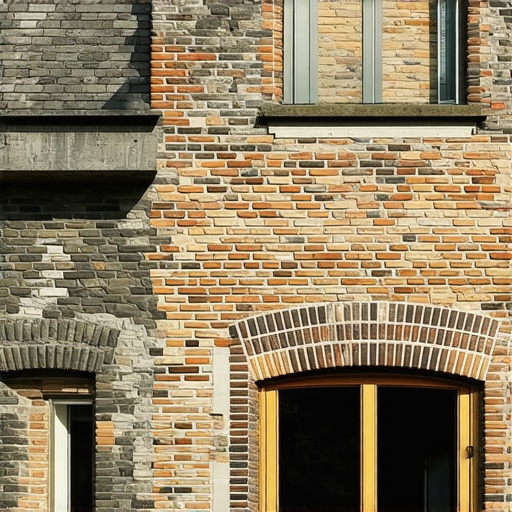
I remember my uncle standing on a rickety scaffold in the late 70s, holding a salvaged 1890s clay brick he’d pulled from a demo site. He didn’t just look at it; he licked it. He wanted to feel the suction. If that brick pulled the moisture off his tongue like a sponge, he knew the mud he was mixing had to be loose and rich. He taught me that a wall isn’t a static object; it’s a living, breathing lung. If you choke it with the wrong materials, you’re not just doing a bad job—you’re committing architectural murder. I’ve spent thirty years performing autopsies on buildings that were ‘restored’ by guys who think a bag of Type S Portland cement from a big-box store is the answer to everything. It’s not. When we talk about 19th-century masonry, we are talking about a delicate balance of physics and chemistry that modern ‘lick-and-stick’ contractors simply don’t grasp.
The Physics of the Sacrificial Lamb
The fundamental rule of historic masonry is that the mortar must be the sacrificial lamb. In a 19th-century wall, the bricks were fired at lower temperatures than modern units, making them softer and more porous. The mortar was never meant to be a structural glue; it was a gasket. It’s designed to be softer and more permeable than the brick itself. When the building shifts—and all buildings shift—the soft lime mortar compresses and moves. When moisture gets into the wall, it needs a way out. In a lime-based system, the water travels through the mortar joints and evaporates. This is what we call breathability.
“Mortar should always be weaker than the masonry units so that any stress-induced cracking occurs in the mortar joints, which are easier to repair than the units themselves.” – BIA Technical Note 2
When a handyman performs a masonry damage assessment on a Victorian home and recommends modern Portland cement, he is signing the building’s death warrant. Portland cement is dense, rigid, and waterproof. When the temperature drops and the freeze-thaw cycle kicks in, the water trapped behind that hard cement has nowhere to go. Because water expands by 9% when it freezes, and the cement won’t budge, the pressure is directed inward, blowing the face off the historic brick. That’s called spalling. I’ve seen 140-year-old facades reduced to orange dust in five years because someone used the wrong mud. This is why a proper tuckpointing cost estimation for a historic property must include the labor-intensive process of hand-raking joints rather than using a grinder, which can easily scar the soft edges of old clay.
The Micro-Zoom: Chemical Carbonation vs. Crystalline Hydration
Let’s talk chemistry. Modern Portland cement sets through a process called hydration—a rapid chemical reaction that forms a hard crystalline structure within hours. It’s fast, it’s cheap, and it’s brittle. Pure lime mortar (Non-hydraulic lime) is a different beast entirely. It sets through carbonation. As the water evaporates, the lime (calcium hydroxide) absorbs carbon dioxide from the atmosphere to revert back into calcium carbonate—essentially, it turns back into limestone over months and years. This process creates a pore structure that is significantly larger and more interconnected than Portland cement. This is why lime is the king of sustainable tuckpointing mortars; it has a low carbon footprint and actually re-absorbs CO2 as it cures. Furthermore, lime mortar has a ‘self-healing’ property. When microscopic cracks form due to settlement, the presence of water can dissolve free lime within the joint and redeposit it into the crack, effectively sealing it. You won’t get that from a brick veneer detachment repair kit or advanced masonry adhesives.
The Craft of the Joint
When we provide mortar matching services, we aren’t just looking at color; we’re looking at the aggregate. If you look at a 19th-century joint under a loop, you’ll see sharp sand, bits of unburnt lime, and sometimes even animal hair or oyster shells. To replicate this, we have to source specific sands that match the ‘tooth’ of the original. Using a slicker to strike a joint isn’t just about aesthetics; it’s about compacting the face of the mud to ensure proper shedding of water. If the homeowner is worried about the look of new repairs, masonry staining can be used to blend the new work with the aged patina, but the chemistry of the mortar underneath must remain authentic. This same attention to detail applies to the roofline; a chimney cap replacement on a historic stack requires a lime-wash or a lead-coated copper flashing that won’t react chemically with the soft masonry. Even when we are asked to do modern additions, like an outdoor kitchen masonry build on a historic patio, we have to consider how the new structure interacts with the old foundation to prevent differential settlement.
The Reality of Restoration
I often see spalled concrete steps repair projects where the contractor tried to use high-strength epoxy to bond new concrete to old lime-based foundations. It never works. The hard material eventually shears off, taking a chunk of the original stone with it. You have to respect the hierarchy of hardness. If you’re a homeowner looking at a stair-step crack in your 1890s basement, don’t let someone sell you on a quick fix. You need a forensic approach. You need to understand why the wall is moving and ensure that any repair allows the masonry to continue its century-long dance with the elements. Anything less is just a coat of paint on a crumbling corpse.
“The use of mortar containing high proportions of Portland cement is the primary cause of damage to historic brickwork.” – ASTM C270 Standards Commentary
The Final Verdict
Preserving a 19th-century building is an act of stewardship. It’s about understanding that the craftsmen who came before us didn’t have power tools, but they had a master-level understanding of material science. When you choose lime, you aren’t just choosing an old-fashioned method; you’re choosing the only material that is physically compatible with the heritage of your home. Do it once, do it right, or you’ll be doing it again when the bricks start falling like autumn leaves.