
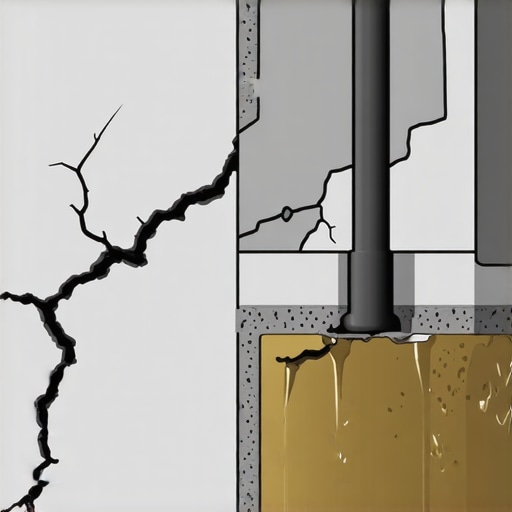
The Horizontal Death Line: Reading the Language of Failing Walls
When I walk into a damp basement, I don’t look at the water heaters or the laundry machines. I look for the ‘line.’ Usually, it sits about four feet off the slab—a long, jagged horizontal fracture that runs the length of the wall. That line is a scream in slow motion. It tells me the earth outside is trying to move into the living room. Most homeowners think walls are static, but as a third-generation mason, I know they are under constant siege. In this forensic breakdown, we are going to look at why these walls buckle and how we stop the physics of collapse before the house becomes a pile of rubble.
The Forensic Scene: More Than a Hairline
The homeowner thought it was just a hairline crack. But when I put my scope inside, I saw the structural steel was rusted to dust. They’d spent five years painting over a horizontal gap in the cinder block, thinking they were ‘maintaining’ the home. In reality, every time it rained, the hydrostatic pressure outside was shoving those blocks inward. By the time I arrived, the wall was three inches out of plumb. The mortar joints had turned to a sandy powder, and the vertical rebar—the very skeleton of the foundation—had been oxidized by moisture until it was nothing more than an orange stain on the concrete. This wasn’t a cosmetic fix; this was a structural emergency.
“Hydrostatic pressure is the resultant of the weight of water acting on the wall… it can exert hundreds of pounds of pressure per square foot against a foundation.” – ASTM D653 Standards on Soil and Rock
The Geotechnical Enemy: The Expansion of Clay
If you live in a region with heavy clay soil and a brutal freeze-thaw cycle, your foundation is essentially sitting inside a giant sponge. When clay gets wet, its volume increases exponentially. The water molecules wedge themselves between the clay platelets, causing the soil to heave. If that water freezes, it expands by another 9%, creating a ‘frost heave’ that can snap a concrete wall like a dry twig. This isn’t just a basement issue; it often starts outside with a failing brick patio. Poor brick patio restoration or neglected drainage allows water to pool right against the foundation. Instead of the water running away, it saturates the ‘overcut’—the loose soil used to backfill the foundation during construction. This creates a vertical column of water that exerts massive lateral force. This is why tuckpointing weatherproofing is not just for aesthetics; it’s the first line of defense in keeping the exterior envelope of your home dry.
The Mechanics of the Bow: Stair-Step vs. Horizontal
Not all cracks are created equal. Vertical cracks are often just settlement—the house finding its seat. But a horizontal crack in the middle of a block wall means the wall is bowing. This is a structural failure. When we see this, we look at the ‘tooth’ of the masonry. Does the mortar still have a grip, or has the ‘suction’ of the block pulled the moisture out of the mud too fast during the original build, leaving a weak bond? In many 1970s builds, contractors used a ‘handyman special’ approach, failing to fill the cores of the blocks with grout. Without that internal strength, the wall acts like a stack of loose bricks rather than a monolithic structure. To fix this, we often look toward foundation underpinning to stabilize the base before we even think about straightening the wall.
Professional Masonry Restoration: The Art of the Mud
Stopping the movement requires more than just a bucket of cement. You need high-performance mortar mixes that respect the material they are bonding to. If I’m working on a pre-1940s home, I’m looking for historic brick salvage to match the original soft-fired units. You cannot slap modern Portland cement onto old, soft brick; the cement is too hard. When the house breathes, the hard cement will stay rigid while the soft brick tries to expand, and the brick face will pop off in a process called spalling. For these jobs, re-pointing services must use Type O or Type N lime-based mortars. We ‘butter’ the brick carefully, ensuring the ‘mud’ has the right consistency—thick enough to hold on the ‘hawk’ but plastic enough to fill the void. This ‘sacrificial’ mortar is designed to weather so the brick doesn’t have to.
Advanced Solutions: From Birdsmouth Cuts to Helical Piers
When the bow is significant, we have to fight physics with physics. This might involve installing carbon fiber straps or steel I-beams. But we also have to manage the moisture that started the problem. We use masonry birdsmouth cuts in the lower courses to allow for ‘weep holes,’ giving trapped water an escape route. On the exterior, flush pointing services or tuckpointing brick walls with a proper ‘slicker’ tool ensures that rainwater sheds off the wall rather than sitting on a ledge and soaking in. If the soil has completely failed, we resort to helical piers—massive steel screws that go deep into the earth to find stable, non-expansive soil. It’s the difference between a ‘Band-Aid’ repair and a permanent cure.
“Water penetration is the single greatest threat to masonry durability. A wall that cannot breathe or drain is a wall that will eventually fail.” – BIA Technical Note 7 on Water Resistance
The Siding Scam and the Lick-and-Stick Fallacy
I see it every day: a homeowner sees a crack and covers it with vinyl siding or ‘lick-and-stick’ stone veneer. This is a death sentence for a foundation. You are trapping moisture against the masonry, preventing the natural ‘breathability’ required for longevity. True professional masonry restoration involves stripping back these shortcuts and getting down to the ‘cold joint’—the place where the new work meets the old. We look for ‘honeycombing’ in the concrete—voids where the aggregate didn’t settle—and we fill those with high-pressure epoxy before the wall can move another millimeter. Don’t be fooled by a ‘soldier course’ of bricks that looks pretty on the outside while the foundation behind it is buckling. If you don’t address the hydrostatic pressure and the soil chemistry, you’re just decorating a disaster.
The Final Word: Do It Once or Do It Twice
A bowing wall doesn’t get better with age. It doesn’t stabilize on its own. Every rain cycle, every freeze, and every summer drought adds another pound of pressure to that horizontal line. Whether you need re-pointing services to stop water ingress or full-scale foundation underpinning, the goal is the same: restore the structural integrity of the home. I’ve seen houses that stood for 200 years because they were built with lime and care, and I’ve seen five-year-old ‘builder grade’ foundations crumble because the ‘mud’ was too thin and the drainage was non-existent. You can pay for the right fix now, or you can pay for a new house later. The choice is usually written on your basement wall in the language of cracks and salt deposits. Listen to what the stone is telling you.