
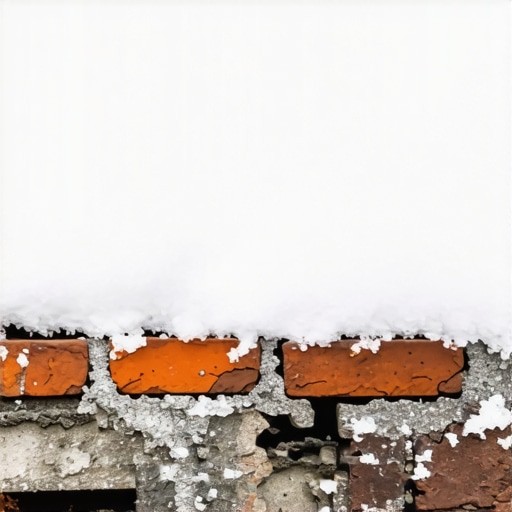
I remember my mentor, a man who had more lime in his lungs than blood in his veins, grabbing a handful of ‘shale’ from the foot of a 100-year-old Victorian. He didn’t just look at it; he smelled it. It was damp, sour, and tasted of salt. That orange dust wasn’t just debris; it was the skin of the building falling off in a silent scream. If your brickwork is shedding layers like an onion, you aren’t looking at a cosmetic blemish—you are witnessing a structural suicide pact between your mortar and the atmospheric moisture. This is the reality of spalling, and if you don’t intervene before the first frost hits, your facade will be a pile of rubble by March.
The Physics of the Explosion: Why Bricks Pop
To understand why you need masonry repair services, you have to understand the microscopic war happening inside your walls. Brick is essentially a ceramic sponge. It is riddled with a network of pores and capillaries. In a healthy system, water enters these pores and then evaporates back out through a breathable mortar joint. But when a ‘handyman’ decides to slap some high-strength, impermeable Portland cement over a soft clay brick, he creates a tomb. This leads to what we call sub-fluorescence. Salts crystallize just beneath the surface of the brick instead of on it.
“Water penetration is the single greatest threat to masonry durability. When liquid water trapped within a masonry unit undergoes a phase change to ice, it expands by approximately 9 percent, generating internal pressures that can exceed the tensile strength of the clay body.” – BIA Technical Note 7
This internal pressure is an irresistible force. When the freeze-thaw cycle kicks in, that 9% expansion doesn’t care about your curb appeal. It pushes the face of the brick right off, leaving a soft, vulnerable core exposed to the elements. This is why a retaining wall capstone replacement is often the first line of defense; if the ‘umbrella’ of the wall fails, the entire structure is force-fed water from the top down.
The Forensic Diagnosis: Identifying the Victim
Before you mix a single bucket of mud, you need to identify the ‘Type’ of failure. Are we looking at foundation crack repair needs or localized spalling? Walk the perimeter. Look at the soldier course—those bricks standing vertically over your windows. If they are tilting or the mortar is missing, you likely have a brick lintel replacement issue. The steel angle iron behind them is rusting, expanding, and ‘jacking’ the masonry apart. If the damage is at the ground level, you’re dealing with ‘rising damp.’ Ground salts are being sucked up into the brickwork, and as they dry, they explode the pores. If you see white, fuzzy powder, that’s efflorescence. It’s a warning. If you see chunks of brick on the lawn, the warning period is over. This is when emergency masonry repair becomes the only option to save the structural integrity of the wall.
The Restoration Reality: Why ‘Harder’ Isn’t Better
The biggest mistake in modern masonry is the obsession with strength. In the world of mortar repointing services, hardness is the enemy of longevity. Historical masonry relies on the sacrificial principle. The mortar must be softer and more vapor-permeable than the brick. If the wall moves—and it will—the mortar should crack, not the brick. If the wall gets wet, the water should evaporate through the mortar, not the brick. When you use a modern Type S mortar on a pre-war home, you are essentially welding a delicate antique with a structural steel beam. It will shatter. For true restoration, we use Type O or even pure lime putty. We ‘butter’ the joints with a precision that ensures no voids are left behind.
“The mortar should always be weaker than the masonry units it binds to ensure that any stress or movement is absorbed by the easily replaceable mortar joints rather than the masonry units themselves.” – ASTM C270 Standards
This isn’t just theory; it’s the law of the trowel.
Micro-Zooming into the Repair Process
To fix a spalling wall before winter, we start by ‘grinding out.’ We don’t just scratch the surface; we take the joint back at least 3/4 of an inch, or until we hit sound mud. We use a hawk and a slicker to pack the new mortar in ‘lifts.’ If you fill a deep void in one go, you get shrinkage cracks. You pack a layer, let it ‘thumb-print’ hard, then pack the next. This ensures a dense, water-resistant barrier. If we are working on a chimney heat shield installation or a chimney crown repair, we are looking at the most extreme environment a brick can endure. The thermal shock of a fireplace combined with the freezing exterior air is a recipe for disaster. We ensure the crown has a ‘drip edge’ so water can’t run down the face of the chimney. For an outdoor kitchen masonry build, we pay special attention to the tile grouts on masonry; these are often the weak points where water ingress begins.
Hardscape and Flatwork: The Horizontal Battle
Spalling doesn’t just happen on walls. Your concrete flatwork services need to account for the same physics. If a driveway or patio wasn’t poured with ‘air-entrained’ concrete, the microscopic bubbles that act as ‘expansion tanks’ for freezing water aren’t there. The surface will ‘pit’ and ‘scale’ just like a brick. This is often exacerbated by salt. Salt doesn’t just melt ice; it increases the number of freeze-thaw cycles the concrete experiences in a single day. If you have a ‘cold joint’—where new concrete was poured against old without a proper bonding agent—water will find that seam, freeze, and heave the entire slab. It’s the same reason retaining wall capstone replacement is critical; if the horizontal surface of a wall isn’t sealed and sloped, the vertical surface is doomed.
The Master’s Close: Do It Once or Do It Twice
You can hire a guy with a bucket of ‘Lanco’ from a big-box store to patch your cracks, but you’ll be calling me back in two years when the patches fall out and take more of your brick with them. Masonry is about managing moisture, not fighting it. It’s about understanding the ‘tooth’ of the stone and the ‘suction’ of the clay. When we perform mortar repointing services, we aren’t just making it look pretty; we are restoring the building’s ability to breathe. Don’t wait for the first blizzard to realize your home’s skin is failing. Fix the drainage, replace the rusted lintels, and get the right mud in the joints now. Do it once, or do it twice—the choice is usually written in the dust on your sidewalk.”,”image”:{“imagePrompt”:”A gritty, high-contrast close-up photo of a master mason’s weathered hands using a pointed trowel to ‘butter’ a soft lime mortar into a deep joint of an old, red brick wall that shows signs of surface spalling and orange dust. The lighting is low-angle to highlight the texture of the brick and the grit of the mortar.”,”imageTitle”:”Master Mason Repointing Spalling Brick”,”imageAlt”:”A close up of a mason repairing spalling brickwork with fresh mortar”},”categoryId”:0,”postTime”:””} rolls=””