
The Invisible Decay of the Vertical Landscape
The homeowner or property manager looks up at a twenty-story commercial tower and sees a solid wall of shale and clay. I look at it and see a ticking clock. Ten years ago, I stood on a suspended scaffold outside a historic Chicago landmark, my boots vibrating from the wind, looking at what the owner thought was just a hairline crack. But when I put my scope into the weep hole, I saw the structural steel angle was rusted to dust, expanding with enough force to lift a ten-ton section of the facade. The building wasn’t just old; it was exfoliating its own skin. This is the reality of commercial masonry facade maintenance: by the time a human eye sees the failure from the ground, the danger is already critical.
The Failure of the Naked Eye and the Rise of AI
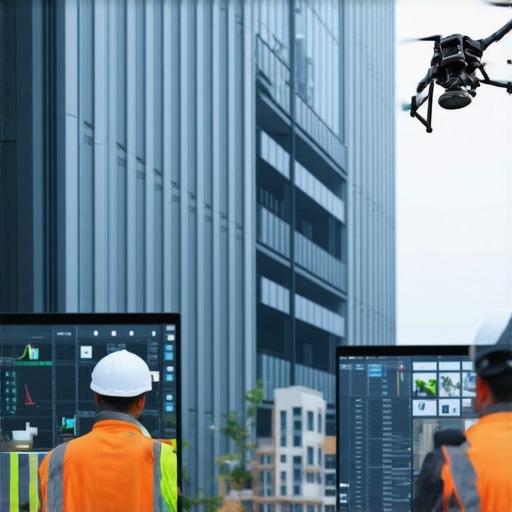
Traditional inspections rely on a guy like me sitting in a swing stage, tapping on bricks with a hammer to hear if they ‘ring.’ If the brick sounds hollow, the bond is gone. But on a building with 500,000 bricks, the margin for error is massive. This is where masonry damage assessment is shifting from tactile intuition to algorithmic precision. AI-driven drones equipped with high-resolution photogrammetry and thermal imaging can now map every square inch of a facade, detecting efflorescence—that white, salty bleed—before it becomes a full-blown spalling event. This isn’t about replacing the mason; it’s about giving us the map before we pick up the slicker.
“Water penetration is the single greatest threat to masonry durability.” – BIA Technical Note 7
The Chemistry of the Wall: Why Mortar Fails
To understand why we need AI, you have to understand the ‘mud.’ Modern high-performance mortar mixes are engineered for specific compressive strengths, but if you slap a high-cement Type M mortar onto a 100-year-old wall, you’ve just signed a death warrant for the brick. Historic brick salvage projects require a ‘sacrificial’ mortar—something softer than the brick itself. When the building moves, the mortar should crack, not the brick. AI-driven thermal sensors can detect where the mortar has lost its ‘suction,’ indicating that the internal moisture is trapped. In Northern climates, this is lethal. When water gets behind a hard, non-breathable joint, it undergoes the freeze-thaw cycle. Water expands 9% in volume when it turns to ice. That internal pressure blows the face off the brick, a process we call spalling. Commercial tuckpointing isn’t just about making it look pretty; it’s about restoring the building’s ability to breathe.
Micro-Zoom: The Physics of Thermal Expansion
Large buildings are living organisms. They expand in the morning sun and contract in the evening chill. Without proper expansion joints, the wall will ‘shelf,’ pushing bricks out at the corners. AI algorithms can track these minute movements over time, identifying where retaining wall reinforcement or lateral ties are failing. We’re looking for ‘shear’—diagonal cracks that suggest the foundation is heaving or the lintels are bowing. When we perform chimney rebuild services on a commercial scale, we see the worst of it: sulfuric acid from boiler exhaust eating the tile grouts on masonry from the inside out. AI can spot the ‘hot spots’ on a chimney stack that indicate the liner has breached, long before the exterior brickwork crumbles.
The Solution: Sealants and Metallic Finishes
Once the masonry damage assessment is complete, the intervention begins. We use brickwork sealants application to create a silane-siloxane barrier that is vapor-permeable but liquid-repellent. It’s like a Gore-Tex jacket for a skyscraper. For modern builds, we’re even seeing metallic brick colors application, which uses mineral-based stains that chemically bond to the clay, providing an industrial aesthetic without compromising the ‘tooth’ of the substrate. This isn’t the ‘lick-and-stick’ veneer you see on suburban strip malls; this is forensic-grade restoration.
“The selection of mortar should be based on the properties of the masonry unit and the environmental exposure.” – ASTM C270 Standard Specification for Mortar
The Hard Truth of Modern Maintenance
If you wait until you see a brick on the sidewalk, you’re too late. The cost of emergency stabilization is ten times the cost of predictive maintenance. By using AI to guide our commercial tuckpointing and structural repairs, we move away from ‘guessing’ and toward ‘knowing.’ We can identify which historic brick salvage units are still viable and which have been ‘burned’ by improper past repairs. We look for ‘honeycombing’ in the concrete backing and ‘cold joints’ where the original pour failed. It’s a gritty, dusty business, but the tech is making it a science. Do it once, or do it twice—the choice usually comes down to whether you’re willing to look at the data before the wall looks back at you from the ground.
[{“@context”:”https://schema.org”,”@type”:”HowTo”,”name”:”How to Perform an AI-Driven Masonry Inspection”,”step”:[{“@type”:”HowToStep”,”text”:”Deploy autonomous drones equipped with 4K LiDAR and thermal imaging to scan the entire facade.” council},{“@type”:”HowToStep”,”text”:”Process the photogrammetry data through an AI model trained to recognize spalling, efflorescence, and stair-step cracking.”},{“@type”:”HowToStep”,”text”:”Generate a heat map of moisture intrusion to prioritize commercial tuckpointing areas.”}]}]