
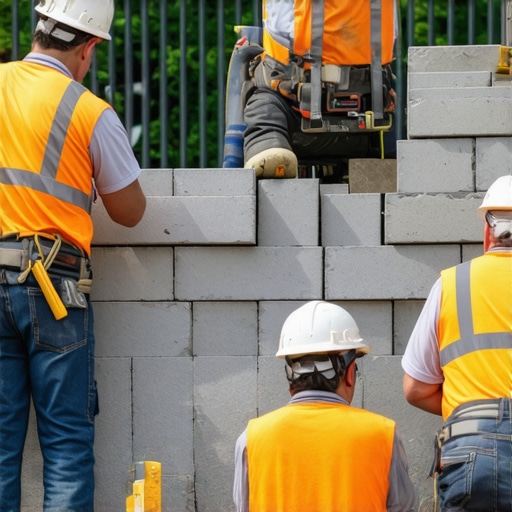
The Forensic Scene: A Ghost in the Wall
The call came in on a Tuesday. The homeowner claimed they had a minor issue with a ‘hairline crack’ in a second-story brick arch restoration project that had been completed by a cut-rate contractor only three years prior. When I arrived, the air smelled of stale lime and trapped dampness. I didn’t just look at the crack; I pulled out the fiber-optic scope and threaded it into a weep hole. What I saw wasn’t just a gap. The structural steel lintel was so choked with rust that it had expanded to twice its original thickness. The ‘minor crack’ was actually the entire facade being jacked upward by the force of oxidizing iron. This is the reality of modern masonry: if you don’t understand the chemistry of what’s happening behind the veneer, the building is essentially a ticking time bomb. This isn’t about stacking blocks; it’s about managing the violent forces of physics and thermal expansion that most people ignore until the wall is in the yard.
The Physics of the Freeze-Thaw Cycle
In our northern climate, we are locked in a perpetual war with water. When we talk about modular masonry damage assessment, we have to talk about the 9% expansion of water. When liquid water penetrates a brick and then freezes, it exerts upwards of 30,000 psi of internal pressure. If your mason used a high-strength Portland cement on old, soft-fired bricks, those bricks are going to lose the fight. The face of the brick will simply pop off—a process we call spalling. For brick column repair or brick arch restoration, we must use a mortar that is ‘sacrificial.’ The mortar must be softer than the brick so that the pressure is relieved through the mud, not the stone. This is why we micro-zoom into the ‘Initial Rate of Absorption’ (IRA). We test how thirsty the brick is. If a brick is too dry, it will suck the moisture out of your buttered joint before the bond can form, leading to a ‘flash set’ that will crumble under the first heavy frost.
“Water penetration is the single greatest threat to masonry durability.” – BIA Technical Note 7
The Anatomy of Foundation Failure: Soil vs. Structure
A concrete block foundation repair isn’t just about patching a hole; it’s about understanding the geotechnical nightmare occurring on the other side of the wall. Hydrostatic pressure—the weight of water-saturated soil pushing against the masonry—is a silent killer. In many cases, we see stair-step cracks that indicate the foundation is settling at different rates. This is where foundation underpinning becomes the only surgical solution. We aren’t just putting a Band-Aid on the crack; we are driving steel piers deep into the load-bearing strata of the earth to stabilize the entire structure. Contrast this with foundation slab jacking, where we inject a high-density polymer or grout under a sunken slab to lift it back to its original grade. The physics here are simple but unforgiving: you either support the weight from below or the earth will eventually swallow it. [IMAGE_PLACEHOLDER_1]
The Modular Retaining Wall: Gravity and Drainage
Modern modular retaining walls are often marketed as ‘DIY-friendly,’ which is a recipe for disaster. I’ve seen 10-foot walls built without a single ounce of geogrid or proper drainage stone. Without a ‘chimney’ of clean gravel behind the wall and a functional perforated drain pipe, the wall becomes a dam. Water collects, the soil becomes a liquid slurry, and the entire mass pushes the wall forward. Patio stone realignment often reveals the same failure: a base that was too thin or lacked proper compaction. If you don’t have eight inches of compacted 3/4-minus gravel under those pavers, the frost will heave them into a wavy mess within two seasons. A master mason knows that the work you don’t see—the base and the drainage—is ten times more important than the pattern on the surface.
Chimney Leak Detection: The Silent Infiltrator
A chimney is the most exposed part of any building. It takes a beating from every direction. Most homeowners call for chimney leak detection when they see a brown stain on their ceiling, but by then, the damage is internal. The flue liners are often cracked, or the ‘wash’ (the concrete cap on top) has shrunken and separated from the brick. We look for ‘honeycombing’ in the mortar joints—places where the mud has washed away, leaving deep voids. In emergency masonry repair, we often find that the ‘lead flashing’ was never properly ‘let into’ the mortar joint, but was instead just caulked on. Caulk is a four-letter word in professional masonry. It fails in the sun, it peels in the cold, and it traps moisture where it shouldn’t be.
“Mortar should be weaker than the masonry units it binds to ensure that any stress-induced cracking occurs in the mortar joints, which are easier to repair.” – ASTM C270 Standard Specification for Mortar for Unit Masonry
The Artisan’s Toolset: Beyond the Trowel
Watching a hack work is painful. They use a grinder like a chainsaw, scarring the brick and creating clouds of silica dust that would choke a mule. A master uses a ‘slicker’ to strike the joint at exactly the right moment of the set—when the mud is ‘thumb-print hard.’ This compacts the mortar against the ‘tooth’ of the brick, creating a weather-tight seal. We use a ‘hawk’ to hold our mud and we ‘butter’ the soldier course with a precision that comes only from decades of muscle memory. If you see a contractor ‘tuckpointing’ by just smearing new mud over old, failing joints, fire them on the spot. That is a ‘cosmetic’ fix that will fail within a year. Real repointing requires grinding out the old mortar to a depth of at least 3/4 of an inch, cleaning the joint, and then hand-packing the new material in layers.
The Final Word on Masonry Longevity
Masonry is meant to last centuries, not decades. But in the age of fast construction, we have lost the understanding of material compatibility. You cannot mix a modern, high-portland mortar with a 100-year-old handmade brick. You cannot build a modular retaining wall without understanding soil mechanics. And you certainly cannot ignore a foundation crack and hope it goes away. Whether it is brick arch restoration or complex foundation underpinning, the goal is always the same: respect the materials, control the water, and never trust a ‘handyman’ with a trowel. If the brick doesn’t ‘ring’ when you tap it, or the mud doesn’t have the right suction, you aren’t building a legacy—you’re just making work for the next guy who has to tear it down.