The homeowner thought it was just a hairline crack. But when I put my scope inside the cavity of that brick veneer installation, I saw the structural steel was rusted to dust and the lateral ties had snapped like brittle twigs. We were standing in a high-seismic zone where the ground doesn’t just sit still; it breathes and shudders. Most folks think a solid, monolithic concrete wall is the gold standard for strength, but they are dead wrong. When the earth starts to roll, rigidity is your enemy. You want ductility. You want a system that can absorb, dissipate, and survive. That is where modular masonry—the humble brick and block—outperforms the modern ‘lick-and-stick’ garbage every single day.
The Physics of the Modular Fuse
When you build a wall out of thousands of individual units, you aren’t just building a barrier; you are building a massive, complex dampening system. Each mortar joint acts as a ‘fuse.’ In a seismic event, the energy has to go somewhere. In a solid concrete wall, that energy builds up until the material reaches its limit, and then—CRACK—you have a structural failure that can’t be ignored. But with professional masonry restoration techniques, we understand that those thousands of joints allow for micro-movements. The wall ‘gives’ just enough to stay standing. This is the ‘tooth’ of the masonry—the mechanical bond between the mud and the clay.
“Water penetration is the single greatest threat to masonry durability, but in seismic design, the flexibility of the assembly determines its ultimate survival.” – BIA Technical Note 7
Let’s micro-zoom into the chemistry of that bond. When I’m on a full repointing services job, I’m looking at the hydration process. When you ‘butter’ a brick, the clay starts to pull the moisture out of the mud. This is the suction. If the brick is too dry, it sucks the water out too fast, and the mortar ‘burns,’ leaving a weak, powdery mess. If it’s too wet, it swims. We’re looking for that perfect ‘Initial Rate of Absorption.’ When that mud cures, it forms Calcium Silicate Hydrate (C-S-H) crystals that interlock with the pores of the brick. In a seismic shake, these crystals can actually handle a degree of shear stress that would shatter a more rigid, brittle material.
The Danger of Modern Veneers
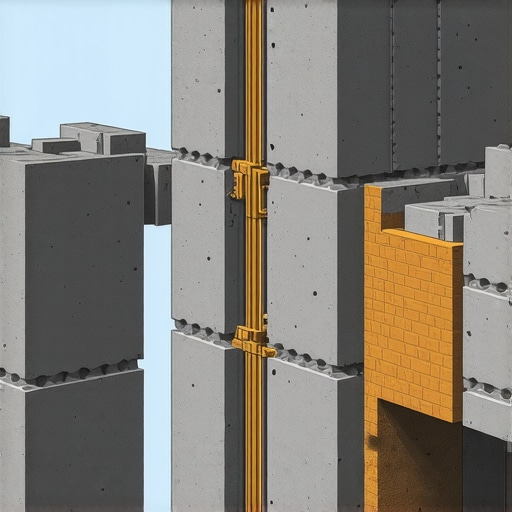
I see it all the time: stone veneer over brick where the contractor didn’t understand the physics of the substrate. They slap a heavy, non-breathable stone on top of an old structural wall without considering the ‘Cold Joint’ they just created. If the thermal expansion coefficients don’t match, or if they don’t use the right corrugated ties, a minor tremor will peel that stone right off like a scab. You need sustainable masonry materials that respect the original structure. If you are doing a brick veneer installation, you better be thinking about the air space behind it. That air space isn’t just for drainage; it’s a pressure-equalization chamber that helps the wall survive the sudden loading of a seismic event.
Restoring the Foundation and the Chimney
Chimneys are the first thing to go in an earthquake. They are tall, heavy, and often poorly tied to the house. I’ve seen chimneys twist 45 degrees without falling because the original mason used a soft lime mortar. We often perform chimney heat shield installation and professional masonry restoration to ensure the internal flue isn’t just a pile of loose tiles. If the ‘Soldier Course’ at the top isn’t locked down with a proper retaining wall capstone replacement mindset, it becomes a projectile. [image_placeholder_1]
The same logic applies to your feet. A brick patio restoration or patio stone realignment isn’t just about aesthetics. It’s about the base. If you have a ‘wavy’ patio, it’s because the compaction physics failed. In seismic areas, a flexible paver system—set on a proper 8-inch crushed stone base—will move with the ground and can be easily reset. Try doing that with a cracked concrete slab. You’ll be jackhammering for a week.
“The architect should ensure that the masonry is not so rigid as to be brittle, for the earth’s movement is not a force to be resisted, but a force to be channeled.” – Vitruvius, De Architectura (Adapted)
The Future: Robotic Masonry Repair
We are even seeing robotic masonry repair entering the field. These machines can inject specialized resins into deep cracks with a precision that a human hawk and slicker can’t always match. But even with robots, you need a Master Mason to understand the ‘why.’ You need to know if that crack is a sign of ‘Honeycombing’ in the original pour or if it’s a structural settlement that needs helical piers. If you don’t fix the underlying soil issues, all the full repointing services in the world won’t save you when the Big One hits. You do it once, or you do it twice. I prefer doing it once and making it last for a hundred years.