
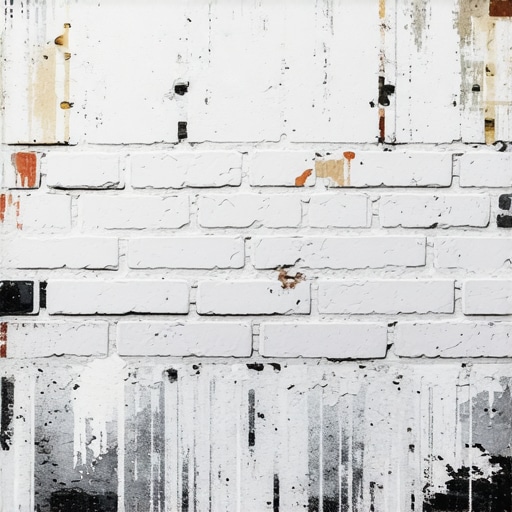
The Ghost in the Wall: Why Efflorescence Is Never Just a Cosmetic Issue
I’ve spent forty years with a trowel in my hand and grit in my eyes. I’ve seen the same story play out from the row houses of Philadelphia to the industrial lofts of Chicago. A homeowner calls me out because they’ve noticed a bit of white, powdery crust on their brickwork. They think they can just scrub it off with a stiff brush and a garden hose. They call it ‘a bit of salt.’ I call it the signature of a building that is slowly drowning from the inside out. When you see that white haze—what we in the trade call efflorescence—you aren’t looking at a stain; you are looking at a forensic trail of water migration that, if left unchecked, leads directly to foundation wall bowing repair and structural failure.
“Efflorescence is a symptom of a condition, not the condition itself. It requires three ingredients: water-soluble salts, moisture to dissolve them, and a path for that moisture to migrate to the surface.” – BIA Technical Note 23
The homeowner thought it was just a hairline crack and a bit of dust. But when I put my scope inside the cavity of that 1920s facade, I saw a nightmare. The internal structural steel lintels were rusted to the point of ‘jacking’—a process where the oxidizing metal expands to four times its original thickness, literally lifting the stone facade restoration project into pieces. That white stain was the warning shot. Because they ignored it, the emergency masonry repair bill didn’t just double; it added a zero to the end of the estimate.
The Chemistry of the ‘White Death’
To understand why those stains matter, you have to micro-zoom into the capillary structure of a clay-fired brick. Brick is essentially a hard sponge. It is full of microscopic pores created during the firing process. When groundwater or driving rain enters the masonry, it dissolves minerals—sodium, potassium, and calcium sulfates—locked inside the brick or the concrete block foundation repair site. As the sun hits the wall, it creates a vapor pressure differential. The water is pulled toward the dry exterior, carrying the dissolved salts with it. When the water evaporates, it leaves the salt behind. This isn’t just a surface film. If the salt crystallizes inside the pore structure (a process called sub-florescence), the internal pressure can exceed the tensile strength of the masonry, causing the face of the brick to pop off in a process called spalling.
Sustainable Tuckpointing Mortars vs. The Modern ‘Lick-and-Stick’ Disaster
The biggest mistake I see ‘handymen’ make is trying to fix an old wall with a bag of Type S Portland cement from a big-box store. If you are dealing with historic masonry preservation, Portland cement is a death sentence. Old bricks, fired in kilns decades ago, are soft. They were designed to move. When you use a hard, modern mortar, you create a ‘cold joint’ that doesn’t allow for thermal expansion. The moisture gets trapped behind that hard ‘mud,’ freezes, and destroys the brick face. We use sustainable tuckpointing mortars—often lime-based—that are sacrificial. The mortar must be softer than the brick. It acts as a wick, drawing the moisture out through the joints rather than the brick face. This is the essence of tuckpointing weatherproofing. When we perform flush pointing services, we aren’t just making it look pretty; we are recalibrating the building’s respiratory system.
“Mortars should be weaker than the masonry units so that any cracks will occur in the mortar joints where they can be easily repaired, rather than in the masonry units.” – ASTM C270 Standard Specification for Mortar
The Physics of Pressure: Why Your Foundation Is Bowing
White stains at the base of a wall often point to a more sinister problem: hydrostatic pressure. When your concrete flatwork services don’t include proper drainage, or your gutters are failing, the soil around your foundation becomes saturated. Water is heavy—62.4 pounds per cubic foot. When that weight pushes against a basement wall, it doesn’t just seep; it forces its way through the block. This is where you see foundation wall bowing repair become necessary. If you see white stains accompanied by a horizontal crack mid-way up your basement wall, the earth is literally trying to push your house over. We don’t just ‘butter’ those cracks. We have to address the soil mechanics, often using carbon fiber straps or helical piers to counteract the load.
Commercial Parapet Wall Repair: The Danger Above
In the world of commercial parapet wall repair, ignoring those white stains is a liability nightmare. Parapets are exposed to the elements on three sides. If the coping stones aren’t sealed or the flush pointing services have failed, water enters the top of the wall and travels down. In winter, this water freezes. Remember the physics: water expands by roughly 9% when it turns to ice. That expansion can push a soldier course of bricks right off the edge of a building. I’ve seen emergency masonry repair crews called out at 2:00 AM because a chunk of a facade fell onto a sidewalk. It all started with a ‘little white stain’ that the building manager ignored for three seasons.
The Master’s Touch: How We Fix It Right
When I pick up my hawk and trowel, I’m not just laying mud. I’m performing surgery. For a proper stone facade restoration, we first identify the salt source. Is it rising damp? Is it a leaking parapet? Once the moisture is controlled, we carefully grind out the failed joints to a depth of at least twice the width of the joint. We use a slicker to pack the new, breathable mortar in ‘lifts’ to ensure there are no voids or honeycombing. We don’t just ‘slick’ the surface; we ‘tool’ the joint to ensure the bond is tight. This is the difference between a ten-year fix and a hundred-year restoration. Don’t let a ‘handyman’ with a bucket of cheap concrete tell you otherwise. In this business, you do it once, or you do it twice—and the second time always costs triple.