
The Forensic Scene: A Structural Ghost Story
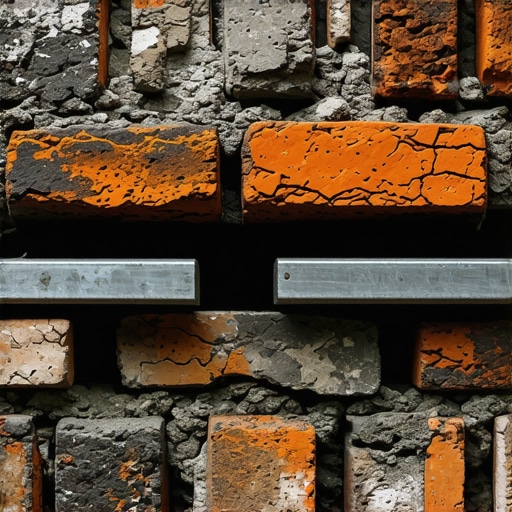
I recently stood on a rusted scaffold in the humid heat, staring at a 1920s brownstone where the owner thought the sagging soldier course over the parlor window was just ‘character.’ I slid my digital borescope into the cavity behind the facade and what I saw was a nightmare of structural decay. The original steel lintel—the horizontal bone holding up thousands of pounds of masonry—wasn’t just rusted; it was delaminating. It looked like a stack of flaky phyllo dough, its iron oxide expanding to six times its original thickness. This process, known as ‘rust jacking,’ was literally lifting the brickwork apart from the inside out. The homeowner wanted a quick fix of tuckpointing to hide the cracks, but masonry doesn’t lie. When the steel fails, the brick follows, and no amount of ‘handyman special’ putty can stop the laws of physics. We were looking at a total masonry water damage repair job before the whole header collapsed into the living room.
The Physics of the Lintel: Why Gravity Wins
A brick lintel is a deceptive piece of engineering. You see a row of bricks sitting over a window or door, but they aren’t floating. In older homes, these are supported by steel angles. The problem is that steel and masonry are fundamentally incompatible neighbors when moisture enters the chat. Steel is an ‘active’ material; it expands and contracts significantly with temperature changes. Brick is ‘passive’ and brittle. When you combine them in a high-moisture environment, the steel oxidizes.
“Steel lintels must be protected by a moisture-resistant coating and properly flashed to prevent corrosion and subsequent masonry cracking.” – BIA Technical Note 31B
This moisture doesn’t just come from rain; it comes from condensation within the wall cavity. In historic tuckpointing, we often find that previous ‘repairs’ used modern Portland cement, which is as hard as glass and completely non-breathable. This traps moisture against the steel, accelerating the rot. The physics of the ‘freeze-thaw’ cycle in northern climates adds another layer of destruction. Water enters the micro-fissures in the mortar, expands by 9% as it turns to ice, and pops the face of the brick right off—a process we call spalling.
The Chemistry of the ‘Mud’: Lime vs. Portland
If you’re dealing with a pre-1940s structure, you aren’t just laying bricks; you’re managing a chemical ecosystem. Historic bricks were fired at lower temperatures, making them softer and more porous than the ‘clinker’ bricks of today. They need to breathe. The mortar used back then was primarily lime and sand. Lime mortar undergoes a process called carbonation, where it absorbs CO2 from the air over decades to harden. It is ‘sacrificial,’ meaning it is softer than the brick. If the wall moves, the mortar cracks, not the brick. When a weekend warrior uses a bag of Type S Portland cement from a big-box store to ‘fix’ a lintel joint, they are signing the brick’s death warrant. The hard cement won’t give. When the lintel shifts, the stress is transferred directly into the historic brick, causing it to shatter. For masonry water damage repair, we must use Type O or Type N lime-based mortars that allow for vapor permeability. This ensures that the ‘suction’ of the brick—its ability to pull moisture through the joint and out to the atmosphere—is maintained.
Modern Reinforcement: Structural Brick Ties Replacement
When the internal skeleton of a wall is compromised, we look toward structural brick ties replacement and helical reinforcement. In the old days, if a lintel was sagging, you tore the whole wall down. Today, we use ‘BIM masonry projects’ (Building Information Modeling) to map out the stress points and then inject modern technology into the historic fabric. Helical bars are stainless steel ‘screws’ that we grout into the bed joints. They act as hidden beams, redistributing the load of the masonry across a wider area and taking the pressure off the failing steel lintel. It’s like giving the building a spinal fusion. We use a ‘hawk’ and a ‘slicker’ to carefully ‘butter’ these bars into the joints, ensuring there are no ‘cold joints’ where new mortar fails to bond with the old. This is a surgical procedure, far removed from the ‘lick-and-stick’ stone veneer work that is currently ruining the suburban landscape. We are talking about restoring the structural integrity of the ‘soldier course’—those bricks standing on end—so they can do their job for another century.
The Toolkit: Tuckpointing Tools for DIY vs. Professional Reality
I see a lot of guys buying tuckpointing tools for DIY projects, thinking they can just scrape out some mud and shove in new stuff. They buy a cheap angle grinder and go to town. That’s the fastest way to ruin a historic facade. One slip of a diamond blade and you’ve scarred the brick forever. A pro uses a ‘flooring chisel’ or a specialized vacuum-shrouded oscillating tool to preserve the ‘tooth’ of the joint. You need that rough surface inside the joint for the new mortar to grab onto. If the joint is too smooth, the new mortar will just fall out in three years—we call that ‘honeycombing’ of the repair. After the joints are raked out, we perform a masonry cleaning using non-acidic detergents to remove 100 years of carbon crust without eating away the delicate ‘fire-skin’ of the brick. Only then do we begin the repointing process, striking the joint with a ‘jointer’ to match the historic profile, whether it’s a ‘grapevine,’ ‘weathered,’ or ‘v-joint.’
Beyond the Lintel: Retaining Walls and Outdoor Fireplaces
The same principles of moisture management and reinforcement apply across the board. Whether it’s retaining wall reinforcement or an outdoor fireplace rebuild, the enemy is always the same: hydrostatic pressure and thermal shock. On a retaining wall, if you don’t have weep holes and a proper gravel base, the wall will ‘bow’ as the soil behind it saturates. It’s the same with a brick paver driveway repair. If the base isn’t compacted to 98% Proctor density, your pavers will sink like a stone in a swamp. I’ve seen retaining wall reinforcement jobs where they used rebar but didn’t grout the cells of the block—that’s just a cage for rust.
“Structural masonry requires a holistic approach to water management, including flashing, weeps, and vapor-permeable materials.” – ASTM C270 Standard Specification for Mortar
When we rebuild a fireplace, we’re looking at thermal expansion. Firebricks expand at a different rate than the decorative facade. If you tie them together too tightly without an expansion joint, the whole thing will crack the first time you light a fire. It’s all about giving the materials room to move, to breathe, and to age gracefully.
The Verdict: Restoration over Replacement
In the end, reinforcing a weak lintel isn’t just about the steel; it’s about respecting the craftsmanship of the men who came before us. It’s about understanding that a building is a living thing that reacts to the soil, the wind, and the rain. When you see those stair-step cracks or a sagging header, don’t ignore it. And for the love of the craft, don’t hire a guy who shows up with a bucket of premixed ‘patch’ and a trowel he hasn’t cleaned since the 90s. True restoration requires a forensic eye and a steady hand. It’s the difference between a repair that lasts a lifetime and a ‘band-aid’ that fails before the check clears. Do it once, do it right, and give that old brick the respect it deserves.