
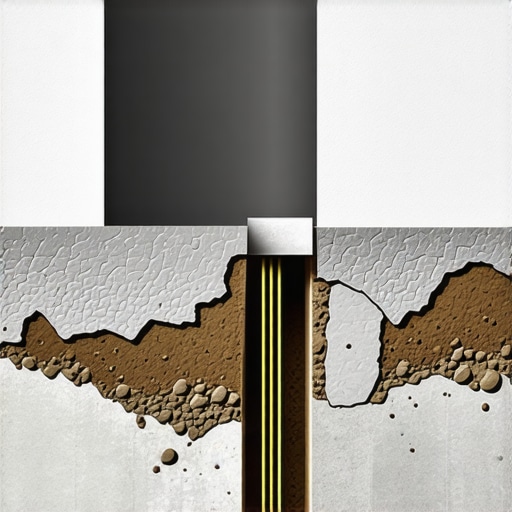
The first thing you notice isn’t the crack in the brickwork. It’s the smell—that heavy, metallic scent of damp earth and oxidized steel that wafts up when a foundation begins to lose its grip on the world. As a third-generation mason, I’ve spent thirty years listening to the groans of houses that were never meant to move. I’ve seen $2 million estates held together by nothing but habit and old lime mortar, and I’ve seen modern builds collapse because some ‘handyman’ thought a bit of concrete patch could solve a geotechnical disaster. Settlement is a slow-motion car crash, and if you’re looking at your drywall and seeing those jagged, diagonal tears above your door frames, the crash has already reached the cabin.
I remember a forensic scene on the edge of a clay-heavy ravine last November. The homeowner was convinced it was just a ‘settling’ issue, a term people use when they want to sleep at night. She showed me a hairline crack in the mortar joint near the corner of the garage. It looked like nothing. But when I bored a hole and inserted my 10mm fiber-optic scope, the reality was a nightmare: the structural steel rebar had been exposed to groundwater for so long it had swollen and turned to brittle, orange dust. The footer hadn’t just settled; it had sheared. That ‘hairline’ crack was the only warning sign before a $100,000 commercial masonry facade maintenance project turned into an emergency structural stabilization. If we hadn’t caught it, that entire corner would have pancaked within two freeze-thaw cycles.
“Water penetration is the single greatest threat to masonry durability.” – BIA Technical Note 7
The Physics of the Sink: Why Your House is Diving
To understand settlement, you have to understand the ‘tooth’ of the soil. In the northern climates, we deal with the brutal mechanics of frost heave and desiccation. When the ground freezes, the water in the soil expands by roughly 9%. If your footings aren’t deep enough—below the frost line—that expansion exerts thousands of pounds of upward pressure. But the real killer is the summer. In heavy clay soils, the heat sucks the moisture out of the earth, causing it to shrink and pull away from the concrete. This creates a void. When the next heavy rain hits, water rushes into that void, softening the soil until the weight of the masonry pushes the footing down into the soup. This is why emergency masonry repair isn’t just about slapping some mud on a crack; it’s about addressing the hydrostatic pressure and soil chemistry beneath the surface.
When we talk about foundation helical pier installation, we are talking about bypassing the incompetent soil entirely. We drive those steel screws deep into the earth until we hit a torque rating that signifies load-bearing strata. It’s the difference between standing on a sponge and standing on a rock. If you’re trying to fix a settling foundation with a concrete patch, you’re just putting a Band-Aid on a compound fracture. You might hide the crack for a season, but the underlying physics will eventually win.
Micro-Zooming into the Mortar: The Sacrificial Principle
If you’re dealing with a historic home, the settlement issues are compounded by the materials used. Before the mid-1940s, we didn’t use high-strength Portland cement. We used lime putty and sand. These old bricks are soft; they’re porous. They need to breathe. If some modern contractor comes in and performs mortar repointing services using a hard, Type S Portland mortar on a historic brick, they are signing the building’s death warrant. The mortar must always be softer than the brick. This is the ‘Sacrificial Principle.’ When the building shifts (and it will), you want the mortar to crack, not the historic brick salvage you’re trying to preserve. Hard cement traps moisture inside the soft brick; when that water freezes, it expands and pops the face right off the brick—a process we call spalling.
For those of us who appreciate historic pointing styles, like the weathered joint or the grapevine joint, we know that the ‘mud’ has to be mixed with surgical precision. We’re looking for ‘suction’—the way the dry brick pulls the moisture out of the mortar to create a monolithic bond. If you ‘burn’ the mortar by letting it dry too fast in the sun, it loses its structural integrity and turns into a sandy mess that you can scrape out with a fingernail. That’s why we ‘butter’ the bricks carefully and use a slicker to compress the joint, forcing the aggregate together to create a weather-tight seal.
“The stability of a structure depends upon the integrity of its foundation and the compatibility of its masonry units with the mortar used to bind them.” – ASTM C270 Standards
Beyond the Basement: Chimneys and Commercial Facades
Settlement doesn’t stay at the ground level. It travels. It acts like a lever, and the tallest point of your house—the chimney—is the first to show the strain. A leaning chimney is often the first visual indicator of a failing footer. When we perform chimney crown repair, we often find that the cracks at the top were actually caused by the house tilting three degrees to the south. You can’t just fix the crown and walk away. You have to stabilize the base. The same logic applies to commercial smokestack repair. These massive structures deal with incredible thermal expansion. If the foundation shifts even a fraction of an inch, the stack effect can cause catastrophic vertical cracking. We look for ‘honeycombing’ in the concrete—areas where the aggregate didn’t settle properly during the original pour—which creates weak points for water to enter and steel to rust.
And don’t get me started on brick patio restoration. People think a patio is just bricks in the dirt. It’s not. It’s a drainage system. If you don’t have a compacted, graduated gravel base, your patio will become a ‘wavy’ mess within three seasons. The ‘mud’ we use for the bedding has to allow for moisture migration, or you’ll get efflorescence—that white, salty staining that ruins a soldier course border faster than a cheap sealer.
The Forensic Verdict: When to Call the Professionals
If you see a stair-step crack following the mortar joints, the house is telling you it’s tired. If you see a horizontal crack in a basement wall, the house is telling you it’s failing. The hydrostatic pressure of the saturated soil outside is literally pushing the wall inward. This is the moment for foundation helical pier installation, not for a bucket of epoxy. You need to relieve the pressure, manage the water, and support the weight on something more reliable than shifting mud. Stop worrying about your drywall. Drywall is cheap. Fixing a sheared footer and a commercial masonry facade maintenance failure is not. Treat the cause, not the symptom, or you’ll be calling me back in two years to pick up the pieces of what used to be your home.