
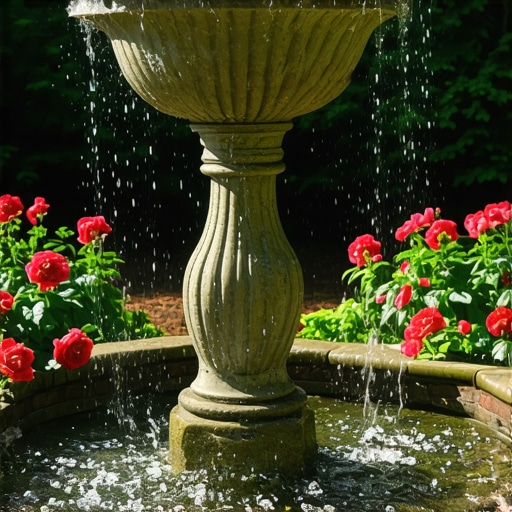
The Ghost in the Basin: A Forensic Examination
The homeowner called me out because her 1920s Italianate garden feature was losing two inches of water every twenty-four hours. She thought it was just a hairline crack in the mortar of the upper basin. But when I put my scope inside the drainage cavity, I saw the structural steel—the very skeleton holding that tiered stone together—was rusted to red dust. The previous contractor had used a high-strength Portland cement for some historic brickwork repointing nearby and slapped the leftovers into this fountain. That hard, brittle mud didn’t allow the soft stone to breathe. It trapped moisture, and the freeze-thaw cycles of our northern winters turned that trapped water into a hydraulic jack, popping the faces off the stone and turning the interior rebar into a crumbly orange mess. This is the reality of outdoor masonry fountain restoration; it is not about aesthetics alone, but the cold, hard physics of water and stone.
“ASTM C270 emphasizes that mortar must be weaker than the masonry units to accommodate movement without cracking the stone.” — ASTM Standards
The Physics of Porosity and Capillary Suction
To understand why a fountain leaks, you have to micro-zoom into the material. Whether you are dealing with historic brickwork repointing or a limestone basin, you are looking at a porous network of capillaries. Most stones have a specific gravity and a ‘suction’ rate—what we old-timers call the ‘tooth’ of the material. When you apply tile grouts on masonry surfaces in a wet environment, the surface tension of the water tries to pull it into the stone. If the foundation of the fountain hasn’t been properly waterproofed, hydrostatic pressure from the surrounding soil can actually push water into the masonry from the outside, a process known as rising damp. This is why we sometimes see the same failures in foundation wall bowing repair—the weight of the water-logged earth is more than the masonry can bear.
The Restoration Reality: Mortar and Mud
When I’m mixing ‘mud’ on the hawk, I’m not just looking for a color match. I’m looking for the right hydration. For a historic piece, I use sustainable tuckpointing mortars, usually a Type O or a lime putty. Why? Because lime is ‘self-healing.’ As it carbonates over a century, it can actually close up microscopic fissures. If you butter a joint with modern, high-strength mortar, you’re signing a death warrant for the stone. The stone will expand in the summer sun, and the mortar won’t give. The result? The stone cracks. This is the same logic we apply to chimney rebuild services or tuckpointing on a Victorian facade. The binder must be the sacrificial lamb.
“Water penetration is the single greatest threat to masonry durability.” — BIA Technical Note 7
The Science of the Invisible Seal
How do we seal it without making it look like it was dipped in plastic? We avoid the ‘lick-and-stick’ hardware store sealants. Instead, we use penetrating silanes and siloxanes. These aren’t coatings; they are chemical reactions. A silane molecule is small enough to penetrate deep into the stone’s pores, bonding to the silica. It changes the surface tension so that water beads up and rolls off, but the stone remains ‘vapor permeable.’ It can still sweat. If you use a film-forming sealer, you’re just creating a blister that will eventually peel and take a layer of stone with it. This is critical when dealing with tile grouts on masonry basins; the grout needs to be as breathable as the unit it holds.
Addressing the Foundation and Structure
Sometimes the leak isn’t in the stone, but in the ground. If the fountain is leaning, the foundation is compromised. We see this in foundation slab jacking scenarios where the earth has settled unevenly. If the basin is shifting, the plumbing—much like a chimney flue liner installation—will snap. You can’t fix a leak in the stone if the structural bones are moving. I’ve seen foundation wall bowing repair techniques adapted for massive tiered fountains where the lateral pressure of the water was literally pushing the walls apart. You have to stabilize the base before you can worry about the ‘slicker’ and the finishing joints.
The Process: Doing It Once or Doing It Twice
To do it right, we first grind out the old, failing joints to a depth of at least twice the width of the joint. We don’t use high-speed saws that can nick the stone; we use hand tools or specialized pneumatic chisels. Then, we dampen the stone to prevent it from sucking the moisture out of our new mud too fast—what we call ‘burning’ the joint. We butter the joints carefully, tuckpointing the new material in layers. Finally, we apply our breathable sealer. It’s a slow, gritty process, but it’s the only way to ensure the fountain rings like a bell when you tap it. Don’t be fooled by a ‘handyman special’ with a bucket of epoxy. Masonry is a living, breathing thing. Treat it with the respect it earned over the last hundred years, or it will crumble into a pile of expensive gravel. Do it once, or you’ll be paying me to do it twice.