
The Forensic Scene: Behind the Parapet
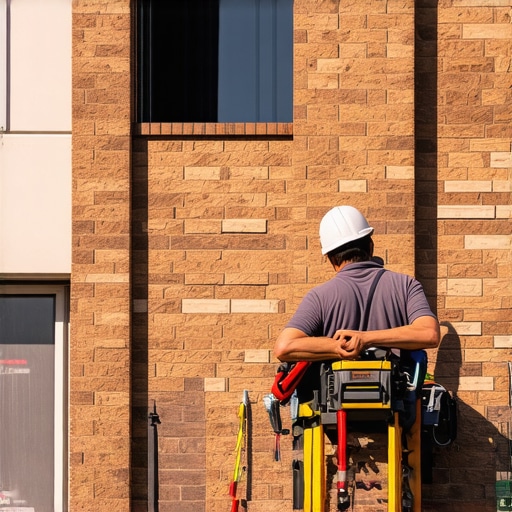
The property manager looked at me and said it was just a hairline crack, a cosmetic annoyance on the third-story parapet of their downtown retail complex. I didn’t say a word. I pulled out the borescope, fed the fiber-optic cable into a 3/8-inch weep hole, and turned on the monitor. What we saw wasn’t just ‘settling.’ The structural steel angle iron, intended to carry the load of the brick veneer, had oxidized so violently it had expanded to twice its original thickness. This ‘rust heaving’ was literally lifting the upper courses of brick off the building. The brick veneer detachment repair wasn’t going to be a simple patch; it was a surgical extraction. Had they caught this during a mid-year inspection six months prior, we could have neutralized the corrosion. Instead, we were looking at a six-figure stabilization project. This is the reality of commercial masonry: the building is a living organism, and by mid-summer, the stresses of the previous winter and the current heat are reaching a breaking point.
“Water penetration is the single greatest threat to masonry durability.” – BIA Technical Note 7
The Physics of the Mid-Year Shift: From Freeze-Thaw to Thermal Heave
Commercial masonry faces a brutal transition. In the North, your concrete block foundation has just survived the freeze-thaw cycle. When water enters a pore and freezes, it expands by approximately 9% in volume. This creates internal pressures exceeding 100,000 PSI, which is enough to shatter even the hardest units. By the time July hits, that damaged internal structure is now being subjected to ‘Thermal Heave.’ A dark brick wall in the direct sun can reach 150 degrees Fahrenheit, causing the entire facade to expand. If your masonry joint sand repair was neglected, there is no ‘give’ in the system. The wall grows, but the lack of flexible relief joints means the masonry has nowhere to go but out. This is where stone veneer repair becomes critical; those thin-set stones don’t have the mass to resist these forces and will begin to ‘pop’ or delaminate from the substrate.
Brick Arch Restoration: The Physics of the Keystone
Mid-year is the prime time for brick arch restoration. Arches are masterclasses in compression physics, relying on the ‘keystone’ to distribute weight down the ‘extrados’ to the abutments. However, thermal expansion in the summer can cause the abutments to shift slightly. When the mortar in an arch is compromised by winter salt or moisture, the ‘tooth’ of the mud—the mechanical bond between mortar and brick—fails. We often find that sustainable block cutting techniques used in modern additions don’t always account for the high-compression needs of traditional arches. If you see a sagging ‘intrados’ (the underside of the arch), the masonry is no longer in compression; it’s in tension. And brick is notoriously pathetic in tension. A mid-year check ensures these structural components are repointed before the entire assembly requires a full teardown.
Foundation Waterproofing & The Hydrostatic Siege
While the sun is beating down on the roof, the concrete block foundation repair needs are often brewing underground. Spring rains saturate the soil, increasing ‘hydrostatic pressure.’ This is the weight of the water-logged earth pushing against your basement walls. If your foundation waterproofing membrane has reached its end-of-life—usually 20 to 30 years—you’ll start to see ‘efflorescence,’ that white, salty powder on the interior block. This isn’t just a stain; it’s the mineral remains of the block’s structural integrity being leached out. During a mid-year check, we look for ‘honeycombing’ in the concrete—areas where the aggregate is exposed and the cement paste has eroded. Left unchecked, that block will eventually ‘bow’ inward, a precursor to total wall failure.
“Mortar should be designed to be weaker than the masonry units it joins, acting as a sacrificial element to accommodate movement.” – ASTM C270
The Science of the Mud: Why Maintenance Matters
When we perform chimney repair services or fire-rated masonry installation in a commercial setting, we aren’t just slinging mud. We are managing hydration chemistry. ‘Burning’ the joint is a common failure I see with handyman specials. If a mason applies mortar to a dry, thirsty brick in the 90-degree heat without ‘pre-wetting,’ the brick will suck the water out of the mortar instantly. This stops the hydration process of the Portland cement or lime. Instead of a chemical bond, you get a dry, sandy mass that has no structural value. We use a hawk and slicker to ensure the joint is properly ‘struck,’ compressing the mortar to create a weather-shedding profile. A mid-year check identifies these ‘burnt’ joints before they wash out in the autumn rains.
IMAGE_PLACEHOLDER
Green Roofing & Sustainable Block Cutting Integration
Modern commercial buildings are increasingly incorporating green roofing masonry integration. This creates a complex micro-climate. You have a massive moisture reservoir (the soil and plants) sitting directly above or adjacent to your parapet walls and fire-rated masonry installation. This requires specific sustainable block cutting to ensure drainage channels remain clear. If the vegetation blocks the weeps, the wall becomes a dam. Water will find its way into the brick veneer, leading to brick veneer detachment repair needs. Our forensic inspections often find that ‘green’ features are the primary cause of masonry decay because the maintenance plan didn’t account for the increased humidity at the roof line.
The Final Tally: Do It Once, or Do It Twice
The cost of a mid-year inspection is a rounding error compared to the cost of concrete block foundation repair or structural stone veneer repair. We look for ‘cold joints’—places where two different pours of concrete didn’t bond—and we check the soldier course above windows for signs of deflection. Commercial masonry is about management of mass and moisture. If you ignore the ‘ring’ of a solid brick for the ‘thud’ of a hollow, water-logged one, the building will eventually tell you about it in the loudest, most expensive way possible. Don’t wait for the ‘stair-step’ crack to become a gap you can fit your hand through. Get a master mason on the roof, check the weeps, test the joint sand, and ensure your investment is actually ‘set in stone.’