
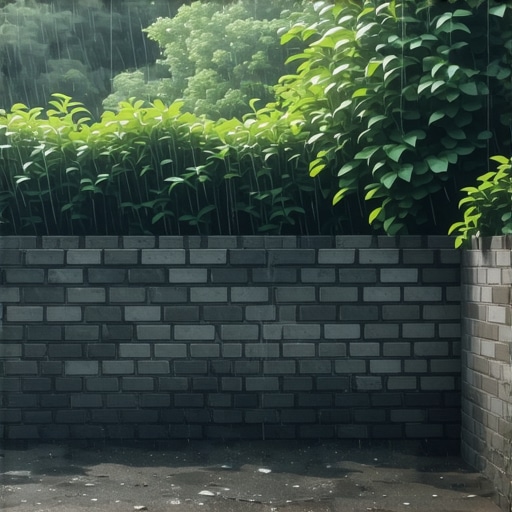
The Anatomy of a Weeping Wall
My old man used to tell me that a brick wall is a living, breathing creature. If you choke it, it dies. If you drown it, it rots. I remember a storm back in ’98, a real gully-washer that sat over a historic commercial district for three days. I stood on a scaffold, watching a beautiful 1920s warehouse literally shed its skin. The mortar wasn’t just wet; it was liquefying, running down the face of the brick like grey tears. The owner thought it was just ‘old age,’ but the forensic reality was much more sinister. The previous contractor had used a hard Portland-rich ‘mud’ over a soft, lime-based original joint. By trapping the moisture behind a wall of inflexible cement, he created a pressure cooker. When the heavy rains hit, the water couldn’t escape, the hydrostatic pressure built up, and the ‘tooth’ of the bond simply snapped. This is the reality of brick wall restoration: it is a battle against the relentless physics of water.
“Water penetration is the single greatest threat to masonry durability. Moisture can cause efflorescence, freeze-thaw damage, and the deterioration of mortar joints.” – BIA Technical Note 7
The Micro-Physics of Mortar Erosion
To understand why your mortar is turning to sand, you have to look at the chemistry of the binder. In a heavy rain environment, mortar doesn’t just ‘get wet.’ It undergoes a process of leaching and carbonation. Most modern masons use too much Portland cement, thinking ‘harder is better.’ It’s a lie. In commercial masonry facade maintenance, we see this constantly. Portland cement creates a dense, brittle matrix. When rain hits a wall, the brick—which is porous—soaks up the water. If the mortar is also dense, the water has nowhere to go. It sits at the interface, the ‘cold joint,’ and begins to dissolve the calcium hydroxide within the mortar. This is called ‘leaching.’ Over time, the structural integrity of the joint vanishes, leaving behind nothing but the aggregate. This is why masonry waterproofing solutions must be breathable; they need to stop liquid water from entering while allowing water vapor to escape. If you seal a wall with a non-breathable ‘lick-and-stick’ sealer, you are essentially signing its death warrant.
When we talk about masonry repair services, we aren’t just slapping mud in a crack. We are managing the ‘suction’ of the brick. If you ‘butter’ a dry, thirsty brick with fresh mortar in the heat before a rain, the brick will suck the moisture out of the mud too fast. This ‘burns’ the mortar, preventing proper hydration. You end up with a ‘honeycombing’ effect inside the joint—a porous, weak structure that will crumble the moment the sky opens up. For BIM masonry projects, we now model these thermal and moisture gradients to predict exactly where the saturation point will occur. It is not just art; it is a geotechnical calculation.
The Restoration Reality: Repointing vs. Tuckpointing
People use these terms interchangeably, and it drives me to the brink. ‘Tuckpointing’ is a decorative finish where you use a contrasting color of mud to create the illusion of a perfect joint. ‘Repointing’ is the surgical act of removing failed mortar and replacing it to restore structural integrity. When a wall is failing due to rain, you need the latter. You have to grind out the joints to a depth of at least twice the width of the joint. Anything less is a ‘Band-Aid.’ If you just ‘shmear’ new mud over the old, crumbling joints, you are creating a ‘skin’ that will pop off in the next freeze-thaw cycle. This is especially critical in stone veneer over brick applications, where the weight of the stone can actually pull the failing brick face right off the substrate if the mortar bed is compromised by moisture.
“Mortar for repointing should be softer than the masonry units and should be as vapor permeable as the original mortar to prevent damage to the masonry.” – ASTM C270 Standards
Managing the Forces: From Chimneys to Foundations
The chimney is the most vulnerable part of any structure because it’s attacked from four sides by the elements. Without a proper chimney flue liner installation to manage thermal shock, the masonry expands and contracts violently. Rain enters the cracks, freezes, and the 9% expansion of ice rips the brick apart. Similarly, in the ground, foundation slab jacking is often required when poor drainage causes the soil to heave or subside, putting immense torque on the masonry above. If your foundation moves, your mortar cracks. If your mortar cracks, the rain gets in. It is a vicious cycle. We see this in retaining walls too; if you don’t have a retaining wall batter correction plan and proper weep holes, the ‘hydrostatic push’ from saturated soil will blow a wall out, no matter how much ‘mud’ you use.
For horizontal surfaces, the stakes are even higher. Masonry joint sand repair is often neglected on patios and walkways. When the sand washes out, the pavers shift, and water begins to undermine the base. This is the same physics that causes a ‘wavy’ driveway. It’s all about compaction and drainage. You don’t just throw sand down; you need a stabilized jointing material that can withstand the ‘washout’ of a tropical downpour while remaining flexible enough to move with the earth.
The Master’s Process: Striking the Joint
When I’m on the hawk, mixing a batch of Type O or Type N mortar for a restoration job, I’m looking for the perfect consistency—like peanut butter. You load your slicker and you pack that mud into the joint. You don’t just push it in; you compress it. This compaction is what creates the weather-tight seal. Then comes the ‘strike.’ By using a concave jointer, you ‘iron’ the joint, pulling the cement paste to the surface and creating a dense, water-shedding profile. A ‘recessed’ or ‘raked’ joint might look cool and modern, but in heavy rain territory, it’s a shelf for water to sit on. You want a joint that kicks the water off the wall as fast as possible. This is the hallmark of professional brick wall restoration. We are not just making it look pretty; we are building a shield against the sky. If you do it right, that wall will be standing long after the ‘handyman specials’ have washed away into the mud.