
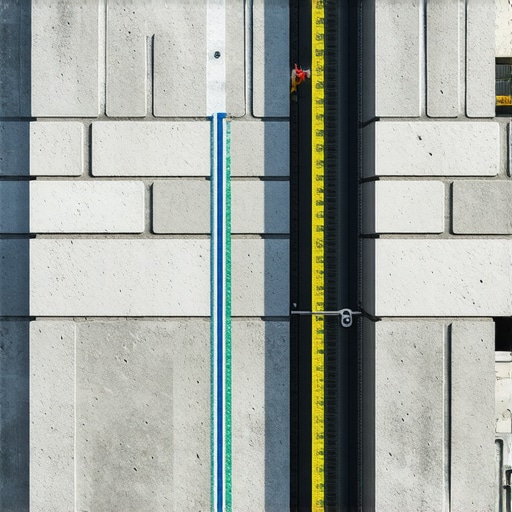
The Forensic Scene: The Wall That Wanted to Breathe
The homeowner thought it was just a hairline crack, a cosmetic annoyance on the south-facing facade of their ten-year-old modular brick home. But when I put my borescope inside the cavity, the reality was much grittier. I saw structural steel lintels that were twisted like pretzels and masonry ties that had snapped under the sheer force of thermal expansion. The wall wasn’t just cracking; it was exploding in slow motion. This wasn’t a material failure; it was a physics failure. The contractor had treated a 60-foot expanse of modular brick as if it were a static monument, forgetting that masonry is a living, moving organism. This is the hallmark of modern ‘lick-and-stick’ mentalities that ignore the fundamental need for specialized expansion joints.
The Physics of Movement: Why Bricks Grow and Concrete Shrinks
In the world of forensic masonry, we deal with two opposing forces. Clay brick, the moment it leaves the kiln, begins a lifelong process of irreversible moisture expansion. It wants to get bigger. Conversely, the concrete masonry units (CMU) used for the backup wall and the concrete pump masonry mixes used in modern structural cores are on a journey of shrinkage as they hydrate and lose moisture. When you pin these two together without a relief valve, something has to give. This is why modular masonry needs specialized expansion joints. We are talking about the coefficient of thermal expansion, where a clay brick wall can move up to 0.6 inches per 100 feet just based on temperature swings from a freezing January night to a scorching July afternoon. Without a clear vertical gap filled with a backer rod and high-quality brickwork sealants application, the internal stress builds until the ‘mud’—the mortar—crushes under the pressure, or the brick faces start spalling off.
“Provisions for differential movement must be designed and detailed for all masonry structures to prevent cracks and other distress.” – BIA Technical Note 18
The Anatomy of a Functional Expansion Joint
A real expansion joint isn’t just a bead of caulk slapped over a joint. It is a clean break through the entire wythe of brick. As a third-generation mason, I’ve seen too many ‘handyman specials’ where they just butter the ends of the brick and call it a day. A forensic-grade joint requires a minimum 3/8-inch gap, free of all mortar. If a single chunk of dried mortar—what we call a ‘bridge’—remains in that gap, it acts as a fulcrum. When the wall expands, all that force concentrates on that one point, causing a massive shear crack. We use a slicker to ensure the joint is clean before inserting a closed-cell backer rod and then applying a polyether or silicone sealant that meets ASTM C920 standards. This allows the wall to ‘breathe’—expanding and contracting without transferring load to the foundation or the structural steel.
The Sins of the Modern Mason: When ‘Hard’ is the Enemy
The biggest mistake I see in historic tuckpointing and modern repairs is the use of high-strength Portland cement where it doesn’t belong. In a spalled concrete steps repair or a concrete patch job, you want strength. But in modular brickwork, the mortar must be the sacrificial lamb. If the mortar is harder than the brick, the brick will break first. We advocate for sustainable tuckpointing mortars—specifically Type N or Type O mixes—that provide flexibility. When we perform full repointing services on a building that has suffered from restricted movement, we often have to grind out new expansion joints where the original architect failed to place them. This isn’t just maintenance; it’s a structural intervention to stop the wall from self-destructing.
“The use of mortar with a lower compressive strength than the masonry units is essential to allow for minor movement and to prevent unit breakage.” – ASTM C270 Standard Specification for Mortar for Unit Masonry
Moisture Management and the Forensic Decay
Water is the silent killer of masonry. In outdoor masonry fountain restoration, the presence of constant moisture makes expansion joints even more critical. Water trapped behind a brick veneer during a freeze-thaw cycle expands by 9% in volume. If your expansion joints are clogged or non-existent, that hydraulic pressure has no escape route. It will blow the face off a modular brick faster than a sledgehammer. This is why masonry cleaning and the subsequent brickwork sealants application are not just about aesthetics; they are about maintaining the integrity of the movement gaps. A clogged joint is a dead joint. During a forensic inspection, I often find ‘honeycombing’ in the mortar because the mix was too dry—a ‘cold joint’ where the mason stopped for lunch and didn’t properly prep the surface before starting again. These weak points are exactly where the wall will fail when thermal stress kicks in.
The Solution: Do It Once, Do It Right
Whether you are dealing with historic tuckpointing on a 1920s bungalow or a modern commercial complex, the rules of physics don’t change. You cannot fight the sun and the rain. If you have a long run of modular masonry, you need vertical expansion joints every 25 feet maximum, and especially near corners where the stress is most acute. Don’t settle for a concrete patch that will pop out in two years. Invest in full repointing services that respect the original material’s chemistry. Use a hawk and trowel to pack those joints deep, and never, ever bridge an expansion joint with hard mortar. In the end, a building is only as good as its ability to handle the elements. If you don’t give the masonry a place to move, it will find one—and you won’t like the results.