
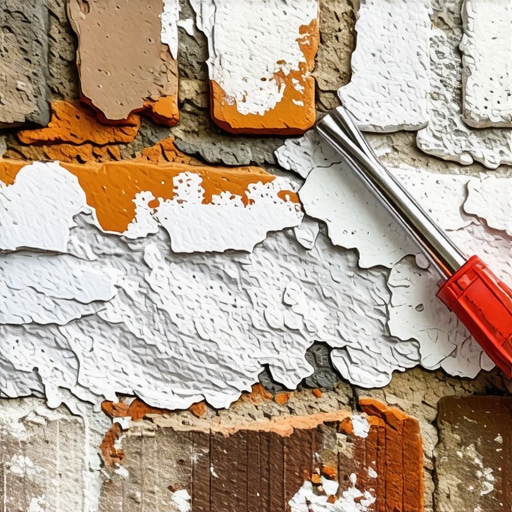
The White Ghost in the Wall
I’ve spent thirty years watching buildings sweat. To the untrained eye, those chalky white streaks on a commercial facade are just a bit of ‘old building character.’ To me, it’s a forensic crime scene. That white powder—efflorescence—is the building’s way of screaming that it’s drowning from the inside out. It’s not just a stain; it’s a salt-driven siege on the structural integrity of the masonry. When I see a soldier course covered in this white bloom, I don’t just see a cleaning job; I see a failure in the mud chemistry or a catastrophic breakdown in the drainage plane. Let’s get one thing straight: efflorescence is the symptom, but water is the assassin.
“Efflorescence is a phenomenon whereby water-soluble salts are carried to the surface of masonry by water and deposited there as the water evaporates.” – BIA Technical Note 23
The Forensic Scene: When the Salts Push Back
The homeowner of a newly minted commercial plaza called me in last November. The building was only three years old, but the red clay brick was turning ghostly. ‘It just needs a power wash,’ he said. I told him he was wrong. I put my scope inside a weep hole and saw the real tragedy: the structural steel was already weeping rust. The salts weren’t just on the surface; they were honeycombing the interior of the units. When I touched the brick, a chunk the size of a silver dollar flaked off in my hand. That’s not just staining; that’s the beginning of a cycle that ends in brick spalling prevention failure. The salts had crystallized inside the pores of the brick, exerting thousands of pounds of pressure—subflorescence—literally blowing the face of the masonry off from the inside. This is why you never just ‘wash it off’ and walk away. You have to understand the chemistry of the migration.
The Osmotic Siege: Physics of the Bloom
To understand why those stains keep coming back, we have to look at the microscopic level. Brick is a sponge. It has a specific ‘suction’ or Initial Rate of Absorption (IRA). When we’re talking about concrete masonry unit restoration, we’re looking at a material that is even more porous. For efflorescence to occur, you need three things: water-soluble salts, a path for water to travel, and the water itself. The salts often come from the mortar repointing services of the past where cheap, high-alkali cement was used. As water moves through the wall, it dissolves these salts—usually sulfates of sodium or potassium. As the sun hits the wall, it creates a vapor pressure gradient. The water moves toward the heat (the exterior), carrying the salt with it. When the water evaporates at the surface, the salt stays behind. If the water evaporates inside the brick because the face is too dense or coated with a ‘lick-and-stick’ sealer, the crystals grow in the pores. This is the death knell for a commercial facade.
The Lintel and the Leaks
Often, the source isn’t just the brick itself but the supporting cast. I’ve performed hundreds of brick lintel replacement jobs where the efflorescence was the first clue. When a steel lintel over a window or door starts to oxidize, it expands. This ‘rust heave’ creates hairline fractures in the mud joints. These cracks are superhighways for rainwater. Once that water hits the back of the brick, the salt migration begins. On larger structures, such as those requiring commercial smokestack repair, the wind-driven rain can push moisture six inches deep into the masonry. If you don’t have a functional cavity and flashing system, that moisture has nowhere to go but out through the face. This is where robotic masonry repair is starting to gain traction—using automated systems to precisely cut out failed joints and prepare them for mortar repointing services without the vibration damage caused by traditional grinders.
Micro-Zoom: The Chemistry of Historic Mortar Analysis
If you’re working on a building from the early 20th century, you can’t just throw a bag of Type S Portland cement at it. Historic mortar analysis is the only way to save these structures. Old bricks were fired at lower temperatures; they are softer and more ‘breathable’ than modern units. If you use a hard, modern mortar, the brick becomes the weakest link. The mortar must be the sacrificial lamb. In a proper restoration, the mortar should be slightly more permeable than the brick itself. This allows the salts to migrate to the mortar joints rather than the brick faces. When I’m buttering a joint on a restoration project, I’m looking for a lime-rich mix that has the right ‘tooth’ to bond but the flexibility to handle thermal expansion. This is the difference between a repair that lasts fifty years and one that fails in five.
“The presence of salts in the masonry units or the mortar is a prerequisite for efflorescence.” – ASTM C67
Advanced Interventions: From Pumps to 3D Printing
We are entering a strange new era of masonry. I’ve seen 3D printed masonry repairs used for complex ornamental features that would have cost a fortune for a stone carver to replicate. But even with high-tech solutions, the basics of moisture management remain. When we use concrete pump masonry mixes for structural grouting in commercial CMU walls, we have to be incredibly careful about the water-to-cement ratio. If the mix is too wet, you’re basically pumping a salt-delivery system into the wall. You end up with cold joints and massive efflorescence blooms six months later. The same goes for concrete flatwork services surrounding the building. If the grade isn’t pitched away from the foundation, the masonry will ‘wick’ ground moisture up through capillary action—a process known as rising damp. This brings a whole different set of salts (nitrates and chlorides) from the soil into your soldier course, leading to chronic staining that no chemical cleaner can touch.
The Restoration Reality: Striking the Joint
The fix for efflorescence isn’t found in a bottle of acid. The fix is found in the slicker and the hawk. First, we stop the water. This might mean brick lintel replacement or fixing failed coping stones. Then, we look at the joints. If the mortar is crumbly, we perform mortar repointing services. We grind back the joints to a depth of at least twice the width of the joint, wash the dust out, and then firmly pack in the new ‘mud’ in ‘lifts.’ This ensures there are no voids where water can pool. Finally, we address the cleaning. We use the mildest possible solution—sometimes just dry brushing is better than adding more water to a water-saturated problem. You want to avoid high-pressure washing which can drive the salts deeper into the substrate and cause honeycombing. If you do it right, you’re not just cleaning a wall; you’re restoring a structural system. You’re giving that building another century of life, and that is what being a master mason is all about.