
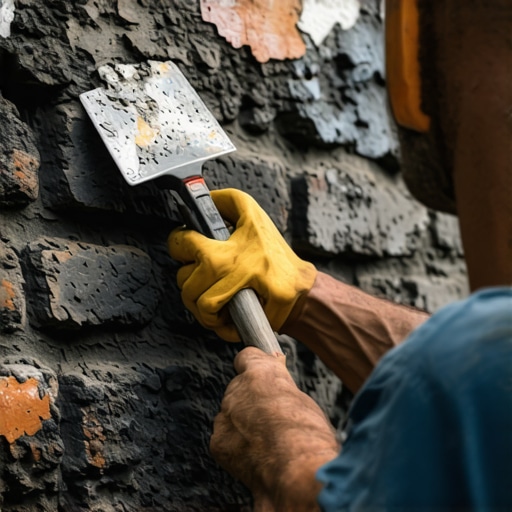
That red powder on your driveway isn’t just dirt. It’s the lifeblood of your home’s 1920s brickwork being ground into a fine silt. The homeowner thought it was just a hairline crack. But when I put my scope inside the chimney flue, I saw the structural steel was rusted to dust, and the interior bricks were essentially sand held together by habit and prayer. The culprit? A handyman had ‘fixed’ the chimney with high-strength Type S Portland cement three years ago. In the world of forensic masonry, that is not a repair—it is a death sentence. When you use a mortar that is harder than the brick, the brick becomes the sacrificial lamb. Instead of the mortar joint breathing and flexing, the brick face pops off in a process we call spalling. If you see dust, your building is screaming for help.
The Chemistry of the ‘Sacrificial’ Joint
To understand why your joints are failing, we have to talk about the physics of the wall. Historic masonry is a living, breathing system. Before the mid-1940s, bricks were fired in kilns that produced a soft, porous core and a slightly harder ‘fire-skin.’ The mortar used was lime-based. Lime mortar does not ‘set’ like modern concrete; it carbonates. It takes in carbon dioxide from the air over decades, staying flexible. More importantly, it is vapor-permeable. This means it allows moisture to travel through the joint rather than the brick. When some ‘bucket-and-trowel’ guy slaps modern Portland cement into those joints during mortar repointing services, he creates a vapor barrier. Moisture gets trapped behind that hard cement, freezes, expands by 9%, and blows the face of your historic brick right off. This is the primary cause of brick veneer detachment repair calls I receive.
“Mortar should be weaker than the masonry units so that any stress-induced cracking occurs in the mortar joints where it can be easily repaired.” – ASTM C270
We use the term ‘sacrificial’ because we want the mortar to fail. I would much rather spend a week grinding out soft lime ‘mud’ than have to replace a thousand shattered soldier course bricks. If your mortar is harder than your brick, the thermal expansion—the way the wall grows and shrinks in the sun—will crush the brick edges. This leads to chimney structural repair needs that could have been avoided with a simple Type O or Type K lime mix.
The Anatomy of a Proper Repoint
A full repointing services job is not a ‘patch job.’ It starts with the ‘hawk’ and the ‘slicker.’ First, we have to remove the old, decaying material. We don’t just scratch the surface. We go back at least 3/4 of an inch or until we hit sound material. This is where most hacks fail; they just ‘butter’ over the dust. If you don’t have a clean, square shoulder for the new mud to bite into, the repair won’t last a single winter. We call this a ‘cold joint’ when the new material doesn’t bond, and it will fall out in chunks within months.
Mixing the mud is a science of its own. We look for the ‘suction’ of the brick. If I’m working on tuckpointing curved walls, the geometry is already working against me. I need a mix with high water retention so it doesn’t ‘flash set’ or burn. If the mortar dries too fast, it loses its structural integrity and turns back into sand—a common issue in outdoor masonry fountain restoration where moisture levels are constantly fluctuating. After we pack the joints in lifts (thin layers), we use the ‘slicker’ to tool the joint. This compacts the mortar against the brick, sealing the edges and creating a profile that sheds water. This isn’t just for looks; it’s about managing the hydrology of the facade.
Beyond the Walls: Chimneys and Retaining Structures
Your chimney is the most vulnerable masonry on your property. It’s attacked by acidic flue gases from the inside and driving rain from the outside. A chimney repair services call often reveals that the chimney damper repair was ignored, allowing moisture to settle into the smoke shelf and rot the masonry from the inside out. When we see honeycombing in the mortar inside a chimney, we know the carbonation process has been reversed by extreme heat and chemical exposure. Similarly, retaining wall drainage upgrade is often the only way to save a crumbling landscape wall. If there’s no way for the ‘hydrostatic pressure’ to escape from behind the wall, no amount of repointing will save it. The water will eventually push the entire mass over, regardless of how well you ‘buttered’ the stones.
“Water penetration is the single greatest threat to masonry durability.” – BIA Technical Note 7
Modern innovations like green roofing masonry integration add another layer of complexity. You’re putting a wet sponge on top of a masonry structure. If your flashing and full repointing services aren’t executed with forensic precision, you are essentially slow-cooking your bricks in a bath of trapped moisture. The goal is always ‘breathability.’ If the wall can’t dry, the wall will die.
When to Call a Professional Forensic Mason
If you can scrape the mortar out with your fingernail, or if you see vertical cracks jumping through the bricks rather than following the mortar ‘stair-step’ pattern, you have a structural problem. This is the difference between a cosmetic touch-up and a building that is trying to fold itself into the ground. Don’t let a ‘handyman special’ ruin a century of craftsmanship. Real masonry is about the ‘tooth’ of the stone and the ‘suction’ of the mud. Do it once, do it right, or get ready to pay for it twice. [IMAGE_PLACEHOLDER]