
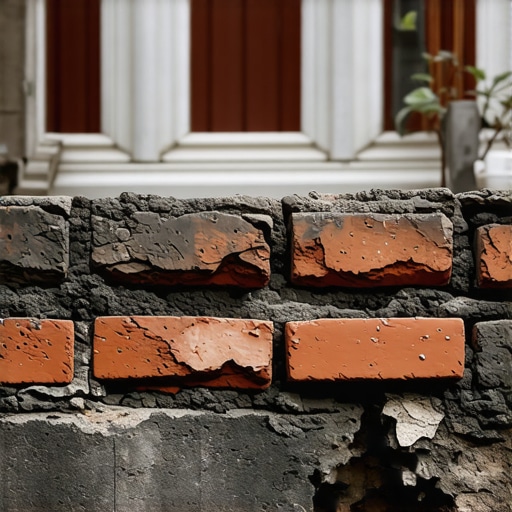
The Forensic Reality of the Powdering Facade
I was standing in a damp cellar in a century-old neighborhood when the homeowner pointed to what he called ‘brick dust’ piling up on the floor like sifted flour. To him, it was a nuisance. To me, it was a forensic crime scene. I took my inspection scope and pushed it into a void where a header brick used to be, and what I saw was structural rot. The internal wythes were turning to mush because someone, decades ago, decided to ‘fix’ a few loose joints with high-strength Portland cement. That choice, made in ignorance, had turned a breathing, living wall into a pressurized water trap. This is the reality of professional masonry restoration: it is not about making things look new; it is about stopping the slow-motion explosion of masonry units under the pressure of physics and chemistry.
The Chemistry of the ‘Sacrificial’ Joint
To understand why historic brickwork fails, you have to understand the ‘tooth’ of the material. Old bricks, fired in kilns that didn’t reach the volcanic temperatures of modern manufacturing, are relatively soft and porous. They are like sponges. They breathe. When we talk about sustainable tuckpointing mortars, we are talking about lime-based ‘mud’ that acts as the sacrificial lamb of the wall. In the world of historic brickwork repointing, the mortar must be softer and more permeable than the brick itself. If the mortar is too hard—which is what happens with modern concrete flatwork services when they try to do vertical wall work—the moisture gets trapped inside the brick. When that moisture freezes, it expands by 9%. Since it can’t escape through the hard cement joints, it blows the face right off the brick. We call this spalling, and it is the death knell for a historic building.
“Mortar is intended to be a sacrificial element of the wall, designed to deteriorate so that the masonry units themselves are preserved.” – BIA Technical Note 1
The Micro-Physics of Spalling and Hydration
The hydration process in a lime-rich mortar is a slow, elegant dance with the atmosphere. Unlike the flash-set of a bag of quick-mix, sustainable tuckpointing mortars undergo carbonation over months and even years. They re-absorb CO2 from the air to revert back to limestone. This flexibility allows the wall to shift and move without cracking the units. When I’m performing professional masonry restoration, I look for the ‘ring’ of the brick. If you tap a healthy brick with your hammer, it should sing. If it thuds, the internal structure is compromised by sub-fluorescence—the crystallization of salts within the pores. To stop this, facade cleaning isn’t just about aesthetics; it’s about removing the sulfates and nitrates that pull moisture into the wall. You cannot just blast it with water; you need a gentle chemical approach that respects the ‘skin’ of the clay.
The Retaining Wall: A Battle Against Hydrostatic Pressure
I’ve seen retaining wall batter correction projects where the entire wall was leaning at a 15-degree angle because the weep holes were plugged with mud and spider webs. Water is heavy—62.4 pounds per cubic foot. When it builds up behind a wall without retaining wall weep hole cleaning, it acts like a hydraulic ram. You can have the strongest stone in the world, but if that ‘mud’ behind it is saturated, the wall will bow. We use masonry birdsmouth cuts to create decorative but functional drainage points in some of our more intricate designs, ensuring that the water has a path of least resistance that doesn’t involve pushing your wall into the neighbor’s yard. Correcting the batter involves excavating the ‘heel’ of the wall and resetting the stones to lean into the hill, a process that requires a master’s touch with a hawk and slicker.
Chimneys and the Internal Fire
A chimney is the most stressed part of any home. It faces the freeze-thaw on the outside and 1,000-degree heat on the inside. Most homeowners ignore chimney heat shield installation until they smell smoke behind the drywall. The clay liners in old chimneys crack—a process called thermal shock. Once those cracks open, the acidic flue gases start eating the mortar from the inside out. This is where professional masonry restoration becomes a matter of life and safety. We ‘butter’ the new liners with high-temp refractory mortar, ensuring that the thermal expansion doesn’t translate into structural cracks in the exterior brickwork. It’s a dirty, cramped job, but seeing the ‘suction’ of a new firebrick as it seats into the mud is a feeling only a third-gen mason can appreciate.
“The durability of masonry depends entirely on the management of water penetration and the compatibility of the replacement materials.” – ASTM C270 Standards
The Art of the Joint: From Sand Repair to Birdsmouth Cuts
When we get down to the fine details, like masonry joint sand repair for historic pavers or masonry birdsmouth cuts for a custom header, we are talking about the ‘hand’ of the mason. A ‘slicker’ is used to strike the joint, compressing the mud to create a weather-tight seal. We don’t just ‘smear’ it in. We ‘pack’ it. If you don’t have the right ‘suction’ when you butter the brick, the bond will fail within five years. We look for ‘honeycombing’ in the mortar—little air pockets that indicate the mix was too dry or ‘burned’ in the sun. This is why we avoid the ‘lick-and-stick’ method of modern stone veneer. It has no soul, no depth, and no longevity. Real masonry is about the weight of the stone and the honesty of the joint. Doing it once means doing it right, with the right lime-to-sand ratio and the patience to let the wall ‘cure’ under damp burlap if the sun is too hot. Don’t trust a handyman with a bag of pre-mix; trust the man who knows the smell of the lime and the sound of the trowel.