
The Forensic Scene: More Than Just a Surface Flaw
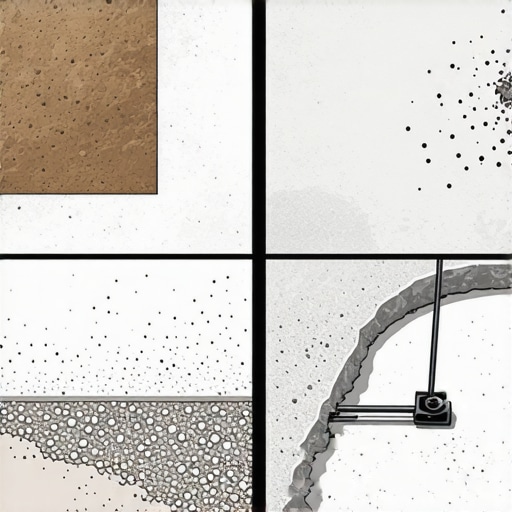
The homeowner called me out because of what they described as a “minor hairline crack” running through their stamped concrete patio. From the curb, it looked like a standard settlement issue. But when I knelt down and ran a borescope into the 1/8-inch fissure, the reality was grim. Beneath that decorative surface, the structural integrity was a ghost. The steel reinforcement was a jagged line of orange dust, oxidized to nothingness by three decades of trapped moisture. This wasn’t just a crack; it was a warning. The entire four-inch slab was cantilevered over a six-inch void where the sub-grade had simply washed away. In this trade, we don’t just look at the stone; we look at the physics of the earth beneath it. When a patio begins to pitch toward the foundation, you aren’t just losing a place to grill; you are inviting hydrostatic pressure to wage war on your basement walls. Understanding foundation underpinning and foundation slab jacking is the difference between a permanent fix and throwing money into a sinkhole.
The Physics of the Void: Why Concrete Fails
Concrete is an incredible material in compression, but it has the tensile strength of a dry biscuit. In the North, we deal with the relentless cycle of freeze-thaw. When water penetrates the soil beneath your patio, it occupies space. As temperatures drop, that water expands by 9%, exerting thousands of pounds of pressure upward—a process we call frost heaving. When the thaw comes, the soil doesn’t always return to its original density. It becomes a soup, losing its load-bearing capacity. Over time, this creates honeycombing in the sub-base, leaving the slab unsupported.
“The most common cause of concrete slab failure is the lack of proper sub-grade preparation and the subsequent migration of fine soil particles due to improper drainage.” – ACI 302.1R: Guide for Concrete Floor and Slab Construction
This is where professional masonry restoration begins. We have to address the soil before we ever touch the surface.
Method 1: The Precision of Foundation Slab Jacking (Polyurethane Injection)
Modern foundation slab jacking, or poly-jacking, is a surgical procedure for a failing patio. We drill small, 5/8-inch holes—roughly the size of a dime—through the concrete in a strategic grid. Through these ports, we inject a high-density, closed-cell structural foam. This isn’t the stuff you buy in a can at the hardware store. This is a two-part chemical reaction that occurs under the slab. As the poly-liquids mix, they expand with enough force to lift thousands of pounds of concrete. The “micro-zoom” here is in the timing. The foam expands in seconds, filling every nook, cranny, and void, consolidating the loose soil. Unlike traditional mudjacking, which adds hundreds of pounds of weight with a heavy slurry, polyurethane is lightweight and won’t cause further settlement of the weak sub-strata. It is an essential tool in commercial masonry maintenance where downtime is not an option.
Method 2: The Old School Strength of Mudjacking
If you’re a purist, you talk about “the mud.” Mudjacking involves pumping a slurry of portland cement, fine sand, and native soil (often called “sugar sand”) under the slab. This is a high-pressure operation. We use a heavy-duty pump to force this thick mixture through two-inch holes. The goal is to create a new, solid base. The physics here relies on the displacement of air and water. The slurry must have the right “suction” to bond with the underside of the slab without shrinking as it cures. However, in masonry rescue after disaster, mudjacking can be risky if the soil is still saturated, as the sheer weight of the new cement slurry can actually trigger a secondary collapse if the underlying strata aren’t stable.
Method 3: Foundation Underpinning with Helical Piers
When the patio is attached to the house or supports a heavy structure like a masonry fireplace, slab jacking isn’t enough. You need foundation underpinning. This is the heavy artillery of masonry repair. We excavate down to the footings and drive helical piers—essentially giant steel screws—deep into the earth until they hit a load-bearing strata or bedrock. We then attach a steel bracket to the pier and the slab, mechanically lifting the concrete back to its original elevation. This bypasses the “junk soil” entirely. It’s a permanent solution, often used during brick patio restoration when the original builder failed to account for soil compaction.
“Structural underpinning shall be designed to transfer the load of the structure to a soil or rock stratum capable of supporting the load without detrimental settlement.” – ASTM D1143 Standard Test Methods for Deep Foundations under Static Axial Compressive Load
Method 4: Full Excavation and Base Reconstruction
Sometimes, the “handyman special” is so far gone that you have to rip it out. If the concrete is shattered into a “spiderweb” pattern, no amount of foam will save it. This is where we talk about the “Base.” A proper patio requires 6 to 8 inches of 3/4-inch clean, angular stone—not rounded pea gravel. Angular stone locks together under compaction; rounded stone acts like ball bearings. We also integrate green roofing masonry integration techniques here by ensuring the base allows for managed water infiltration while directing the bulk of the runoff away from the home. During this process, I often find myself performing chimney leak detection or chimney flashing repair because if the patio is sinking, the house is often settling unevenly too, tearing the flashing at the roofline. Once the base is vibrated to a 98% Proctor density, we pour a new slab with 4000 PSI concrete, reinforced with #4 rebar on 12-inch centers. We don’t just lay it; we “butter” the edges and ensure a fire-rated masonry installation if an outdoor kitchen is involved.
The Warning Signs: When to Call the Master
Don’t ignore the “stair-step” cracks in your brickwork or the vertical separation where the patio meets the foundation. These aren’t cosmetic. If you see “honeycombing” at the edge of your slab—where the concrete looks like a porous sponge—the fines are washing out. This leads to a loss of skin friction between the soil and the slab. Whether it’s professional masonry restoration or a simple brick patio restoration, the goal is to stop the water. Use a “slicker” to keep your joints tight, and never, ever trust a contractor who doesn’t talk about soil density. Do it once, or do it twice. In this trade, the earth always wins if you don’t respect the physics of the pour.