
The Borescope Never Lies: A Forensic Glimpse Behind the Facade
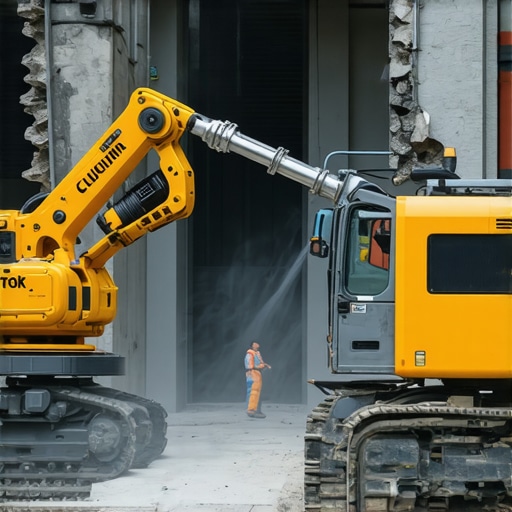
The property manager told me it was just a cosmetic issue—a few hairline fractures in a soldier course forty feet up a commercial high-rise. He wanted a quote for commercial tuckpointing and a quick coat of brickwork sealants application to hide the ‘blemish.’ I didn’t give him one. Instead, I pulled out the 4mm borescope and drilled a pilot hole into the mortar joint. What I saw on the screen was a structural graveyard. Behind the brick veneer installation, the galvanized steel ties had vanished, eaten away by decades of moisture trapped in the wall cavity. The veneer wasn’t just cracked; it was ‘pillowing,’ disconnected from the backup wall and held up by little more than gravity and hope. This is the reality of modular masonry construction in high-stress environments. If we hadn’t caught it, that facade would have ended up on the sidewalk. But instead of a multimillion-dollar tear-down, we brought in the robots.
“The accumulation of water within a masonry wall system, whether through infiltration or condensation, is the primary catalyst for the degradation of both units and mortar joints.” – BIA Technical Note 7: Water Resistance of Brick Masonry
The Physics of Failure: Why Facades Give Up the Ghost
In the world of forensic masonry, we deal with the brutal reality of the freeze-thaw cycle. When you’re dealing with a commercial smokestack repair or a massive brick column repair, you aren’t just fighting gravity; you’re fighting thermodynamics. Water enters a hairline foundation crack repair or a failing joint. When that water freezes, it expands by exactly 9% in volume. In a confined space behind a brick, that expansion generates thousands of pounds of pressure per square inch. It’s a slow-motion explosion. If you’ve used a high-strength Portland cement on a historic facade—what we call a ‘hard mud’—the brick itself will shatter before the mortar gives way. That’s a cardinal sin in my book. We look for ‘honeycombing’ in the backup concrete and ‘cold joints’ where the original pour failed to bond. On a commercial scale, these voids become reservoirs for disaster. This is where concrete pump masonry mixes become the surgeon’s scalpel. We don’t just slap on some mud and call it a day; we have to re-establish the structural link between the skin and the skeleton of the building.
Enter the Machine: The Mechanics of Robotic Grout Injection
Robotic grout injection is a far cry from a handyman with a pointing hawk and a slicker. It is a high-precision operation designed to fill internal voids without dismantling the exterior. The process starts with a grid of injection ports, strategically placed based on ultrasonic scanning of the wall’s density. We use specialized concrete pump masonry mixes that have been engineered for extreme flowability—what we call ‘rheology’ in the lab. These aren’t your standard bag-mixes from a big-box store. These mixes contain superplasticizers and shrinkage-compensating agents that allow the grout to travel through a 3mm needle, buttering the internal crevices of the wall from the inside out. The robot controls the injection pressure with millibar precision. If the pressure is too low, you get a ‘cold joint’ and a void; if it’s too high, you blow the brick veneer right off the wall. It’s a delicate dance of fluid dynamics. Unlike traditional stone wall repair, where we might manually pack a joint, the robot ensures that every cubic centimeter of the internal cavity is occupied by a dense, structural matrix. This is the only way to effectively stabilize a failing commercial smokestack repair without a full demolition.
“Grout for use in reinforced masonry shall be formulated to provide the necessary flow for complete filling of the grout space without segregation of the constituents.” – ASTM C476: Standard Specification for Grout for Masonry
The Chemistry of the Mud: Why Mix Design Matters
When I talk about the ‘tooth’ of a repair, I’m talking about the mechanical bond between the old masonry and the new injection. Modern modular masonry construction often fails because the materials are too rigid. In our injection process, we prioritize the hydration curve of the grout. If a grout ‘flashes’ or sets too fast, it creates a brittle bond that will crack under the first sign of thermal expansion. This is especially critical in brick column repair where the load-bearing requirements are astronomical. We also look at sustainable block cutting practices to ensure that the replacement units we use—if any—are sourced and shaped to match the original porosity of the wall. This ensures ‘breathability.’ If you seal a wall too tight with brickwork sealants application before the internal grout has fully carbonated, you’re just trapping moisture that will eventually cause spalling. The grout must be ‘sacrificial’ in its moisture profile but ‘structural’ in its load-bearing capacity. It’s a paradox that only a master mason truly understands. We’re not just filling holes; we’re restoring the building’s ability to handle stress.
Case Study: The Vertical Challenge of Smokestacks and High-Rises
Think about a 200-foot industrial chimney. The thermal gradient from the inside to the outside is staggering. You have 400-degree gases on the interior and sub-zero winds on the exterior. This causes the masonry to expand and contract like a giant lung. A standard foundation crack repair approach won’t work here. The injection grout must have a modulus of elasticity that matches the existing brickwork. If it’s too stiff, the smokestack will literally tear itself apart. We use robotic rigs that crawl the exterior of the stack, injecting a custom-tailored concrete pump masonry mix that has been ‘air-entrained.’ These tiny, microscopic air bubbles act as pressure-relief valves for when moisture inevitably finds its way in and freezes. This is the difference between a repair that lasts five years and one that lasts fifty. Most ‘handyman specials’ don’t account for the ‘suction’ of a dry brick, which can pull the water out of the grout so fast it ‘burns’ the mix, leaving it weak and crumbly. We pre-hydrate the wall through the injection ports to ensure the grout stays wet enough to cure properly.
The Final Trowel: Preserving the Structural Legacy
At the end of the day, commercial tuckpointing and robotic injection are about more than just aesthetics. They are about forensic science. When we perform stone wall repair or stabilize a brick veneer installation, we are fighting the entropy that eventually claims all man-made structures. The tech has changed—we use lasers, robots, and advanced chemical polymers—but the goal is the same one my grandfather had: build it once, or do it twice. Don’t be fooled by a contractor who promises a quick fix with a bucket of cheap caulk. True structural health comes from the inside. It’s about the density of the pour, the chemistry of the bond, and the precision of the injection. If your commercial facade is showing signs of distress, don’t just look at the surface. Look deep into the voids, because that’s where the real story is told. Robotic grout injection isn’t just a fancy tool; it’s the future of masonry preservation, ensuring that our skyline remains as solid as the day the first soldier course was laid.