The Autopsy of a Fallen Hearth
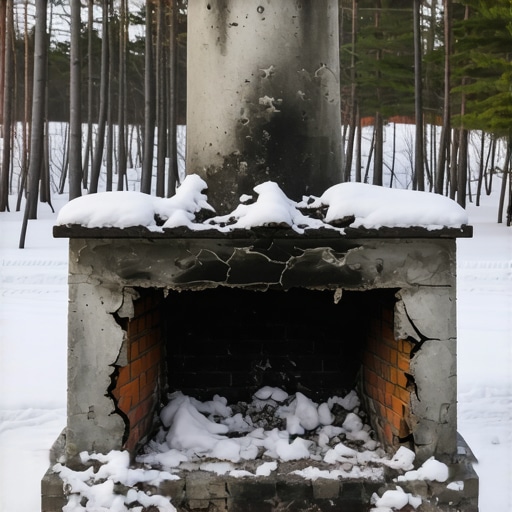
I recently stood in a backyard in the suburbs of Chicago, staring at what used to be a $25,000 outdoor entertainment centerpiece. Now, it was just a pile of expensive rubble and cracked limestone. The homeowner was baffled. He bought the best stone, hired a guy with a nice truck, and yet, after one single winter, the entire structure looked like it had been through a mortar attack. I didn’t need a magnifying glass to see the culprit. It was written in the jagged, vertical fissures running through the firebox and the ‘spalling’—that’s when the face of the brick just pops off—littering the patio.
My father, a man who had more mortar under his fingernails than blood in his veins, used to have a ritual. Every time we finished a project, he’d take a handful of the ‘mud’—the mortar—and smear it on a scrap piece of wood. He’d leave it out in the rain and the snow for a month. If that little dab didn’t bond like a curse to that wood, he’d change his mix for the next job. He knew what many modern installers forget: an outdoor fireplace isn’t just a decoration; it’s a structural machine that has to survive a 2,000-degree internal temperature while the outside is sitting at twenty below zero. If you don’t account for that thermal violence, your fireplace is a ticking time bomb.
1. The Foundation: Failing the Frost Line
The most common failure I see in concrete flatwork services is the ‘floating’ hearth. In northern climates, the ground is a living, breathing thing. When the moisture in the soil freezes, it expands, exerting thousands of pounds of upward pressure. This is ‘frost heave.’ If your fireplace footing isn’t dug deep enough—well below the local frost line—the entire structure will tilt. You won’t notice it in December, but by March, the freeze-thaw damage restoration costs will exceed the original build price. We aren’t just pouring a pad; we are anchoring a monolith. Without self-leveling masonry lifts to ensure the base is perfectly plumb before the first soldier course is laid, the center of gravity shifts, and the masonry begins to tear itself apart at the weakest joints.
“Foundations for outdoor masonry chimneys must be designed to support the load and extend below the frost line to prevent movement caused by soil freezing.” – BIA Technical Note 19B
2. Refractory Ignorance: Using Standard Brick in the Firebox
I’ve seen ‘pros’ line a firebox with standard red clay bricks. That’s a death sentence. Standard bricks are porous. They hold moisture like a sponge. When you light a fire, that moisture turns to steam. Because the steam has no place to go, it creates internal pressure that shatters the brick from the inside out. You must use firebricks (refractory bricks) and refractory ‘mud.’ These bricks are fired at much higher temperatures and have a different mineral composition—high alumina—that allows them to expand and contract without losing their structural integrity. When buttering these bricks, the joints must be thin, usually 1/8th of an inch. If you have a thick, one-inch mortar joint in your firebox, it’s going to crumble and fall out because standard mortar can’t handle the thermal shock. This is where chimney sweep and repair becomes a forensic investigation into why the firebox is collapsing.
3. The Lick-and-Stick Trap: Ignoring the Air Gap
Modern ‘lick-and-stick’ stone veneer is the bane of my existence. Contractors often stick these thin stones directly to a concrete block core with a heavy Portland-based concrete patch or thin-set, leaving no room for the materials to breathe. Here’s the physics: the inner block core gets hot and expands at a different rate than the cold outer stone veneer. Without an expansion joint or a small air gap, the stone will literally pop off the wall. I’ve seen brick patio restoration jobs where the fireplace stone fell off and crushed the pavers below. We need to use structural brick ties replacement techniques even on small outdoor features to ensure the veneer is mechanically fastened, not just glued. If moisture gets trapped behind that stone, the 9% expansion of water as it turns to ice will shear that stone right off the ‘hawk’ before you can say ‘lawsuit.’
4. Drainage and the Dreaded Chimney Leak
Water is the universal solvent. It wants to get inside your masonry and stay there. A fireplace without proper chimney flashing repair and a high-quality chimney cap is just a well for rainwater. If water saturates the interior of the flue and then hits a freeze cycle, it causes ‘honeycombing’ in the mortar joints—a structural weakening where the mortar turns to a sandy grit. Chimney leak detection is often too late; by the time you see the dampness on the exterior stone, the internal chimney flashing repair has already failed. You need a proper ‘wash’—the sloped concrete top of the chimney—to shed water away from the structure. If that wash is flat or cracked, the water will travel down the structural brick ties and rot the core from the inside out.
“Mortar joints shall be struck with a joiner to compact the mortar surface, making it more resistant to water penetration.” – ASTM C270 Standards
5. The Wrong Mud for the Climate
In the old days, we used lime-heavy mortars. Why? Because lime is ‘self-healing.’ If a tiny hairline crack forms, the lime reacts with carbon dioxide and moisture to actually reseal the crack. Modern Type S mortar is incredibly hard, but it’s also brittle. In a freeze-thaw damage restoration scenario, a hard mortar is often the enemy. If the mortar is harder than the brick, the brick will crack instead of the joint. I always recommend sustainable block cutting and the use of a ‘softer’ mortar mix for the exterior veneer to allow for the natural movement of the structure. Using a ‘slicker’ tool to compress the joints is also vital; it creates a ‘skin’ on the mortar that repels water. If you just ‘rake’ the joints for a rustic look without compacting them, you’re inviting the ice to move in and set up shop.
Ultimately, a fireplace that lasts a century isn’t an accident. It’s the result of respecting the physics of heat and the chemistry of water. Whether you are performing brick restoration or building new, don’t let a ‘handyman’ with a trowel ruin your investment. Hire someone who knows the ‘ring’ of a good brick and the ‘tooth’ of the stone. Do it once, or you’ll be paying me to come out with my scope and tell you why it’s time to tear it down and start over.