
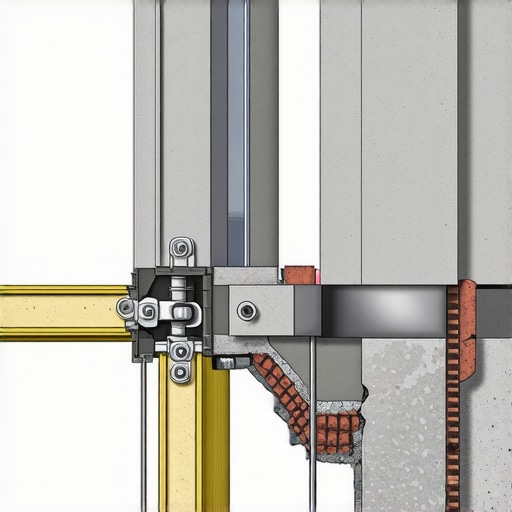
The Silent Groan of a Dying Foundation
I’ve walked into enough basements to know the smell of a structure in distress. It’s a mix of damp earth, decaying organic matter, and the metallic tang of oxidized rebar. Most homeowners ignore the signs until the wall looks like it’s trying to belly-flop onto the washer-dryer. They see a small line in the mortar and think it’s just ‘settling.’ But as a third-generation mason, I know better. The homeowner thought it was just a hairline crack. But when I put my scope inside the cavity of a 1960s cinder block wall last Tuesday, I saw the truth: the structural steel was rusted to dust, and the hydrostatic pressure from the outside soil was ready to win the fight. This is the ‘squeeze,’ and if you don’t address the physics of the soil, your house is essentially a sinking ship in slow motion.
The Geotechnical Nightmare: Why Walls Bow
In the North, where the freeze-thaw cycle is a relentless hammer, the soil is your greatest enemy. When water gets trapped in silty clay, it doesn’t just sit there. It expands. Physics tells us that water expands by roughly 9% when it turns to ice. That expansion happens in the microscopic voids of the soil, creating a lateral load that a standard 8-inch block wall was never designed to handle. This is compounded by the lack of a proper retaining wall drainage upgrade or failed footing drains. When that soil saturates, it becomes a heavy slurry, exerting ‘hydrostatic pressure’—a force so consistent it can snap a soldier course of bricks like toothpicks.
“Water penetration is the single greatest threat to masonry durability, leading to efflorescence, spalling, and structural failure.” – BIA Technical Note 7
When I inspect these forensic scenes, I’m looking for the ‘tooth’ of the crack. A stair-step crack usually means the footing is dropping. A horizontal crack across the third or fourth course? That’s the wall bowing under the weight of the world. If you see that horizontal bulge, you’re looking at a structural failure that requires more than just a bucket of ‘mud’ and a slicker. You need engineering.
Method 1: Carbon Fiber Reinforcement (The Aerospace Solution)
The modern era has given us advanced masonry adhesives and carbon fiber straps that would make an old-school mason’s head spin. This isn’t your grandfather’s fix, but it’s damned effective. We use carbon fiber because it has a tensile strength 10 times that of steel. We don’t just slap it on; we ‘butter’ the wall with a high-modulus epoxy resin. The chemistry here is vital: the epoxy must penetrate the pores of the masonry to create a monolithic bond. This is why we grind the wall down to the raw aggregate before application. If you’re dealing with commercial masonry facade maintenance, this is often the go-to for reinforcing parapets without adding weight.
Method 2: Steel I-Beam Soldier Piles
For walls that have moved more than two inches, carbon fiber is a Band-Aid on a bullet wound. That’s when we bring in the heavy metal. We use steel I-beams, anchored into the concrete floor slab and bolted to the floor joists above. This creates a fulcrum that resists the inward push of the soil. The key here is the ‘batter’—the angle of the wall. If the wall has a significant lean, we might even use retaining wall batter correction techniques to pull it back over time using tension bolts. It’s crude, it’s loud, and it takes up a bit of floor space, but it turns a failing wall into a fortress. It’s the difference between a ‘handyman special’ and a permanent forensic fix.
Method 3: Helical Tiebacks (The Earth Anchor)
If you want to fix the problem without digging up your entire yard (the ‘Total Excavation’ nightmare), helical tiebacks are the gold standard. We drill a small hole through the foundation and screw a large steel corkscrew deep into the ‘good’ soil—past the active zone where the freeze-thaw happens. This is high-level retaining wall reinforcement. We then put a plate on the inside of your basement wall and tighten it. This pulls the wall outward, countering the squeeze. It’s all about the torque. We monitor the pressure in real-time to ensure we aren’t just cracking the block. This is often paired with flush pointing services on the exterior if we can reach it, to ensure the wall is sealed against further intrusion.
“The design and installation of masonry must account for lateral loads and the physical properties of the surrounding soil to prevent catastrophic displacement.” – ASTM C1324 Standard
The Trap: Stone Veneer Over Brick and Hidden Weight
I see a lot of folks trying to hide their bowing walls by applying stone veneer over brick. This is a recipe for disaster. You’re adding thousands of pounds of dead weight to a structure that is already screaming for help. That veneer creates a ‘cold joint’ where moisture can sit, accelerating the rust on any remaining rebar. If you’re going to do a veneer, you need to ensure the underlying structure is sound and that you’ve used proper brickwork sealants application to keep the water out of the substrate. Without that, you’re just putting a tuxedo on a corpse.
The Drainage Mandate: Do It Once, or Do It Twice
None of these fixes—not even a fire-rated masonry installation or the most expensive I-beams—will last if you don’t fix the water. You need a retaining wall installation mindset even for your house foundation. This means grading the soil away from the house and ensuring your gutters aren’t dumping a thousand gallons of water right into the ‘squeeze zone.’ In my forty years of tapping bricks, I’ve never seen a wall fail that had perfect drainage. It’s always the water. It’s always the freeze. It’s always the neglect of the basics. Don’t be the homeowner who waits for the collapse. Fix the squeeze before the earth decides it wants to live in your basement.