
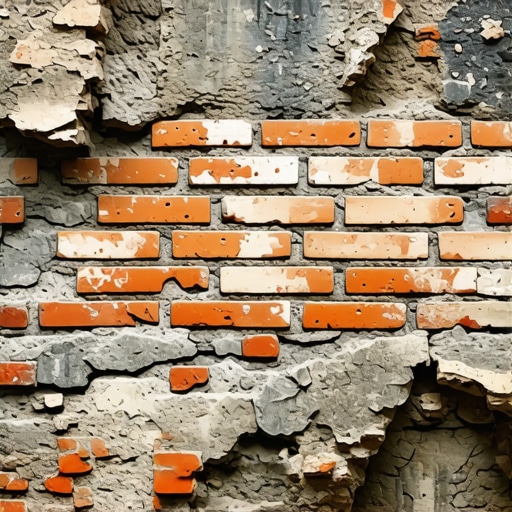
The first time I saw a full-scale wall failure up close, it wasn’t a slow progression; it was a sudden, violent shedding of three thousand bricks that had been screaming for help for a decade. The homeowner had called me out because they noticed a hairline crack near the second-story window. When I inserted the endoscope into the cavity, what I saw was a graveyard of rusted metal. The structural steel ties, supposed to be the umbilical cord between the masonry and the framing, had turned to flakes of red dust. They weren’t holding anything. The wall was standing purely by gravity and a prayer. That is the reality of masonry forensics. It is a world where the invisible chemistry of oxidation meets the relentless physics of gravity, and if you are not paying attention, your house will eventually try to return to the earth. Most people think of brick as permanent. It is not. It is a living, breathing system that requires specific equilibrium to survive. When that equilibrium is disrupted—usually by moisture or poor craftsmanship—the veneer begins its slow divorce from the structure.
1. The Tell-Tale Bow: Identifying Wall Bulges
One of the most immediate indicators of a veneer in crisis is a visible ‘belly’ or bulge in the wall. This usually occurs when the wall ties—those corrugated metal strips that bridge the air gap—have failed due to corrosion or improper installation. When these ties snap or pull out of the mortar, the brick skin is no longer laterally supported. It begins to lean outward under its own weight or is pushed by the internal pressure of trapped water.
“Corrosion of metal ties and anchors can lead to a total loss of lateral support, resulting in the eventual collapse of the masonry wythe.” – BIA Technical Note 28B
This isn’t just an aesthetic issue. A bulging wall is a structural emergency. In the trade, we talk about the ‘tooth’ of the mortar, but if the ties are gone, that tooth has nothing to bite into. The physics here is simple but brutal: once the center of gravity shifts past the base of the brick, the only thing keeping it up is the friction of the mortar joints. In some modern forensic investigations, we are now utilizing digital twin masonry projects to map these bulges with millimeter precision, allowing us to see movement that the human eye might miss until it is too late.
2. The Stair-Step Fracture: More Than Just Settlement
Everyone has seen stair-step cracks, but few understand what the masonry is trying to say. If the crack follows the mortar joints in a diagonal pattern, it often indicates differential settlement. However, if that crack starts to widen at the top and the brick itself is pulling away from the window casings, you are looking at veneer detachment. This is where historic mortar analysis becomes critical. If a previous ‘handyman’ used a high-strength Portland cement (Type S) to repoint a soft, lime-based historic wall, the brick has no room to breathe or move. The harder mortar acts like a wedge, and when the wall expands in the summer heat, the pressure has nowhere to go but out.
“Mortar should always be weaker than the masonry units it binds, ensuring that stresses are relieved through the joints rather than the brick itself.” – ASTM C270 Standards
When the brick can’t expand into the joint, it pops the ties or shears them off entirely. This is why historic masonry preservation is not just about looks; it is about matching the compressive strength of the materials to ensure the wall doesn’t commit suicide through internal stress.
3. Efflorescence and the Hidden Hydrostatic Pressure
If you see a white, powdery substance blooming across your brick, don’t just reach for the power washer. That is efflorescence—mineral salts carried to the surface by moisture. It is a flashing red light that water is trapped behind your veneer. In a properly functioning wall, the air cavity and weep holes allow moisture to escape. But when those weep holes are clogged with ‘mud’ (excess mortar droppings) during construction, the water sits against the ties. This leads to a process called ‘flash setting’ of the moisture, where it cycles between liquid and vapor, accelerating the rot of the structural brick ties. If you ignore this, the next stage is spalling, where the face of the brick literally explodes because the water inside has frozen and expanded by 9%. For complex cases, robotic masonry repair is now being used to reach into these cavities and clear obstructions or install secondary drainage without tearing down the entire facade. Proper masonry cleaning should only happen after the source of the moisture is identified and mitigated, otherwise, you’re just feeding the beast more water.
4. Corner Separation and Soldier Course Displacement
Look at the corners of your home. If there is a vertical gap where two walls meet, or if the soldier course (bricks laid vertically) above a window is slipping, the veneer is no longer ‘buttering’ correctly to the structure. This is often exacerbated by poor concrete flatwork services around the foundation. If the soil isn’t graded correctly or the concrete slabs have shifted, hydrostatic pressure builds up at the base of the wall. We see this often in patio stone realignment jobs where the patio has tilted toward the house, funneling thousands of gallons of runoff directly into the brick’s foundation ledge. To fix this, we often perform a structural brick ties replacement. We use stainless steel helical ties that are driven through the brick and into the backup material—be it wood, block, or concrete—to ‘pin’ the wall back in place. This is a surgical procedure that requires a steady hand and a ‘hawk’ full of perfectly matched mud to hide the injection points. We are also seeing a rise in metallic brick colors application to mask these repairs, though a true mason prefers the honest look of a well-executed sustainable masonry materials match.
The Forensic Solution: Fix it Once, Fix it Right
Fixing a detaching veneer isn’t about slapping some caulk in a crack. It requires a deep dive into the moisture profile of the building. We start with a historic mortar analysis to ensure any new ‘mud’ we introduce won’t cause further damage. Then, we look at the ties. If they are gone, we use helical pinning. If the base is sinking, we look at the concrete flatwork services and drainage. The goal is historic masonry preservation—keeping the original character while upgrading the hidden structural components. Don’t be fooled by ‘lick-and-stick’ contractors who want to cover the problem with stone veneer. That’s just putting a shroud over a corpse. You need to restore the mechanical bond between the skin and the skeleton. Whether it’s through robotic masonry repair or old-fashioned trowel work, the physics of the wall must be respected. Do not wait for the wall to talk to you by falling into your driveway. If you see the signs, the time for forensic intervention is now.