Stop Masonry Water Damage: 5 Proven 2026 Repair Fixes
The Forensic Reality of the Hairline Crack
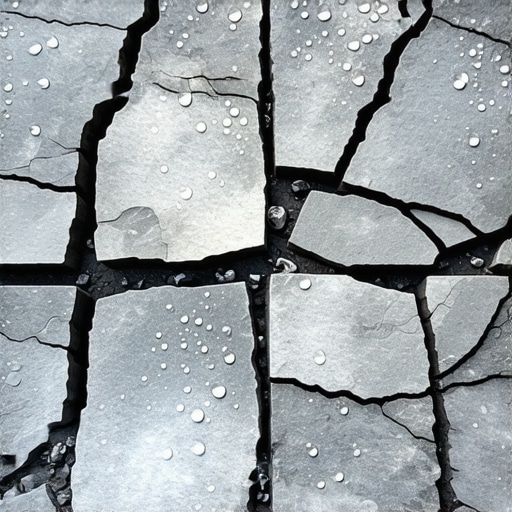
I remember a call-out last November to a limestone estate that looked perfect from the curb. The homeowner pointed out what she called a ‘pencil line’ crack running vertically through the brick quoin repair work done just two summers prior. She thought it needed a bit of caulk. I pulled out my thermal imager and a fiber-optic scope. When I drilled a pilot hole and threaded that lens into the cavity, the truth wasn’t a crack—it was a graveyard. The structural steel lintels were so oxidized they looked like puffed pastry, and the back-up wythe of common brick was turning back into mud. This is the forensic reality of masonry: by the time you see the symptom on the surface, the disease has been eating the bones for a decade. Water is a patient predator. It doesn’t just sit; it migrates, expands, and dissolves. If you are dealing with freeze-thaw damage restoration in 2026, you aren’t just ‘fixing a wall’; you are managing the physics of fluid dynamics and the chemistry of mineral salts.
“Water penetration is the single greatest threat to masonry durability. The design and construction of masonry should be such that water is prevented from entering the masonry or, if it does enter, it is drained to the exterior.” – BIA Technical Note 7
1. The Science of Brick Spalling Prevention: More Than a Surface Fix
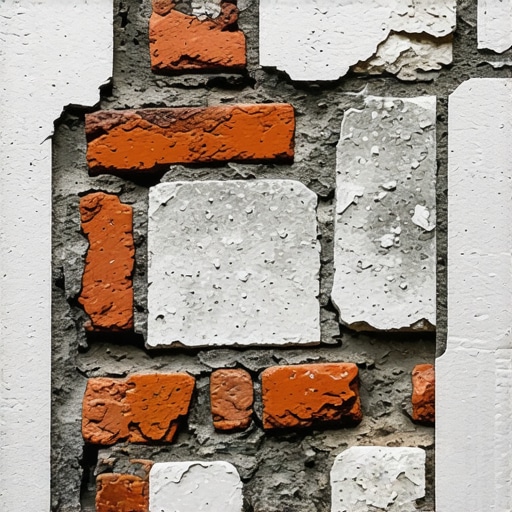
When we talk about brick spalling prevention, we are fighting a battle against the 9% expansion of water. In northern climates, moisture gets trapped in the microscopic pores of a brick. When that temperature drops, the ice forms, and the internal pressure exceeds the tensile strength of the clay. The face of the brick simply pops off. In the old days, we just replaced the brick. In 2026, we look at the ‘vapor permeability’ of the system. If some ‘handyman’ slapped a high-gloss acrylic sealer on your house, he didn’t protect it; he signed its death warrant. You’ve trapped the moisture behind a plastic film. The real fix involves using breathable silane-siloxane penetrating repellents that allow the wall to ‘breathe’ while keeping liquid water out. We look for the ‘tooth’ of the material—that gritty, open-pore structure that allows for the natural migration of salts without causing sub-florescence. If the brick is already soft, we use consolidation treatments that chemically re-bind the friable clay before we even think about stone facade restoration.
2. Retaining Wall Weep Hole Cleaning and Hydrostatic Pressure
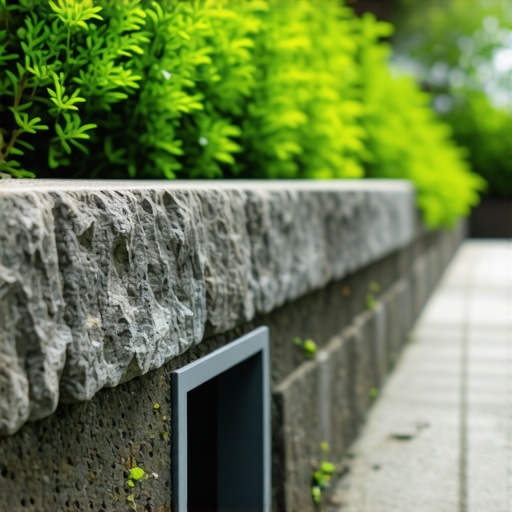
A retaining wall is essentially a dam that isn’t supposed to hold water. I’ve seen 24-inch thick granite walls lean like the Tower of Pisa because the weep holes were clogged with silt and spider webs. Retaining wall weep hole cleaning is the most neglected maintenance task in the industry. When water collects behind a wall, it creates hydrostatic pressure—a heavy, invisible force that can push thousands of pounds against every square foot of masonry. If your ‘mud’ (mortar) is cracking in a stair-step pattern on a garden wall, it’s not a mortar problem; it’s a drainage crisis. The 2026 standard involves retrofitting these walls with high-flow drainage inserts and ensuring the gravel ‘chimney’ behind the wall hasn’t been contaminated with fines. I often tell clients: if you don’t see water coming out of your weep holes after a heavy rain, that water is still inside your wall, and it’s looking for a way out through your mortar joints.
3. High-Performance Mortar Mixes and the ‘Sacrificial’ Principle
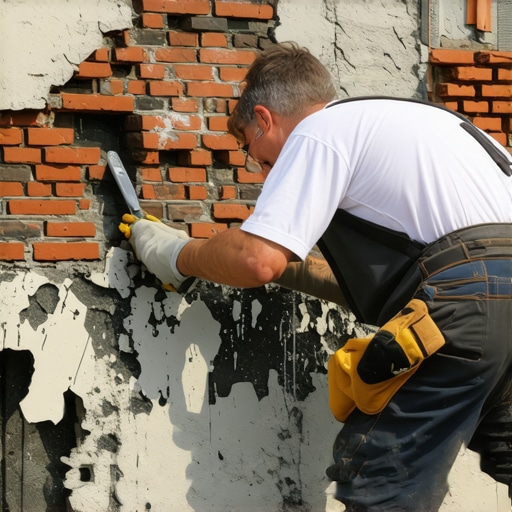
The biggest mistake modern masons make is using ‘Type S’ mortar on everything. It’s too hard. It’s like putting a diamond between two crackers; the crackers are going to break first. In stone facade restoration, the mortar must be the sacrificial lamb. It should be softer than the surrounding stone so that when the wall moves—and it *will* move—the mortar cracks, not the stone. We are now utilizing high-performance mortar mixes that incorporate hydraulic lime (NHL) and fiber-reinforced mortars. These fibers act like microscopic rebar, giving the ‘mud’ a level of flexural strength that old-school Portland mixes can’t touch. When we ‘butter’ a joint today, we aren’t just slapping it on. We are looking for ‘suction’—the rate at which the brick pulls moisture out of the mix. If the brick sucks the water out too fast, the mortar ‘burns’ and never reaches its full chemical bond. This is where masonry birdsmouth cuts come into play on corners; precision matters because the thinner the joint, the less room for error in the mix chemistry.
“Mortar should be selected based on the strength of the masonry units. A mortar that is too strong can lead to the deterioration of the units themselves during thermal expansion and contraction.” – ASTM C270 Standard
4. Precision Engineering: Brick Quoin Repair and Birdsmouth Cuts
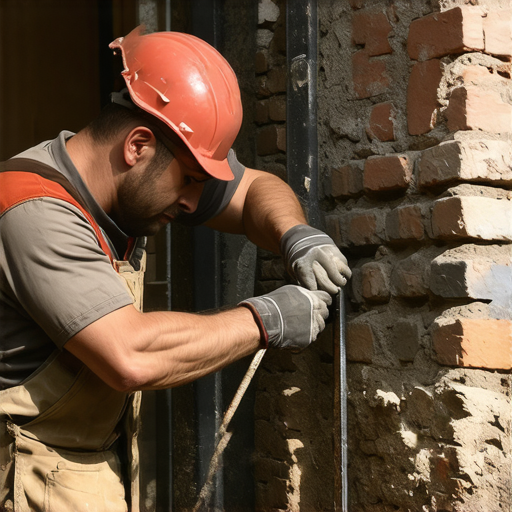
The corners of a building—the quoins—take the brunt of the structural load and the weather. Brick quoin repair isn’t just about aesthetics; it’s about restoring the ‘interlock’ of the building’s skin. When a corner settles, you get ‘shear’ forces that can snap a brick in half. I’ve spent days on a hawk and trowel, hand-carving masonry birdsmouth cuts—those V-shaped notches that allow bricks to wrap around an corner without a vertical ‘cold joint.’ A cold joint is where two pours or two sections of masonry meet without a physical bond; it’s a highway for water. By using precision-cut units, we eliminate that weak point. In 2026, we are also seeing the rise of AI masonry assessment. We can now drone-map a facade and use algorithms to identify the specific quoins that are under the most stress, allowing us to intervene before the corner actually fails.
5. The Future of Fixes: AI Assessment and 3D Printed Repairs
We are entering the era of the ‘Digital Mason.’ AI masonry assessment allows us to see sub-visual shifts in a wall’s geometry. While I still trust my ‘slicker’ (the jointer tool) and my ‘ring’ test, data doesn’t lie. If the AI shows a 2mm shift in a soldier course over six months, we know there’s a soil issue. For highly complex stone facade restoration where a piece of ornamental carving has been obliterated by freeze-thaw damage restoration, we are now using 3D printed masonry repairs. We scan the remaining detail, print a replacement in a mineral-based ‘ink’ that matches the parent stone’s porosity and color, and ‘butter’ it into place. It’s a marriage of the 19th-century craft and 21st-century tech. It’s not just about making it look good; it’s about ensuring the thermal expansion coefficient of the repair matches the original stone so it doesn’t pop out in three years. This is the ‘Cure’ rather than the ‘Band-Aid.’