Stop Heat Loss: 3 Signs You Need Chimney Damper Repair in 2026
The Forensic Reality of the Failing Firebox
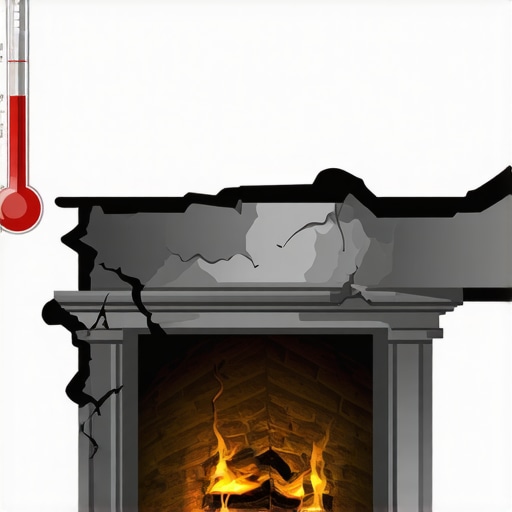
The homeowner thought it was just a hairline crack running along the firebrick in the back of the hearth. They called me in because the living room felt like an icebox every time the wind howled from the north, despite the furnace running at full tilt. But when I put my scope inside the throat of that chimney, I didn’t just see a drafty door. I saw that the structural steel lintel was rusted to dust, and the damper frame had warped so severely it was acting like a permanent exhaust fan for their expensive heated air. This wasn’t just a maintenance fluke; it was a systemic failure of the masonry envelope. When we talk about chimney damper repair in 2026, we aren’t just talking about a piece of flappy metal. We are talking about the thermal integrity of your entire structure. If your damper isn’t sealing, you might as well leave a window open all winter. Modern structural masonry inspection reveals that a compromised damper is often the first domino to fall in a series of expensive repairs, including chimney cap replacement and, in severe cases of moisture migration, full repointing services for the exterior stack.
“Water penetration is the single greatest threat to masonry durability. When dampers fail to seal, moisture enters the flue, reacts with creosote, and forms carbonic acid that eats mortar from the inside out.” – BIA Technical Note 7
The Physics of Heat Loss: The Stack Effect
To understand why your damper is failing, you have to understand the ‘Stack Effect.’ Your house is essentially a giant straw. Warm air rises because it is less dense. In a perfect world, your chimney damper acts as a surgical plug at the top of that straw. But masonry is a living, breathing thing. Over decades, the ‘tooth’ of the mortar—that microscopic grip the mud has on the brick—begins to fail due to thermal cycling. In 2026, we are seeing more extreme temperature swings than ever before. In northern climates, the freeze-thaw cycle is brutal. If moisture gets past a rusted damper, it gets into the smoke shelf. When that water freezes, it expands by 9%, literally pushing the bricks apart from the inside. This is where AI masonry assessment becomes invaluable; we can now use thermal imaging and algorithmic modeling to predict exactly where a chimney will spall before the first flake of brick hits the ground. If you are noticing white, salty powder on your interior bricks—what we call efflorescence—that is a red flag that your damper or cap is allowing moisture to bypass the thermal barrier.
Sign #1: The Auditory Tell (The Rattle and the Whistle)
If you hear a persistent whistling or a metallic rattle when the damper is supposedly closed, you have a seal failure. Most old-school dampers are cast iron ‘throat’ dampers. They rely on a metal-on-metal connection. Over time, the sulfur in soot reacts with humidity to create a corrosive paste that pits the iron. This prevents a flush fit. When I’m out in the field doing a commercial masonry maintenance check, I look for ‘scorched’ edges on the damper plate. This indicates that heat is leaking through a gap, creating a localized jet of hot air that further warps the metal. This thermal bridging doesn’t just waste energy; it puts unnecessary stress on the surrounding masonry. If the warp is bad enough, it can even transfer torque into the chimney walls, leading to vertical cracks that might eventually require foundation helical pier installation if the chimney’s footprint begins to pull away from the main structure due to uneven settlement caused by localized heat-sinks in the soil.
Sign #2: Resistance and ‘Ghost’ Resistance
When you pull that handle or turn that screw, it should feel smooth—like ‘buttering’ a fresh brick with a well-mixed batch of Type N mortar. If you feel a gritty resistance, or if the damper refuses to seat fully, you are likely dealing with creosote buildup or ‘honeycombing’ of the interior masonry. Creosote is a byproduct of incomplete combustion, and it is incredibly ‘tenacious.’ It sticks to the damper hardware like glue. More dangerously, if you feel a ‘ghost’ resistance—where the handle moves but the plate doesn’t—you likely have a sheared pin. In BIM masonry projects, we now model the mechanical stress on these components because we’ve realized that the constant expansion and contraction of the firebox can actually ‘walk’ a damper frame right out of its bedding. If your damper is stuck open, you are losing hundreds of dollars a month in heat. If it’s stuck closed, you are a back-puffing fireplace away from carbon monoxide poisoning.
“All chimneys shall be provided with a listing and labeled chimney cap to prevent the entry of rain, snow, and debris, which are the primary catalysts for damper hardware oxidation.” – ASTM E2112 Standards
Sign #3: Visible Spalling and Mortar Decay in the Throat
Get a flashlight and look up. If you see ‘flakes’ of brick sitting on your damper plate, your chimney is cannibalizing itself. This is often the result of a failed damper allowing cold air to crash into the warm interior masonry, causing a localized freeze-thaw event right in the throat of the chimney. This requires more than just a quick fix; you need fire-rated masonry installation to replace the damaged firebricks. I’ve seen ‘handyman specials’ where someone tried to use regular mortar to patch a firebox. Regular mud can’t handle the heat; it turns to sand in a week. You need high-temperature refractory mortar. In some cases, if the damage has reached the exterior, we might even need to discuss foundation slab jacking if the chimney’s weight distribution has shifted due to internal structural decay. For those with luxury features, such as an outdoor masonry fountain restoration project nearby, remember that the same freeze-thaw principles apply to all your stonework—if the seal is gone, the stone is doomed.
The Solution: Modern Restoration and Sealing
In 2026, we don’t just replace like-for-like. We upgrade. If your throat damper is shot, we often recommend a top-sealing damper. This sits at the very top of the flue and is operated by a cable. It acts like a storm door for your chimney. Combined with a chimney cap replacement, this creates a dead-air space that provides incredible insulation. We use ‘slicker’ tools to ensure every joint in the repair is struck perfectly, ensuring no water can find a ledge to sit on. Whether you are dealing with a historic home that needs full repointing services or a modern build requiring an AI masonry assessment, the goal remains the same: keep the heat in and the weather out. Don’t wait until the ‘ring’ of your bricks turns into a dull thud. Address the damper now, or you’ll be calling me for a full-scale forensic reconstruction later.

![3 Sustainable Block Cutting Tactics to Cut Project Waste [2026]](https://masonryrescue.com/wp-content/uploads/2026/02/3-Sustainable-Block-Cutting-Tactics-to-Cut-Project-Waste-2026.jpeg)