Stop Foundation Sinking: Is Helical Pier Installation Best in 2026?
The Anatomy of a Failing Foundation: A Forensic Scene
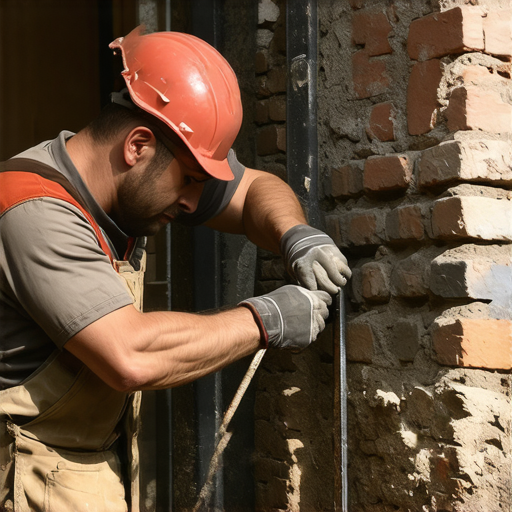
The homeowner thought it was just a hairline crack. A thin, jagged line tracing the mortar joints on the east wing of a 1920s Tudor. But when I put my scope inside the cavity and peeled back a section of the plaster, I saw the structural steel was rusted to dust and the brick ties had snapped like dry twigs. The building wasn’t just ‘settling’; it was gasping for air as the soil beneath it surrendered to hydrostatic pressure. I’ve spent forty years in the mud, following in the footsteps of a father and grandfather who taught me that a building is only as honest as its footprint. Most people see a wall; I see a complex hydraulic system that is constantly fighting the earth. When that fight starts to go sideways, the symptoms show up in the masonry long before the floorboards start to groan. We’re talking about stair-step cracks that indicate a localized collapse of the load-bearing strata. In 2026, the technology for fixing these failures has evolved, but the physics of the soil remains as stubborn as ever.
The Physics of Settlement and the Freeze-Thaw War
In our northern climate, we deal with a specific brand of masonry torture: the freeze-thaw cycle. When water penetrates the microscopic pores of a brick or the fine fissures in a mortar joint, it’s not just getting wet—it’s loading a slow-motion explosive. Water expands by 9% when it turns to ice. If you’ve used a modern, high-strength Portland cement on a historic facade—a classic rookie mistake—that water has nowhere to go. The hard cement traps the moisture inside the softer, historic brick. When it freezes, the face of the brick literally pops off. This is what we call spalling, and it’s the death knell for a wall.
“Water penetration is the single greatest threat to masonry durability, leading to efflorescence, subflorescence, and the eventual disintegration of the structural bond.” – BIA Technical Note 7
This same logic applies to the foundation. When the soil around your home becomes saturated, it exerts massive hydrostatic pressure. In the winter, that wet soil freezes and heaves. In the summer, it dries out and shrinks. This constant ‘pumping’ action is what causes a foundation to sink. A structural masonry inspection isn’t just about looking at cracks; it’s about measuring the deflection of the wall and understanding the geophysics of the dirt it sits on.
Helical Piers: The 2026 Gold Standard for Deep Foundation Recovery
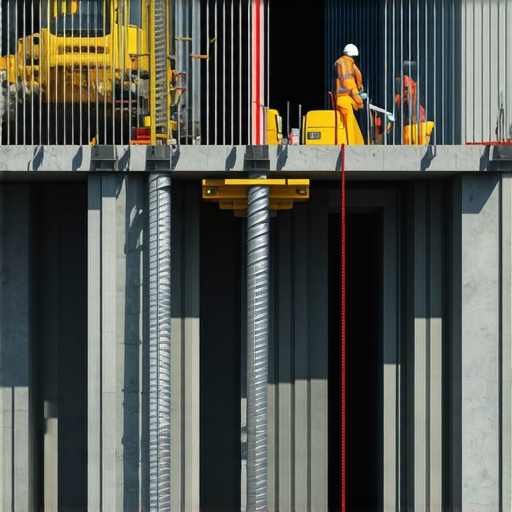
So, why is helical pier installation the dominant conversation in 2026? Think of a helical pier as a giant steel screw that bypasses the ‘garbage’ soil—the top layers of clay and silt that shift with the weather—and anchors into the stable, load-bearing strata or bedrock deep below. We use a high-torque hydraulic drive to twist these shafts into the earth. The ‘vanes’ or helices on the pier provide the bearing capacity. We aren’t just ‘jacking up’ the house; we are transferring the entire weight of the structure onto a steel skeleton that doesn’t care about the moisture content of the topsoil. During a masonry damage assessment, we calculate the required torque to ensure the pier can handle the dead load of the brick and the live load of the occupants. It’s a surgical process. Unlike old-school concrete underpinning, which requires massive excavation and can actually destabilize the wall further, helical piers are installed with minimal vibration. This is critical when you’re dealing with tuckpointing curved walls or delicate stone facade restoration where one wrong shake could send a hundred-year-old cornice tumbling.
The Chemistry of Repair: Mud, Hawks, and Slickers
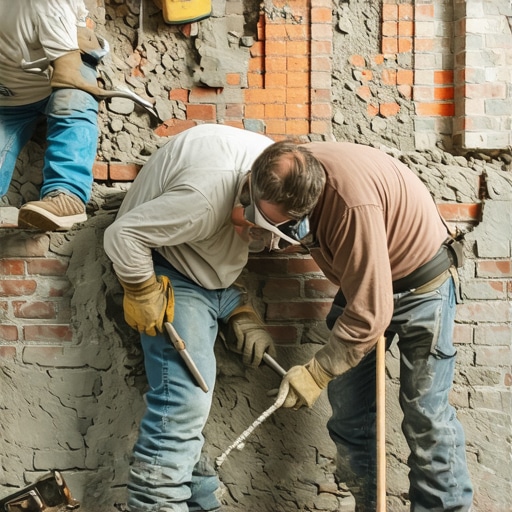
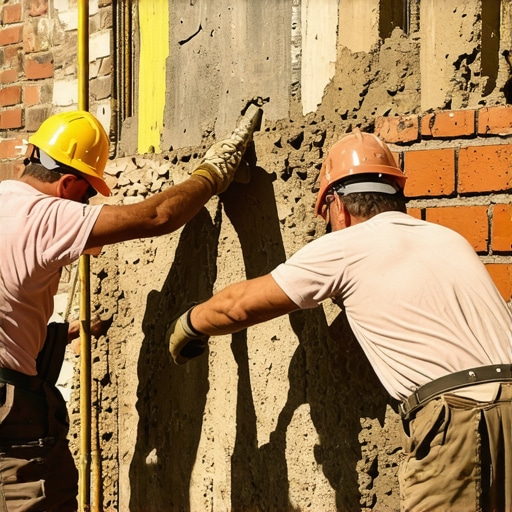
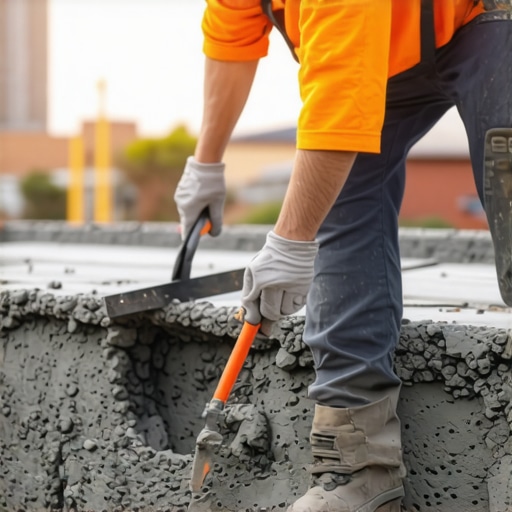
Once the foundation is stabilized with piers, we turn our attention to the ‘skin’ of the building. This is where the art of the structural repointing comes in. You don’t just slap some home-center mortar into a crack and call it a day. That’s ‘buttering’ the joints, and it’s a sin in my book. You have to grind out the old, failing ‘mud’ to a depth of at least twice the width of the joint to create a proper ‘tooth’ for the new material. We use a hawk to hold the mortar and a slicker or jointer tool to compress it into the gap.
“The modulus of elasticity of a repair mortar must be lower than that of the masonry units to ensure that the mortar remains the sacrificial element of the wall system.” – ASTM C270 Standards
If the house has shifted, you’ll likely see brick efflorescence—that white, salty powder that looks like a ghost on the wall. That’s the building ‘sweating’ out minerals because water is moving through the masonry. Brick efflorescence removal requires more than just a pressure washer; it requires a chemical neutralization to stop the salts from returning. For historic pointing styles, we often mix our own lime-based mortars to match the breathability of the original construction. This ensures that the chimney rebuild services or facade repairs we do today will still be standing when my grandson is the one holding the trowel.
Protecting the Investment: Sealants and Maintenance
After we’ve stabilized the bones and repaired the skin, we have to talk about brickwork sealants application. Many contractors will try to sell you a cheap ‘wet look’ sealer that creates a plastic film. That’s a death sentence for masonry. A true professional uses a silane-siloxane penetrating water repellent. It doesn’t film over; it bonds chemically with the silica in the brick and mortar, allowing the wall to ‘breathe’ vapor out while preventing liquid water from soaking in. This is the final layer of defense against future sinking and spalling. Whether you are dealing with a tuckpointing project on a residential bungalow or a massive stone facade restoration on a commercial landmark, the principle remains the same: respect the materials, understand the physics, and never trust a ‘handyman’ with a structural crack. Do it once, or do it twice. In 2026, the tech is better, but the craftsmanship still comes down to the man with the hawk and the slicker. Don’t wait for the hairline crack to become a pile of rubble; get a forensic look at your foundation before the earth decides to take it back.