Stop Foundation Cracks: 4 Proven Fixes for 2026 Homes
The Anatomy of a Failing Wall: A Forensic Look at Modern Masonry
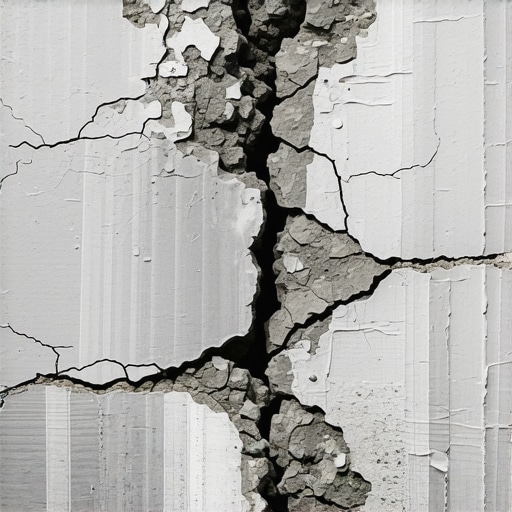
The homeowner stood in his pristine, climate-controlled basement, pointing at a line no thicker than a credit card. He thought it was just a hairline crack, a minor blemish in his 2026-spec build. But when I threaded my fiber-optic scope into the core of that concrete masonry unit (CMU), the gritty reality was laid bare: the structural steel was not just corroded; it had been reduced to an orange, flaky dust. The moisture had been migrating through the porous block for three seasons, fueled by a lack of proper porous stone sealers and an oversight in hydrostatic management. That tiny line was the gasp of a dying wall. I have spent forty years listening to what stones and bricks have to say, and right now, modern foundations are screaming.
“Water penetration is the single greatest threat to masonry durability.” – BIA Technical Note 7
In the trade, we call it the ‘silent heave.’ Whether you are dealing with historic masonry preservation or a brand-new build, the physics of the earth do not care about your architectural aesthetic. If you live in a region where the frost line dives deep, you are at war with a relentless enemy: the 9% expansion of freezing water. When moisture enters a microscopic fissure and the temperature drops, that water expands with enough force to shatter solid granite. If your contractor used a hard, brittle cement on a brick wall restoration project instead of a softer, breathable fiber-reinforced mortars, that expansion will pop the faces right off your bricks—a process we call spalling.
The Physics of the ‘Stair-Step’ and the Horizontal Bulge
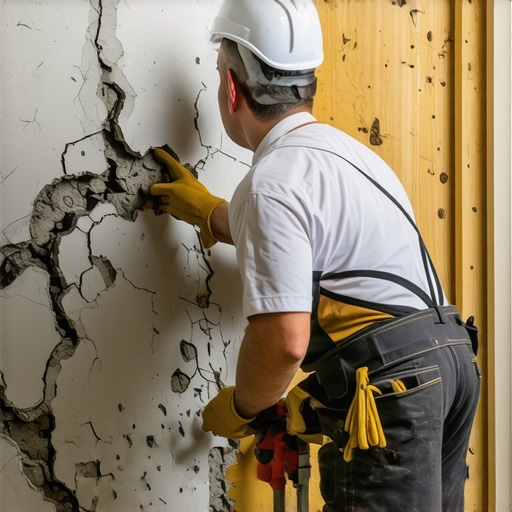
Not all cracks are created equal. A vertical crack often tells a story of settlement—the house finding its seat in the dirt. But a stair-step crack, following the mortar joints like a jagged lightning bolt, is the signature of differential settlement. This is where the soil under one corner of your ‘forever home’ has decided to take a walk while the rest stays put. Worse yet is the horizontal crack. That is the mark of hydrostatic pressure. Imagine the tons of saturated soil pressing against your basement wall after a spring thaw. If the wall wasn’t reinforced with a proper soldier course or internal webbing, it begins to bow. By the time you see the crack, the wall is already losing the fight against gravity.
[image_placeholder_1]
Fix 1: The Surgical Intervention of Fiber-Reinforced Mortars
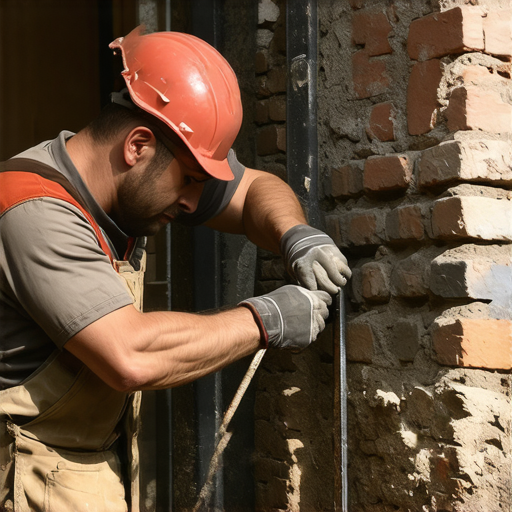
For 2026, the standard for repair has shifted from simple ‘mud’ to advanced material science. We no longer just slap some Type S mortar in a hole and call it a day. Fiber-reinforced mortars utilize microscopic strands of glass or polymer to create a matrix that handles tension—something traditional mortar is notoriously bad at. When we perform flush pointing services, we are looking for a bond that mimics the original structure’s ‘tooth.’ By injecting these reinforced compounds into the crack, we aren’t just filling space; we are knitting the wall back together. This is especially critical in brick wall restoration where the integrity of the entire facade depends on the flexibility of the joints.
Fix 2: Managing the Breathability with Sustainable Masonry Materials
One of the biggest scams in modern construction is the ‘lick-and-stick’ stone veneer over brick. Contractors take a perfectly good, breathable brick wall and smother it in a non-breathable synthetic stone using high-strength adhesives. This traps moisture behind the veneer, leading to a rot that eats the structure from the inside out. In 2026, we are seeing a return to sustainable masonry materials like lime-based mortars and natural hydraulic limes (NHL). These materials allow moisture to move through the joint rather than through the brick. It is the sacrificial principle of the old masters: the mortar must be softer than the masonry unit so that the mortar fails—and can be replaced—instead of the stone itself.
Fix 3: Chemical Stabilization and Porous Stone Sealers
If your foundation is weeping, a bucket of waterproof paint from a big-box store is like putting a band-aid on a gunshot wound. You need to address the substrate. Porous stone sealers in the modern era are silane-siloxane blends that penetrate deep into the capillaries of the concrete or stone. They don’t form a plastic film; they change the surface tension of the internal pores, making them hydrophobic. For high-traffic areas or an outdoor kitchen masonry build, this is the difference between a structure that lasts fifty years and one that crumbles in five. Even tile grouts on masonry surfaces require this level of chemical protection to prevent the ‘wicking’ effect that leads to sub-florescence—the crystallization of salts beneath the surface.
“Mortar shall be specified by property or proportion… the selection of mortar should be based on the masonry unit and the environmental exposure.” – ASTM C270 Standard
Fix 4: Masonry Staining and Aesthetic Structural Integration
Sometimes the fix is structural, but the scar is hideous. This is where masonry staining comes into play. Unlike paint, which sits on top and eventually peels, a true masonry stain is a mineral-based pigment that petrifies within the stone or brick. When we repair a foundation or a chimney, we often have to use different batches of material. A master mason uses staining to marry the new work to the old, ensuring that the historic masonry preservation doesn’t look like a patchwork quilt. It’s about ‘buttering’ the joints with precision and ‘slicking’ them to a finish that matches the original 1920s or 1950s strike.
The Hard Truth: Do It Once, or Do It Twice
I’ve seen too many ‘handyman specials’ where a ‘cold joint’ was left during a concrete pour, or where honeycombing was vibrated out of sight but not out of existence. If you are building an outdoor kitchen masonry build or fixing a cracked basement, remember: the ‘mud’ is the cheapest part of the job, but the labor and the logic are where the value lives. Don’t be seduced by the ‘asphalt gypsies’ offering cheap foundation sprays. If they aren’t talking about soil compaction, hydrostatic relief, and the carbonation of lime, they are just selling you a coat of paint for a crumbling ruin. You either pay the price for quality masonry today, or you pay the price of a structural failure tomorrow. In the world of stone and mortar, there are no shortcuts—only the slow, heavy reckoning of the earth.
This post highlights some really crucial points about the long-term health of masonry structures. I especially appreciate the emphasis on using fiber-reinforced mortars; I’ve seen firsthand how they outperform traditional mortar in crack repair and joint flexibility. The mention of lime-based mortars resonates with my own experience working on historic restorations, where breathability is key to preventing moisture buildup. I do wonder, though, how affordable these advanced materials are for average homeowners, and what the maintenance cycle typically looks like with newer sealers and mortars? In my opinion, educating homeowners about the importance of proper foundation management can save a lot of trouble down the road. Have any of you had success with specific brands or techniques that combine affordability with durability? It seems that a proactive approach using the right materials can really extend the lifespan of a masonry wall, but I’d love to hear about practical, cost-effective solutions out there.