Stop Crumbling Mortar: 3 Repair Fixes for Durable 2026 Walls
The Ghost of Mortar Past: Why Your Walls are Bleeding Sand
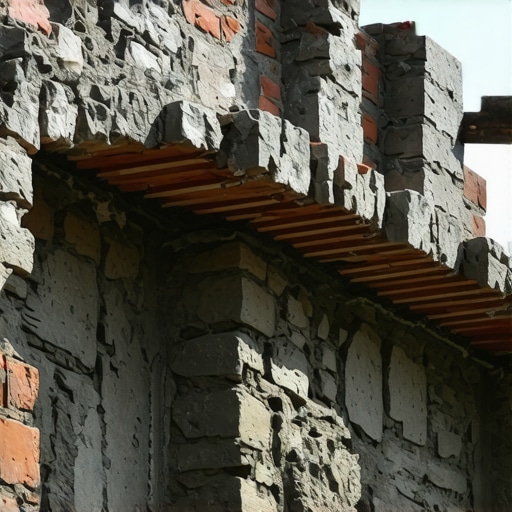
I remember a job site back in ’94, a century-old textile mill where the brickwork looked like it was melting. My old man grabbed a handful of the joints; it crumbled into white powder with the slightest pressure from his thumb. He looked at the foreman and said, ‘You didn’t use a trowel here; you used a death sentence.’ That ‘mud’ was too high in Portland cement, far too rigid for the soft, handmade clay units it was supposed to protect. When the building shifted—as every building must—the bricks didn’t breathe. They choked. The mortar was harder than the brick, and in the world of masonry, that is the cardinal sin. If the mortar doesn’t act as the sacrificial lamb for the wall, the wall will eventually tear itself apart. We are seeing a massive resurgence of this failure today as 2026 approaches, driven by quick-fix contractors who don’t understand the molecular handshake between stone and binder.
“Water penetration is the single greatest threat to masonry durability, and the selection of a mortar that is stronger than the masonry unit itself often leads to irreversible spalling and structural failure.” – BIA Technical Note 7
Fix 1: The Chemistry of Repointing—Beyond the ‘Lick-and-Stick’
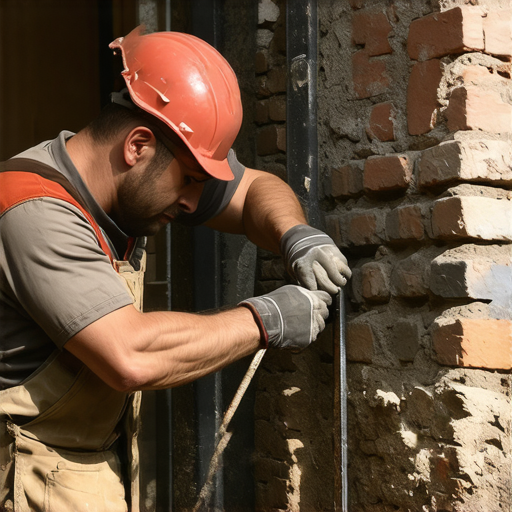
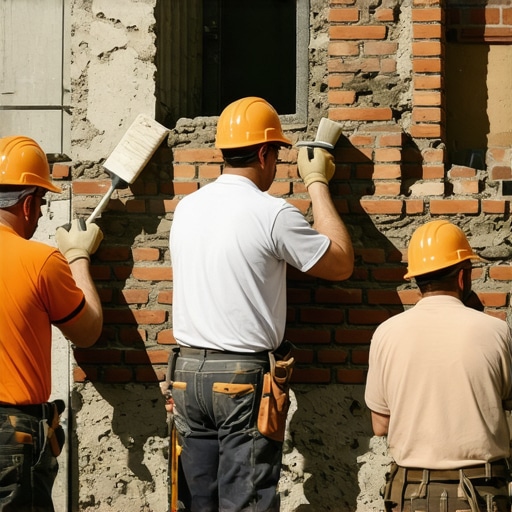
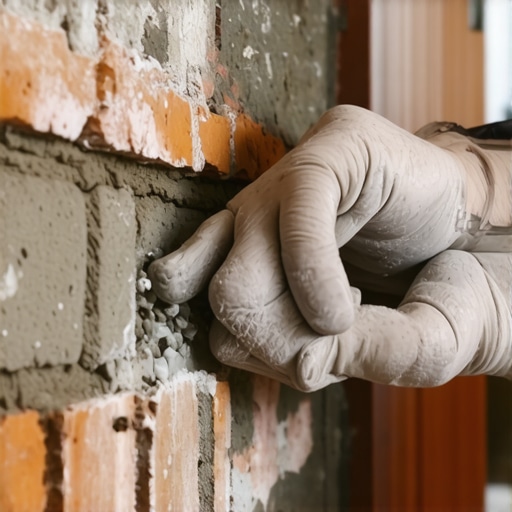
To stop crumbling, we have to talk about the ‘tooth’ of the joint. You can’t just butter over a failing joint and expect it to hold. That’s a ‘handyman special’ that will peel off within two seasons. True masonry water damage repair begins with mechanical excavation. We grind out the failing mud to a depth of at least twice the joint’s width. This isn’t just about cleaning; it’s about exposing the raw, porous surface of the brick to allow for a mechanical bond. When you mix your new mud, you need to account for the suction. A dry, high-suction brick will rip the moisture out of your mortar before the hydration process even begins, leaving you with a ‘flash set’ that has no structural integrity. You have to dampen the rag-work first. We call it ‘chasing the wall’—ensuring the substrate is saturated but surface-dry. For these 2026 projects, we are increasingly looking at concrete masonry unit restoration techniques that utilize Type O or Type K mortars for historic facades. These mixes are high in lime, allowing for autogenous healing. When a hairline crack forms, moisture reacts with the unhydrated lime to seal the gap naturally. It’s not magic; it’s carbonation chemistry that takes decades to fully mature.
Fix 2: Advanced Sealants and the Efflorescence War
Once the joints are struck—using a slicker to compress the mud and create a weather-shedding profile—the next battle is the salt. If you see white, fuzzy crystals growing on your brick, that’s efflorescence. It’s the sound of your wall crying. Salts are being pulled from the earth or the mortar itself through capillary action, and as the water evaporates at the surface, the salt stays behind. To stop this, brick efflorescence removal must be followed by a high-grade brickwork sealants application. But here is where most fail: they use a film-forming sealer. A film-forming sealer is like wrapping your house in a plastic bag; the moisture gets trapped behind the skin, freezes, and pops the face of the brick right off. You need porous stone sealers—silanes or siloxanes that work at a molecular level. These chemicals line the pores of the masonry without plugging them, changing the surface tension so water beads off while water vapor can still escape. This ‘breathability’ is the difference between a wall that lasts another century and one that requires a concrete patch every three years.
“Mortar should be designed to be weaker than the masonry units so that any stress-related cracking occurs in the mortar joints, where it can be easily repaired, rather than in the units themselves.” – ASTM C270 Standards
Fix 3: The Digital Twin and Sub-Grade Stability
We are moving into an era where BIM masonry projects and digital twin masonry projects allow us to map the thermal expansion and moisture migration of a facade before we even pick up a hawk. We can see where the stress concentrations are likely to cause ‘stair-step’ cracking. Often, crumbling mortar is just a symptom of a much deeper cancer: settlement. If the soil is heaving or the drainage is poor, the wall is under constant shear stress. This is where foundation underpinning and foundation waterproofing become mandatory. You can’t fix the teeth if the jaw is broken. We use helical piers to reach load-bearing strata, stabilizing the masonry so the new repointing work isn’t immediately sheared off by hydrostatic pressure. In 2026, the integration of structural sensors within the wall allows us to monitor the ‘pulse’ of the building. If the mortar starts to degrade, we know if it’s due to environmental acidity or structural shifting. Doing it once means doing it right, which usually means getting your hands dirty in the mud and your head deep into the geotechnical data. Don’t let a ‘quick fix’ turn your legacy into a pile of red dust.
![Fix Cracking Joints: 5 Historic Brickwork Repointing Tactics [2026]](https://masonryrescue.com/wp-content/uploads/2026/02/Fix-Cracking-Joints-5-Historic-Brickwork-Repointing-Tactics-2026.jpeg)