How 3D Printed Masonry Repairs Fix Structural Gaps in 2026
The Forensic Scene: Listening to the Scream of the Stone
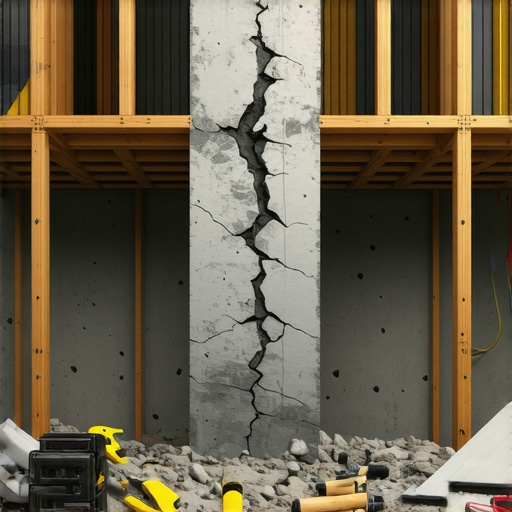
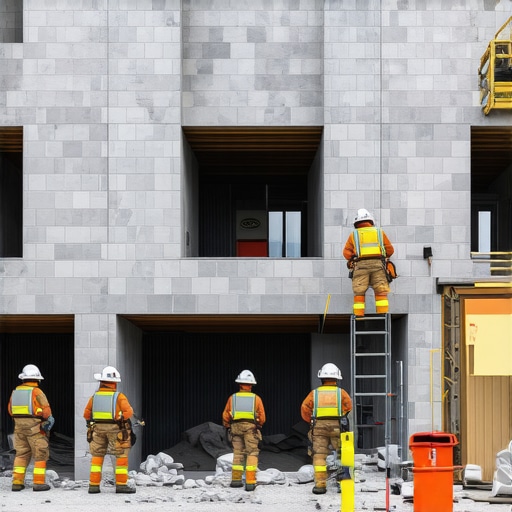
I was standing in the shadows of a century-old warehouse in early 2026, staring at a vertical fracture that you could slide a deck of cards into without catching an edge. The property owner stood behind me, hands in his pockets, trying to convince himself it was just ‘natural settling.’ But I’ve spent forty years reading the language of lime and clay, and this wasn’t settling; it was a structural surrender. I pulled my fiber-optic scope from my kit and fed it deep into the void. What I saw on the screen confirmed my worst fears: the internal wythe had completely delaminated. The load-bearing core of that wall was crumbling into dust, leaving the exterior brickwork to carry a weight it was never designed to hold. In the old days, we’d be talking about a total teardown and a rebuild that would cost more than the building was worth. But in 2026, we have a different set of tools—if you know how to use them without offending the spirit of the original mason.
The Physics of the Void: Why Traditional Mud Fails
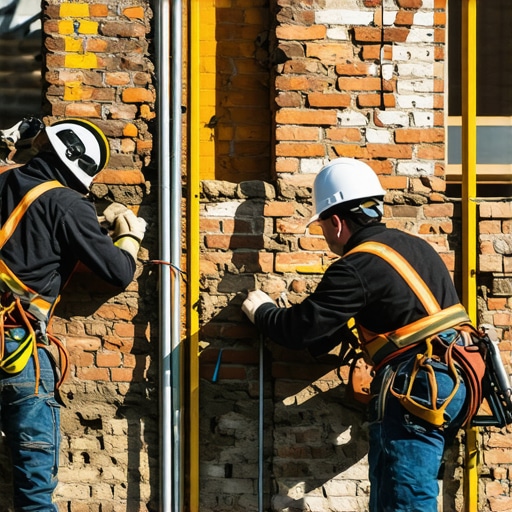
Most folks think masonry repair services involve just slapping some fresh mud into a hole and calling it a day. That’s how you end up with a wall that looks like a patchwork quilt and fails again in three winters. When you have a structural gap, you aren’t just fighting gravity; you’re fighting hydrostatic pressure and differential thermal expansion. Traditional mortar repointing services often fail in deep structural gaps because the mortar dries from the outside in. This creates a hard shell while the interior remains ‘green’ or wet. As that interior moisture eventually evaporates, the mortar shrinks, leaving a microscopic gap between the new ‘mud’ and the old brick. That gap is an invitation for water. In a freeze-thaw climate, water is a slow-motion explosion. It enters the gap, freezes, expands by 9%, and pops the face of your brick right off. This is why masonry damage assessment is the most critical step—you have to understand the ‘tooth’ of the substrate before you ever pick up a trowel.
“Water penetration is the single greatest threat to masonry durability, accounting for over 90% of all accelerated deterioration.” – Brick Industry Association (BIA) Technical Note 7
The 2026 Revolution: 3D Printed Structural Infill
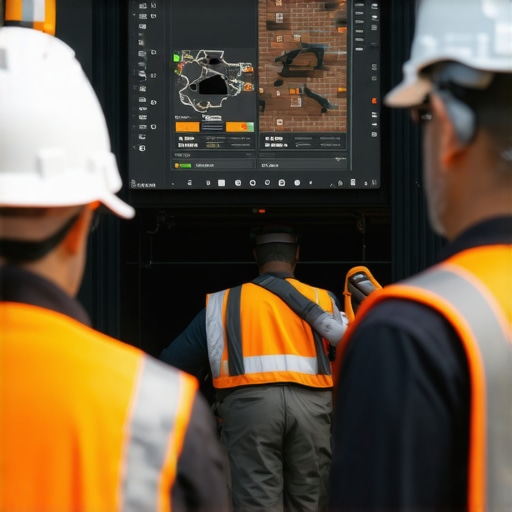
The game-changer we’re seeing now is the integration of robotic 3D printing directly into brick wall restoration. We aren’t just ‘buttering’ bricks anymore. We use high-resolution LiDAR to map the internal cavity of a structural gap. Once we have the digital ‘negative’ of the void, we use a mobile 3D printer to inject fiber-reinforced mortars specifically engineered for that exact building’s density. These aren’t your grandfather’s mortars. We’re talking about polymers and micro-fibers that create a mechanical bond at the molecular level. This ‘printed’ infill doesn’t just fill the space; it knits the two wythes back together. The fiber-reinforced mortars act like millions of tiny anchors, preventing the lateral movement that leads to ‘bulging’ walls. This isn’t ‘lick-and-stick’ masonry; this is forensic structural reconstruction.
Modular Retaining Walls and the Art of the Base
It’s the same story with modular retaining walls. I see ‘handyman specials’ every week where a guy stacked blocks on top of dirt. By the second year, the wall is leaning like a drunk sailor. Why? Because they ignored the angle of repose and the compaction physics of the backfill. In 2026, we’re using 3D printed sensors embedded in the retaining wall capstone replacement to monitor soil pressure in real-time. If the wall moves even a fraction of a millimeter, we know it. But even with all this tech, the basics still apply. If you don’t have six inches of compacted 3/4-minus gravel and a perforated drain pipe wrapped in silt-cloth, your high-tech wall is just an expensive pile of rubble waiting to happen. You have to respect the weight of the earth.
Stone Coping and the Criticality of the Seal
When we get into stone coping installation, the forensic evidence of failure is almost always at the joints. Coping is the ‘umbrella’ of a wall. If the coping fails, the wall dies. Most contractors use a standard hard cement for the joints. Big mistake. Stone expands in the sun—it breathes. If you trap it with a rigid joint, it will shatter the stone’s edges in a process called spalling. We now use 3D-scanned, custom-fitted re-pointing services that utilize hybrid sealants disguised as traditional lime mortar. It looks like 1920, but it performs like 2026. This is especially vital for concrete flatwork services where the interface between the horizontal slab and the vertical masonry creates a ‘cold joint.’ Without a proper expansion joint and a backer rod, that gap will swallow every drop of rain and pump it straight into your foundation.
“The compressive strength of a repair mortar should always be lower than that of the surrounding masonry units to ensure the mortar acts as the sacrificial element.” – ASTM C270 Standard Specification for Mortar
The Micro-Zoom: Hydration and Carbonation
Let’s talk about the ‘mud.’ When we perform re-pointing services, we aren’t just mixing sand and cement. We are managing a chemical reaction. In 2026, we use ‘smart’ mortars that include phase-change materials to regulate temperature during the curing process. This prevents ‘flash setting’ in hot climates, which leads to ‘honeycombing’—those tiny air pockets that weaken the structure. A proper 3D-printed repair ensures the hydration process is uniform. In historic brick wall restoration, we often revert to high-calcium lime putties. Unlike modern Portland cement, which is brittle and impermeable, lime mortar carbonates over decades, actually getting stronger as it absorbs CO2 from the air. It’s a living material. When you ‘butter’ a joint with a hawk and a slicker, you are applying a breathable skin that allows moisture to escape rather than trapping it inside the brick.
When to Panic: Identifying the Danger Zone
Not every crack is a death sentence. A hairline crack in your concrete flatwork services might just be the slab ‘finding its home.’ But when you see a ‘stair-step’ crack following the mortar lines, or a horizontal fracture that cuts across the brick itself, you have a structural emergency. That is the building telling you that the soil is moving or the steel lintels are rusting and expanding (a phenomenon known as ‘oxide jacking’). This is where masonry repair services transition into structural engineering. If you see ‘efflorescence’—that white, salty crust on the bricks—it’s a warning sign that water is moving through the wall. It’s the smoke before the fire. Ignore it, and you’ll soon be looking at a retaining wall capstone replacement or worse, a full facade collapse.
Closing the Gap: The Future of the Craft
The ‘Old World’ masons knew things we’ve forgotten in our rush for ‘seamless’ and ‘quick’ construction. They understood that you can’t fight nature; you have to work with it. 3D printing and fiber-reinforced mortars are incredible tools, but they are only as good as the hand that guides them. Whether it’s stone coping installation or a complex brick wall restoration, the goal remains the same: durability through compatibility. You do it once, or you do it twice. And in my experience, doing it twice usually costs four times as much. Respect the suction of the brick, understand the chemistry of the mud, and for heaven’s sake, keep the water out.
![4 Geogrid Mistakes Ruining Retaining Walls [2026 Checklist]](https://masonryrescue.com/wp-content/uploads/2026/02/4-Geogrid-Mistakes-Ruining-Retaining-Walls-2026-Checklist.jpeg)