![Fix Shifting Blocks: 4 Signs Your 2026 Foundation Needs Help [2026]](https://masonryrescue.com/wp-content/uploads/2026/02/Fix-Shifting-Blocks-4-Signs-Your-2026-Foundation-Needs-Help-2026.jpeg)
Fix Shifting Blocks: 4 Signs Your 2026 Foundation Needs Help [2026]
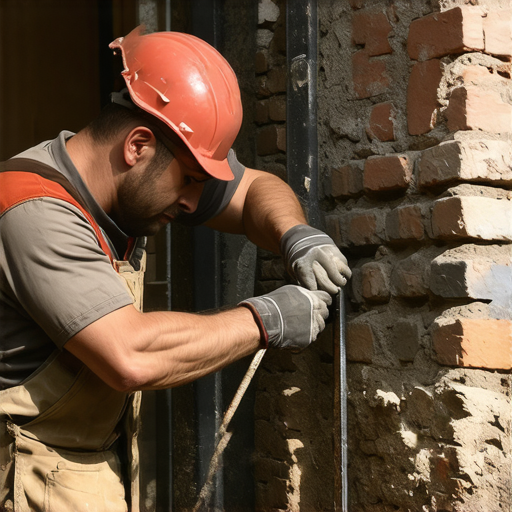
I stood in a damp basement last Tuesday, looking at what the homeowner described as a ‘hairline nuisance.’ But when I put my fiber-optic scope inside the hollow core of the CMU (Concrete Masonry Unit), I saw the reality: the structural steel was rusted to dust, expanded to four times its original thickness, and was literally pipe-bombing the block from the inside out. This is the world of forensic masonry—where what you don’t see is usually what’s trying to kill your house. In my thirty years of buttering joints and striking lines, I’ve learned that a foundation doesn’t just ‘shift.’ It reacts to the laws of thermodynamics and soil mechanics that most ‘handyman specials’ completely ignore. We are entering 2026, and the extremes in our weather patterns are putting stresses on 1950s block-work that the original masons never anticipated. If you think a bit of caulk is going to fix a shifting block, you’re bringing a toothpick to a gunfight.
The Physics of the ‘Mud’ and the Failure of Modern Mixes
To understand why your foundation is failing, you have to understand the chemistry of the hydration process. When we talk about ‘mud’—our trade term for mortar—we aren’t just talking about wet sand. We are talking about the formation of Calcium Silicate Hydrate (C-S-H) gels. In a proper masonry damage assessment, I look at the ‘tooth’ of the mortar. Modern Portland cement is incredibly hard, often reaching 2,500 PSI or more. But many older foundations were built with softer, lime-rich mortars. When a ‘renovator’ uses a hard Type S mortar for structural repointing on a soft-block foundation, they create a ‘cold joint’ that can’t breathe. The harder mortar won’t compress; instead, it forces the block to crack. It’s a violation of the sacrificial principle: the mortar should always be slightly weaker than the masonry unit it holds together.
“Water penetration is the single greatest threat to masonry durability, accounting for nearly 90% of all accelerated deterioration.” – BIA Technical Note 7
When the soil outside your wall becomes saturated, it reaches a state of hydrostatic pressure. Imagine a column of water ten feet high pressing against your wall; that is thousands of pounds of lateral force. If your failing retaining wall repair didn’t include a proper drainage plane (weep holes and 57-stone backfill), that wall is a ticking time bomb. The water doesn’t just sit there; it migrates through the porous block via capillary action, bringing salts with it. This is why you see that white, fuzzy powder called efflorescence. It’s not just an eyesore; it’s the smell of your foundation slowly dissolving.
Sign 1: The Horizontal Shear (The Silent Killer)
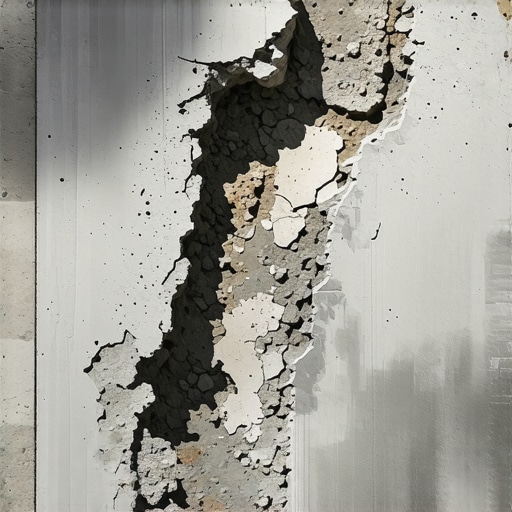
If you see a horizontal crack running along the third or fourth course of blocks, you aren’t looking at ‘settling.’ You are looking at shear failure. This happens when the lateral pressure of the earth exceeds the friction and bond strength of the mortar joints. I’ve seen emergency masonry repair crews try to ‘staple’ these cracks, but without addressing the ‘angle of repose’ of the soil outside, you’re just wasting money. The block is literally being pushed off its ‘bed’ of mortar. This often happens in areas with high clay content. When that clay gets wet, it expands. When it dries, it shrinks. This cyclic loading ‘walks’ the wall inward, one millimeter at a time, until the center of gravity is lost.
Sign 2: The Stair-Step Fracture and Soil Heaving
A stair-step crack following the head joints and bed joints is the classic signature of differential settlement. One corner of your house is ‘riding’ a different soil strata than the other. Perhaps your outdoor kitchen masonry build wasn’t properly tied into the main structure, or a brick column repair was done on a footing that didn’t reach the frost line. In the North, we deal with the 9% expansion of water as it turns to ice. If your footings are shallow, the frost heave will lift the entire corner of the house, snapping the mortar bonds in that ‘staircase’ pattern. When I perform a masonry damage assessment, I’m looking for the width of the crack at the top versus the bottom. If it’s wider at the top, the foundation is ‘diving’ at the end. If it’s wider at the bottom, the center is heaving.
Sign 3: Spalling Faces and the Freeze-Thaw Attack
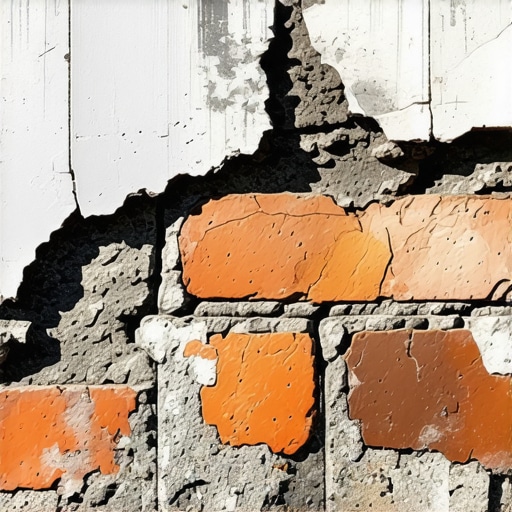
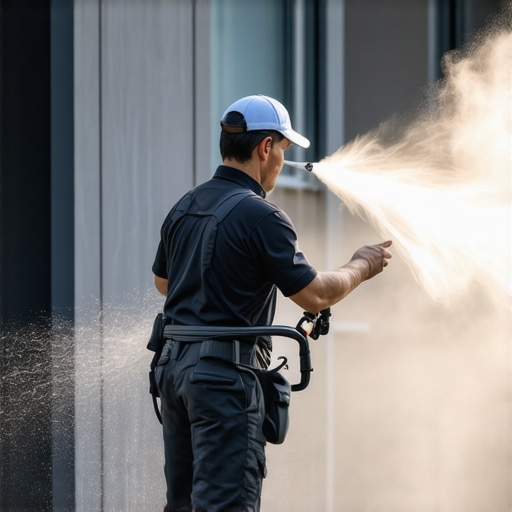
When the face of your block starts popping off in thin layers, we call that spalling. It’s a common sight during stone balustrade restoration or facade cleaning gone wrong. Often, some ‘expert’ used a power washer at 4000 PSI and drove water deep into the masonry ‘pores.’ When the temperature drops, that trapped water freezes and expands, blowing the face of the stone or block right off. This is why masonry joint sand repair is so critical for pavers and patios; you have to keep the bulk water out. Once the ‘skin’ of a block is gone, the soft interior is exposed to the elements, and the structural integrity drops by 40% in a single season.
Sign 4: Rotational Torque and Corner Separation
The most terrifying thing I see is when a corner of a block foundation starts to rotate outward. This usually points to a failure in the ‘soldier course’ or a lack of proper ‘buttering’ on the head joints. Masonry is incredibly strong in compression—you can stack a skyscraper on a brick—but it has almost zero tensile strength. It hates to be pulled or twisted. If your brick column repair involves just ‘tucking’ some new mud into the surface, you’re missing the point. You need to ‘re-grout’ the cores. For 2026, we are seeing more homeowners attempting tuckpointing tools for DIY, using a ‘hawk’ and a ‘slicker’ without understanding ‘suction.’ If the block is too dry, it steals the water from the mortar, and you get a ‘burned’ joint that will fall out in three years.
“The bond between mortar and masonry unit is the primary defense against structural instability; a failed bond is a failed wall.” – ASTM C270 Standards
The Cure: Beyond the Band-Aid
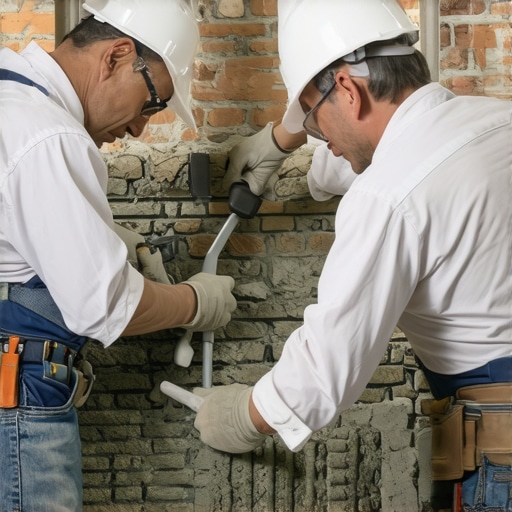
You don’t fix a shifting foundation with a bucket of hydraulic cement from the local hardware store. That’s a ‘lick-and-stick’ mentality that leads to disaster. Real repair involves restoring the structural ‘knitting’ of the wall. This might mean carbon fiber straps to resist lateral tension, or helical piers to find ‘load-bearing’ strata thirty feet down. If you’re dealing with a stone balustrade restoration or a historic facade, you need to be mixing lime putty that matches the original ‘breathability’ of the structure. Stop looking for ‘seamless’ solutions; look for ‘structural’ ones. Masonry is an honest trade. If you cheat the physics, the building will eventually tell the truth. Do it once, or do it twice—the choice is yours, but the earth never stops pushing.

This post offers such a comprehensive look into foundation issues that many homeowners might overlook until problems become severe. I’ve seen firsthand how neglecting water drainage and soil management can lead to significant structural failures, especially with the unpredictable weather patterns we’ve been experiencing. What really stood out to me was the emphasis on proper mortar choice and how older lime-rich mortars behave differently than modern types. When dealing with historic restorations, I believe matching the original materials is crucial for breathability and integrity, but it’s often ignored in DIY efforts. Regarding the signs of failure, I’ve personally encountered situations where horizontal shear cracks were mistaken for simple settling, leading to missed opportunities for early intervention. Has anyone here found effective methods in their experience to detect these subtle signs early, especially in remote or hard-to-access areas?