Failing Retaining Wall? 4 Block Replacement Tactics for 2026
The Forensic Scene: When ‘Just a Gap’ Means Structural Failure
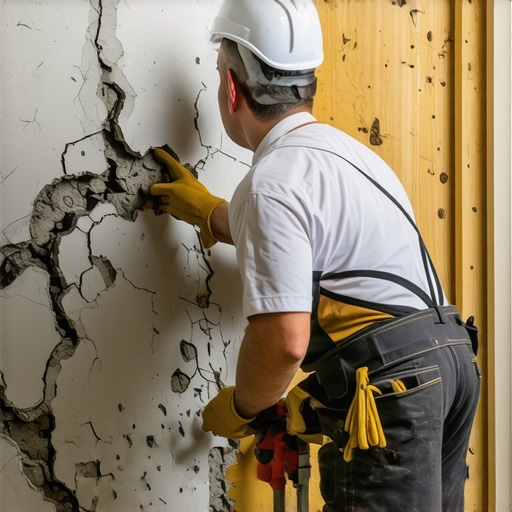
Last November, I stood in a mud-slicked backyard in the suburbs of Minneapolis, staring at a tiered segmental retaining wall that was doing a slow-motion dive into a swimming pool. The homeowner, a man who clearly spent more time on spreadsheets than on a shovel, pointed at a horizontal separation in the third course. ‘It’s just a hairline gap,’ he told me, his voice hopeful. I didn’t say a word. I pulled my fiber-optic scope from my kit and fed it through the separation. What I saw on the screen wasn’t just dirt; it was a void the size of a toolbox where the geogrid had snapped like a dry twig under the weight of saturated clay. The structural steel in the adjacent pilasters was already weeping rust—oxidization that had turned the internal reinforcement to a crumbly orange dust. This wasn’t a minor fix. This was emergency masonry repair territory, where the laws of physics were about to foreclose on his landscaping.
“The design of masonry retaining walls must account for the accumulation of water behind the wall, which significantly increases lateral pressure.” – BIA Technical Note 18A
The Physics of the Failure: Why 2026 Demands Better Tactics
In the freeze-thaw belts of the North, we are seeing a shift in how soil behaves. The cycles are faster and more violent. When water infiltrates the backfill, it doesn’t just sit there; it occupies the pore space. When that temperature drops below 32 degrees Fahrenheit, that water expands by approximately 9%. If your wall doesn’t have the ‘tooth’ to bite back, or the drainage to vent that pressure, the wall will ‘blow.’ We see this manifest in honeycombing—those nasty clusters of voids in the concrete where the paste didn’t reach the aggregate—and in the eventual shearing of the block faces. To survive the next decade, we have to stop thinking about walls as static objects and start treating them as hydraulic valves. If the water can’t get out, the wall will come down.
Tactic 1: High-Performance Concrete Pump Masonry Mixes for Core Consolidation
Old-school contractors used to just dump bagged dry-mix into the cores of a block wall and spray it with a garden hose. That’s a death sentence. By 2026 standards, we are moving toward concrete pump masonry mixes that utilize superplasticizers to maintain a high slump without sacrificing strength. When you butter the head joints of a block, you need a mix that flows into every cranny of the masonry birdsmouth cuts at the corners. This ensures a monolithic bond. I’m talking about a mix that hits 4,000 PSI but remains fluid enough to eliminate air pockets. Without this density, moisture finds a home, freezes, and pops the face of your stone off like a bottle cap.
Tactic 2: The Integration of Fiber-Reinforced Mortars
Standard Type S mortar is fine for a garden border, but for a retaining wall under 15 tons of hydrostatic pressure, you need more. I’ve started insisting on fiber-reinforced mortars for all structural block replacements. These mixes contain micro-synthetic fibers that act like a million tiny rebars. They don’t just hold the ‘mud’ together; they resist the microscopic shrinkage cracks that occur during the hydration process. As the C-S-H (Calcium Silicate Hydrate) gel forms at the molecular level, these fibers bridge the gaps, preventing the ‘cold joint’ failures common in traditional stone wall repair. When you’re up on the hawk, you can feel the difference—the mortar has more ‘grab,’ more suction. It sticks to the unit and stays there.
Tactic 3: Forensic Mortar Matching and Breathability
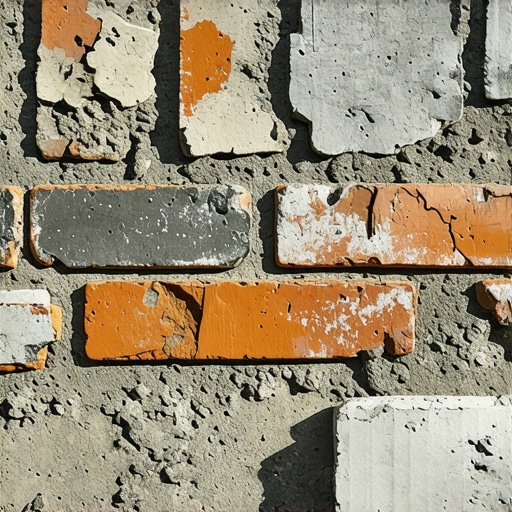
If you are performing a stone facade restoration on an older retaining wall, you can’t just slap a hard Portland cement into the joints. This is where most ‘pros’ fail. They use a mortar that is harder than the stone itself. In a freeze-thaw environment, the stone needs to breathe. If the mortar is too dense, the moisture gets trapped inside the stone, freezes, and causes spalling. This is why mortar matching services are critical. We analyze the original binder—often a lime-based mix for older structures—and replicate it. Whether you are doing tuckpointing on the capstones or a full-scale repoint of the face, the mortar must be the sacrificial element. It is better for a joint to fail in fifty years than for the stone to shatter in five.
“Mortar shall be specified by either proportion or property specifications. The selection of mortar type should be based on the structural requirements and the type of masonry units being used.” – ASTM C270 Standard Specification
Tactic 4: Precision Geometry with Birdsmouth and Soldier Courses
Geometry is the silent partner in wall longevity. I see too many guys just ‘eyeballing’ the corners. For 2026, we utilize masonry birdsmouth cuts to create interlocking internal corners that distribute lateral load across two planes instead of one. It’s about creating a mechanical lock. Furthermore, the soldier course—that row of blocks standing on end at the top—must be properly anchored. If the cap isn’t sealed, water travels down the vertical cores, washing out the fines in your grout and leading to internal erosion. It’s the same principle we use in chimney sweep and repair: if the crown is cracked, the whole stack is at risk. Whether it’s a chimney or a retaining wall, the top must be a shield.
The Final Reckoning: Do It Once, or Pay Twice
I’ve been called out to fix outdoor masonry fountain restoration projects that failed because the installer didn’t understand the ‘wicking’ effect of concrete. I’ve seen $100,000 walls collapse because the ‘mud’ was too dry. Don’t be the homeowner who thinks a bucket of premix and a plastic trowel is a solution. If you see a crack, call a forensic specialist. If you’re building new, demand a pumpable mix with fiber reinforcement. In the world of masonry, there is no such thing as a ‘good enough’ shortcut. You either respect the chemistry of the stone and the physics of the soil, or you get used to the sound of falling blocks in the middle of a rainstorm.