
Digital Twin Masonry: How to Predict 2026 Structural Failures
The Forensic Scene: A Ghost in the Wall
The homeowner pointed to a thin, vertical fissure running from the grade to the limestone sill of a first-floor window. “Settlement,” he said, with the misplaced confidence of someone who had spent ten minutes on a DIY forum. I didn’t correct him. I just pulled out the fiber-optic borescope and threaded it through a 3/8-inch weep hole that had been clogged with spider webs and silt for a decade. Inside that cavity, the reality wasn’t settlement; it was an atmospheric slaughter. The steel wall ties—the only thing holding that brick veneer to the structural frame—were nothing but orange flakes of iron oxide. The digital twin model I ran later confirmed what my eyes already saw: by the spring thaw of 2026, the lateral pressure of a high-wind event would peel that entire facade off like wet wallpaper. This is the reality of modern masonry forensics. We aren’t just looking at cracks; we are looking at the ‘breathability’ of the system and the inevitable failure of materials that weren’t designed to play nice together.
“Water penetration is the single greatest threat to masonry durability.” – BIA Technical Note 7
The Physics of the Freeze-Thaw War
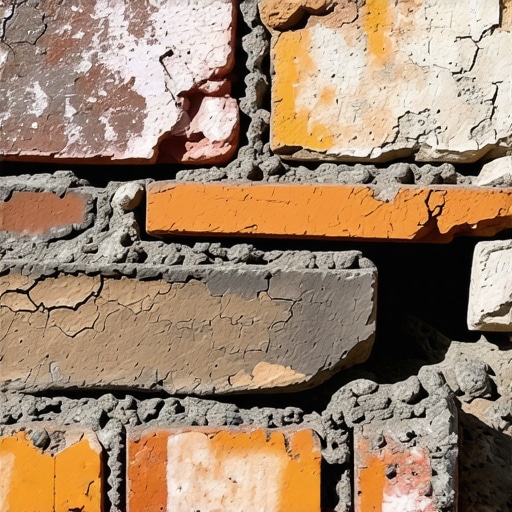
In the North, we live and die by the freeze-thaw cycle. Brick spalling prevention isn’t about slapping a sealer on the wall and calling it a day. It is about understanding the microscopic pore structure of the unit. When water enters a brick, it travels through capillary action. If you have used a hard, Portland-heavy ‘mud’ on a soft, 19th-century clay brick, you have essentially signed its death warrant. Old bricks are sponges; they need to move moisture. Modern Type S mortar is a wall—it’s too hard, too rigid. When the temperature drops and that trapped water hits its freezing point, it expands by 9%. That expansion generates internal pressures exceeding 20,000 PSI. Since the mortar won’t give, the brick face does. It pops. It spalls. It turns to red dust on your driveway.
By 2026, we expect to see a 15% increase in spalling failures across the Rust Belt due to the increased frequency of rapid freeze-thaw oscillations. Digital twin masonry allows us to map these thermal bridges. We can see where stone coping installation was botched—usually by skipping the stainless steel flashing underneath—and predict exactly where the saturation will lead to a blowout. If your coping isn’t shedding water away from the wall, it’s just a funnel for structural decay.
The Digital Twin: Predictive Structural Integrity
We use Digital Twin technology to create a virtual replica of a building’s masonry envelope. This isn’t some fancy 3D model for a sales pitch; it’s a physics-based simulation that accounts for the specific ‘tooth’ of the stone and the ‘suction’ of the brick. We feed it data on local soil heaving and hydrostatic pressure. For instance, a retaining wall drainage upgrade isn’t just about sticking a pipe in the ground. It’s about the compaction physics of the backfill and the weep hole spacing. If the digital twin shows that the hydrostatic pressure will exceed the shear strength of the modular retaining walls by 2026, we know the wall is going to ‘belly’ out before it happens. This is how we move from reactive repairs to forensic prevention.
“The mortar shall be of a lower compressive strength than the masonry units to ensure the mortar acts as the sacrificial element.” – ASTM C270 Standards
Historic Tuckpointing: The Sacrificial Mud
When I see a ‘handyman special’ where someone has used a grinder to chew through historic brick quoins to ‘repoint’ them with grey cement, my blood boils. Historic tuckpointing is a surgical procedure, not a demolition job. You don’t ‘grind’—you use a pneumatic chisel to carefully remove the failed mortar without scarring the ‘skin’ of the brick. The new mud must be a lime-rich mix, often Type O or even a pure lime putty. It has to be the sacrificial lamb. I want the mortar to fail in fifty years so the brick survives for two hundred. Applying mortar requires the right ‘hawk’ and ‘slicker’ technique—you have to pack it in layers to avoid shrinkage cracks. If you ‘butter’ the edges and leave the center hollow, you’re just creating a pocket for water to sit and rot the wall from the inside out.
The Chimney and the Quoin: Critical Failure Points
Chimney flashing repair is the most neglected aspect of residential masonry. The transition between the masonry mass and the roofline is a violent intersection of different expansion rates. While the brick wants to stay still, the wood framing of the house is constantly ‘breathing.’ Without a proper two-piece counter-flashing system, you are relying on caulk—and caulk is a lie. By 2026, the chimneys that were ‘repaired’ with goop in 2020 will be leaking into the attic, causing masonry waterproofing solutions to be useless because the water is entering from the top down.
Similarly, brick quoin repair is more than aesthetic. Quoins are the structural anchors of the corners. If they start to shift or show ‘honeycombing’ in the mortar joints, it means the foundation is likely experiencing differential settlement. In these cases, we look toward self-healing concrete foundations. These modern mixes contain crystalline admixtures that react with incoming moisture to plug micro-cracks before they reach the rebar and cause it to ‘bloom’ and crack the concrete flatwork services around the perimeter.
The Hardscape Truth: Compaction and Drainage
I’ve walked onto too many sites where ‘wavy’ pavers were blamed on ‘bad luck.’ It’s never luck; it’s the base. If you didn’t spend three days with a plate compactor and six inches of crushed aggregate, you didn’t build a patio; you built a future mud puddle. Concrete flatwork services often fail because of ‘cold joints’—where one pour starts before the other has finished setting. This creates a weak plane that will inevitably crack during the first hard frost of 2026. If you’re not seeing a 4-inch base of compacted gravel and rebar on chairs, you’re looking at a temporary installation.
The 2026 Horizon
Structural survival in the next few years depends on moving away from ‘lick-and-stick’ aesthetics and back to the chemistry of the craft. Whether it is a modular retaining wall or a historic facade, the physics of water and thermal expansion don’t care about your budget. They only care about the laws of thermodynamics. Do it once, or do it twice—the choice is usually written in the mud.
![Why Sagging Windows Need New Brick Lintels Fast [2026 Fix]](https://masonryrescue.com/wp-content/uploads/2026/02/Why-Sagging-Windows-Need-New-Brick-Lintels-Fast-2026-Fix.jpeg)
![4 Geogrid Mistakes Ruining Retaining Walls [2026 Checklist]](https://masonryrescue.com/wp-content/uploads/2026/02/4-Geogrid-Mistakes-Ruining-Retaining-Walls-2026-Checklist.jpeg)