Birdsmouth Cuts: Why This Pro Secret Fixes 2026 Masonry Corners
The Forensic Scene: A Dying Corner
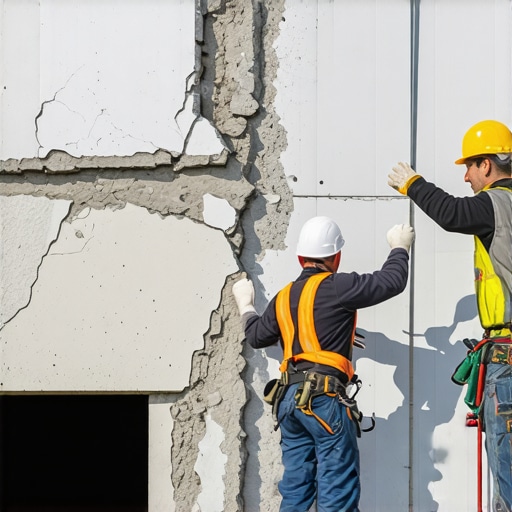
The call came in at 6:00 AM. A developer in a high-wind coastal zone was watching a three-story brick veneer facade unzip itself at the southeast corner. To the architect, it was a ‘thermal anomaly.’ To the homeowner, it was a lawsuit. But when I climbed the pipe-staging and put my borescope into the cavity, the truth was uglier. The contractor had used standard butt-joints on a 45-degree corner, relying on a bead of caulk and hope to keep the weather out. The structural steel behind it was already weeping orange tears of oxidation. They thought it was a hairline crack, a minor blemish on a new build. I saw a total systemic failure. The absence of a birdsmouth cut—that intricate, notched miter that allows masonry units to interlock and breathe—had turned this ‘luxury’ build into a ticking clock of hydrostatic pressure and wall-tie fatigue.
The Physics of the Birdsmouth Cut
In the trade, we talk about the ‘tooth’ of the material. A birdsmouth cut is more than just a decorative angle; it is a mechanical marriage. By notching the brick to wrap around a corner rather than just meeting at a point, you increase the surface area for the mud to bite. This is critical when you are dealing with modern sustainable masonry materials which often have different absorption rates than the high-fired clays of the 1920s. When you butter a birdsmouth, you aren’t just applying mortar; you are creating a labyrinthine seal that defies the wind-driven rain. Without this cut, the corner becomes a cold joint, a weak point where the differential movement of the building’s frame will inevitably snap the bond.
“Water penetration is the single greatest threat to masonry durability, and the geometry of the joint is the first line of defense.” – BIA Technical Note 7
Micro-Zooming into the Mud: Chemistry of the Bond
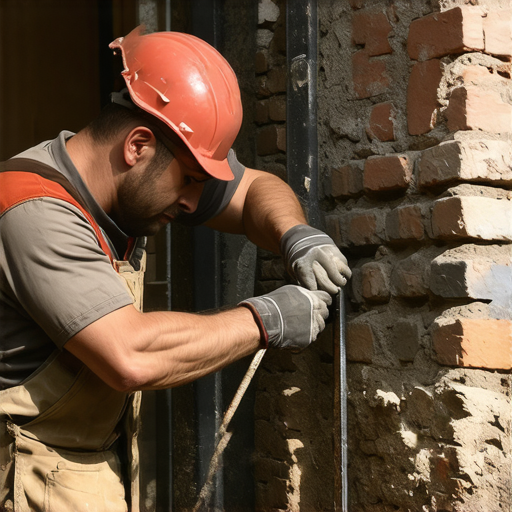
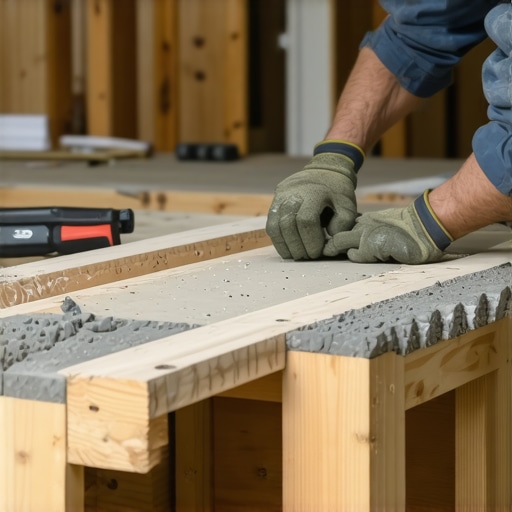
You can have the best birdsmouth cut in the world, but if your mud is ‘short’ or you’ve burned it by adding too much Portland, you’re dead in the water. I see it every day on commercial tuckpointing jobs: guys using Type S mortar on soft, reclaimed brick. It’s like trying to weld a soda can to a steel I-beam. The mortar needs to be the sacrificial lamb. It has to be softer than the brick itself. In the 2026 landscape, we are seeing a return to high-lime content mixes because they offer autogenous healing. When a micro-crack forms in a lime-rich mortar, moisture reacts with the unhydrated lime to actually reseal the crack. This chemistry is vital when performing a concrete patch or a concrete block foundation repair where the goal is to stop water vapor from migrating through the substrate and hitting the rebar. If the mortar is too hard, it traps the moisture, and when the freeze-thaw cycle hits, the face of your expensive brick pops off like a scab. That’s spalling, and it’s the hallmark of a mason who doesn’t understand suction.
The 2026 Masonry Shift: From Humans to Robotics
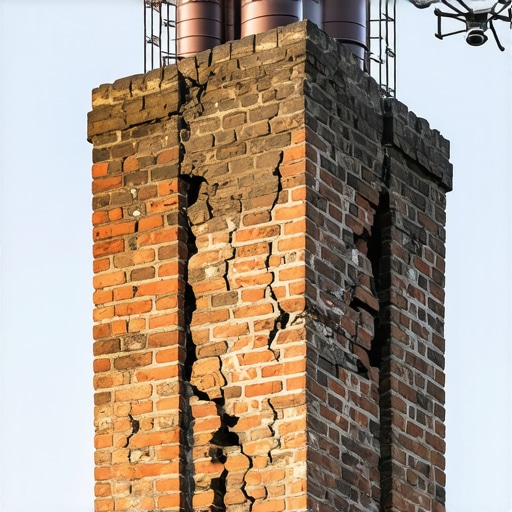
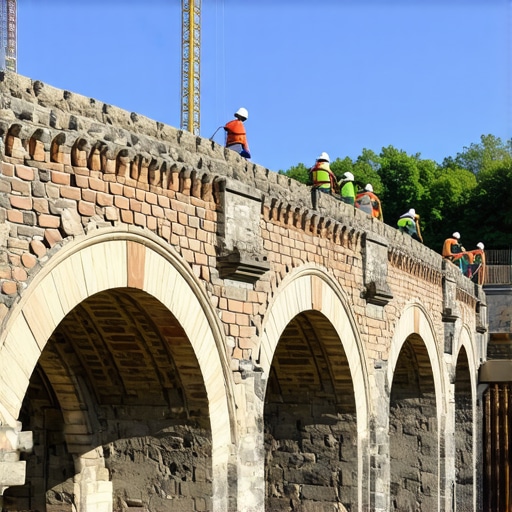
We are entering an era where robotic masonry repair is no longer science fiction. I’ve seen rigs that can strike a joint with more consistency than a man who’s been on the hawk for thirty years. But even a robot needs to be programmed with the logic of the birdsmouth. These machines are being used for complex brick arch restoration where the geometry is too punishing for the average ‘lick-and-stick’ crew. However, the robot can’t smell the dampness in a basement or feel the ‘give’ of a failing soldier course. That’s where the forensic side comes in. Using drone chimney inspections, we can now map the thermal degradation of a chimney crown repair before we even put a ladder up. We look for the ‘honeycombing’ in the concrete—those tiny voids where the aggregate didn’t settle, leaving a porous mess for the rain to find. Whether it’s tile grouts on masonry in a commercial kitchen or a massive bridge abutment, the principles remain the same: density, geometry, and drainage.
The Sins of Modern Construction
It sickens me to see a soldier course used as a decorative band without proper flashing. Water hits that horizontal joint, sits there, and eventually works its way into the core. A pro knows that every horizontal surface in masonry is a liability. This is why chimney crown repair is such a booming business; people think a smear of Portland on top of a chimney is a ‘fix.’ It’s not. A crown needs a wash, a drip edge, and a bond break. It needs to be a separate entity from the flue to allow for thermal expansion. If you don’t give the masonry room to grow when the heat hits, it will find its own room by cracking your masonry cleaning efforts into a spiderweb of failure.
“Mortar shall be of a composition that is compatible with the units being bonded, ensuring that the structural integrity is maintained under thermal stress.” – ASTM C270
Why the Birdsmouth Wins
When you use a birdsmouth cut on a corner, you are acknowledging that the building is a living, moving thing. You are providing a ‘slip’ that prevents the corner from ‘opening up’ like a book. In 2026, as we move toward more sustainable masonry materials—recycled glass aggregates, carbon-sequestered blocks—the ‘old world’ secrets like the birdsmouth become even more relevant. These new materials have different thermal expansion coefficients, and the rigid, square-cut corners of the 1990s simply won’t hold them. You need the mechanical interlock. You need to ‘butter’ the joint deep into the notch with a slicker, ensuring no air pockets are left to harbor moisture. If you leave a void, you’re just inviting the freeze-thaw to rip your work apart. It’s about the long game. You can do it once, or you can pay me to come out with my forensic kit and tell you why you have to do it twice.
![3 Sustainable Block Cutting Tactics to Cut Project Waste [2026]](https://masonryrescue.com/wp-content/uploads/2026/02/3-Sustainable-Block-Cutting-Tactics-to-Cut-Project-Waste-2026.jpeg)