
The Ghost of the $50,000 Wall
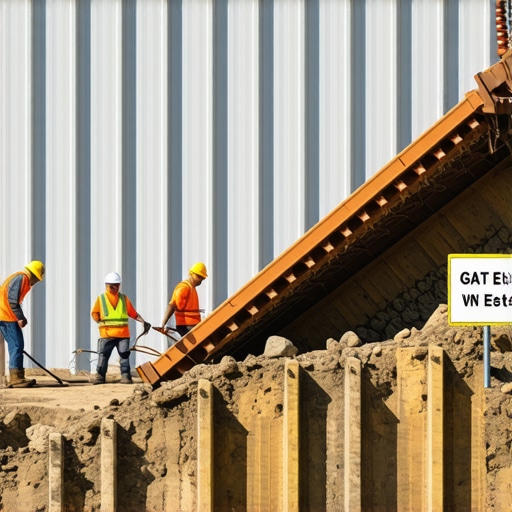
I once stood looking at a $50,000 retaining wall that lay in a pile of rubble because the contractor forgot one thing: drainage. It wasn’t just a wall; it was a tiered masterpiece of chiseled stone that should have outlasted the mortgage. Instead, after a three-day torrential downpour, the entire hillside decided it wanted to be in the neighbor’s pool. As a forensic inspector, I see this tragedy repeated weekly. When you are standing in the mud, smelling the metallic scent of saturated clay and seeing the raw, ‘honeycombing’ texture of failed concrete, the physics of failure become very personal. A modular wall doesn’t just ’tilt’ because it’s tired; it leans because it is losing a silent war against gravity, water, and poor compaction. Before you consider retaining wall block replacement, you need to understand the structural masonry inspection process that reveals why your ‘dry-stack’ is becoming a ‘wet-slide.’
“Water penetration is the single greatest threat to masonry durability, creating hydrostatic pressure that can exceed the shear strength of even the heaviest block units.” – BIA Technical Note 7
1. The Invisible Sledgehammer: Hydrostatic Pressure
The number one reason for a leaning wall isn’t the weight of the dirt—it’s the weight of the water inside that dirt. Soil is a porous medium, a collection of voids that act like a sponge. When heavy rains hit, those voids fill. A cubic foot of dry soil might weigh 100 pounds, but saturated soil can easily hit 140 pounds. That extra 40 pounds isn’t just vertical weight; it exerts lateral pressure. This is ‘hydrostatic pressure.’ If the contractor didn’t install a ‘drainage chimney’—a vertical column of clean, 3/4-inch crushed stone behind the blocks—that water has nowhere to go. It sits there, pushing. In northern climates, this pressure is multiplied by the freeze-thaw cycle. When that trapped water freezes, it expands by roughly 9% in volume. This expansion doesn’t care about your ‘lick-and-stick’ aesthetics; it will pop the face off a block or push a whole course of historic brick salvage out of alignment. Without proper ‘weep holes,’ the wall becomes a dam, and dams aren’t designed to be held up by friction alone.
2. The Proctor Curve: Why Your Base Is Failing
In the world of professional masonry restoration and hardscaping, the ‘base’ is everything. Most ‘handyman specials’ fail because they dug a shallow trench, threw in some ‘mud’ (mortar) or loose gravel, and started ‘buttering’ blocks. Real structural integrity requires understanding the Proctor Curve—the relationship between moisture content and soil density. If the base material—usually a well-graded aggregate—is not compacted to at least 95% of its maximum dry density, the wall will settle unevenly. This is where the lean starts. As the soil ‘heaves’ or ‘subsides,’ the wall follows. I’ve seen foundation underpinning projects where the original wall was built on ‘native soil’ (unprocessed dirt). Over five years, the organic material in that dirt rotted, the soil collapsed, and the wall began its slow bow toward the driveway. A forensic structural masonry inspection usually starts here, with a probe to see if the base is four inches of dust or a foot of compacted stone.
3. Surcharge Loads: The Silent Killer
People often treat a retaining wall like a fence, but it’s a structural element. A ‘surcharge load’ is any weight added behind the wall that wasn’t accounted for in the original ‘blueprint.’ Think about a new driveway, a heavy shed, or even a green roofing masonry integration project on a nearby structure that directs water runoff toward the wall. That extra weight pushes down and then out. This is where the physics of the ‘angle of internal friction’ comes into play. If you place a heavy load within the ‘failure wedge’ (the triangle of soil that wants to slide), you are asking those modular blocks to do a job they weren’t designed for. Unlike tuckpointing curved walls where the geometry provides some inherent strength, a straight modular wall relies purely on mass and geogrid. If you’ve added a pool deck above your wall and now the blocks are ‘smiling’ (curving outward), you have a surcharge problem that no amount of masonry cleaning will fix.
“The design of a retaining wall must account for the lateral pressure of the soil, which is significantly increased by the presence of water and external loads.” – ASTM D698 Standard Test Methods
4. Geogrid: The Skeleton That Isn’t There
For any wall over three feet, the blocks shouldn’t be working alone. They need ‘geogrid’—a high-tensile polymer mesh that extends back into the soil. This mesh uses the weight of the backfill to anchor the face of the wall. When I perform a chimney structural repair or a wall teardown, I often find the geogrid was either missing, too short, or—my personal favorite—installed upside down. Without geogrid, the wall is just a stack of heavy rocks. With it, the wall is a reinforced mass. If your wall is leaning from the middle, it’s a sign the geogrid (if it exists) has reached its ‘yield point’ or the ‘tail’ wasn’t long enough to grab the soil. This is why stone veneer over brick often fails when applied to walls; the veneer adds weight and traps moisture but adds zero structural tensile strength. The ‘tooth’ of the soil must be locked into the grid to keep the wall vertical.
5. The Geometry of Failure: Incorrect Batter
A modular wall shouldn’t be perfectly vertical; it needs a ‘batter’—a slight backward lean into the hillside. Most modular blocks have a lip or a pin system that automatically creates a 1-to-12 or 1-to-24 batter. If the first course wasn’t set perfectly level (front to back), that error is magnified as the wall goes up. By the time you’re five courses high, the wall is already ‘out of plumb.’ Over time, gravity pulls on that forward lean. This is common in DIY retaining wall block replacement where the homeowner doesn’t realize that the ‘slicker’ or ‘hawk’ tools used for professional masonry restoration aren’t what they need—they need a transit level and a heavy-duty plate compactor. If the wall didn’t start with a ‘toe’ (the part of the wall buried underground to prevent ‘kicking out’), the bottom blocks will slide forward while the top stays put, resulting in a wall that looks like it’s trying to sit down. Understanding the difference between a ‘gravity wall’ and a ‘reinforced wall’ is the difference between a lifetime of stability and a weekend of disaster.