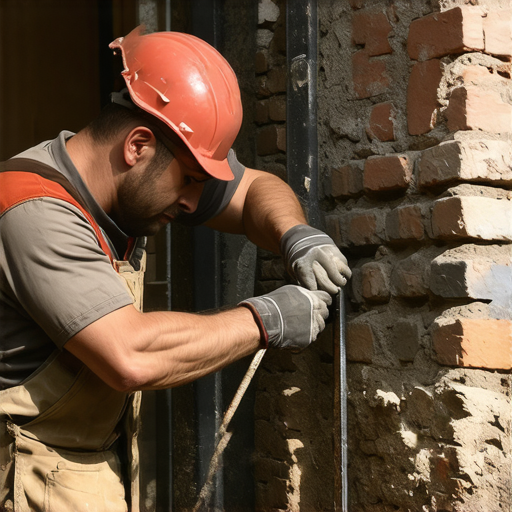
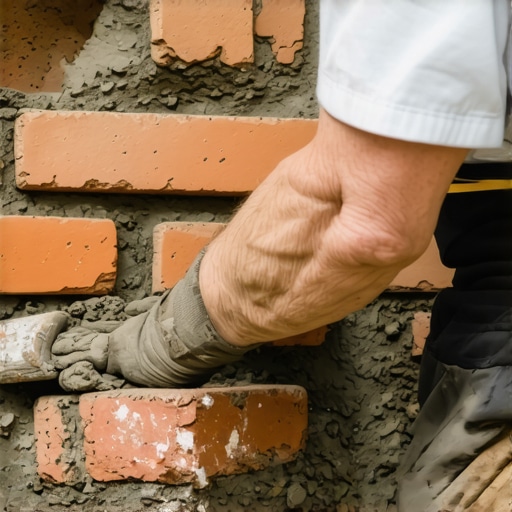
Expert Foundation & Tuckpointing Services for Long-Lasting Strength
Understanding the Critical Role of Foundation & Tuckpointing in Structural Longevity
In the realm of masonry and structural engineering, the significance of meticulous foundation repair and tuckpointing cannot be overstated. These processes form the backbone of enduring edifices, preventing deterioration that can lead to costly repairs or catastrophic failure. As industry experts, we recognize that a comprehensive approach to foundation stabilization and surface preservation is essential for safeguarding property value and ensuring safety.
Advanced Techniques in Foundation Restoration: Beyond Basic Repairs
Modern foundation restoration employs innovative techniques such as underpinning with helical piers, carbon fiber reinforcement, and hydraulic underpinning systems. These methods address complex issues like soil settlement, heave, and structural shifting, which traditional repairs might not fully resolve. Integrating these advanced solutions with regular tuckpointing ensures the masonry’s resilience against environmental stressors, including freeze-thaw cycles and moisture intrusion.
How Tuckpointing Enhances Masonry Durability and Aesthetic Appeal
Strategic tuckpointing involves not only aesthetic restoration but also critical structural reinforcement. Expert tuckpointing replaces deteriorated mortar joints with high-quality, flexible mortar mixes that accommodate thermal expansion and contraction. This process prevents water ingress, which is a primary catalyst for brick spalling and mortar decay. When combined with surface cleaning techniques, tuckpointing revitalizes the facade, boosting curb appeal while fortifying the structure against future damage.
What Are the Signs of Hidden Foundation Damage That Require Expert Intervention?
Detecting subtle indicators of foundation issues demands a keen eye and professional assessment. Symptoms such as uneven floors, cracked walls, door and window misalignments, and stair-step cracks in masonry may signal underlying foundation problems. Engaging with specialists who utilize non-invasive diagnostic tools ensures accurate diagnosis and targeted repair strategies, preventing escalation of damage.
For comprehensive guidance on foundation and tuckpointing services, consider exploring our detailed foundation restoration expertise. Maintaining a proactive maintenance schedule with expert consultation can significantly extend your property’s lifespan and structural integrity.
If you are interested in elevating your masonry projects to industry standards, we invite you to discover more about our concrete patching and facade cleaning services. Your investment in expert foundation and tuckpointing solutions is a decisive step toward long-term durability and property preservation.
Leveraging Modern Materials for Superior Masonry Longevity
In the pursuit of durable masonry, the integration of advanced materials such as polymer-modified mortars and high-strength sealants is transforming traditional repair practices. These innovative compounds offer enhanced flexibility, adhesion, and weather resistance, significantly extending the lifespan of tuckpointed joints and foundation repairs. Experts recommend selecting materials that are compatible with existing masonry to prevent issues like differential movement or chemical reactions, which can undermine structural integrity over time. For comprehensive insights on material selection, visit our trusted foundation and tuckpointing services that utilize state-of-the-art materials for enduring outcomes.
Can Predictive Maintenance Revolutionize Masonry Preservation?
Predictive maintenance, driven by IoT sensors and data analytics, is emerging as a game-changer in masonry preservation. By continuously monitoring factors such as moisture levels, temperature fluctuations, and structural shifts, property owners can anticipate deterioration before it manifests visibly. This proactive approach allows for targeted interventions, reducing repair costs and preventing catastrophic failures. Experts in the field emphasize the importance of integrating sensor networks with professional assessments, such as those provided by trusted masonry restoration specialists, to formulate effective maintenance schedules. This strategy not only preserves aesthetic appeal but also ensures long-term structural safety, aligning with the recommendations from authoritative sources like the American Society of Civil Engineers.
How Can We Develop More Resilient Masonry Systems for Future Challenges?
Addressing future challenges requires a holistic approach that combines innovative engineering, sustainable materials, and adaptive design principles. For example, incorporating reinforced masonry with fiber-reinforced polymers can improve resistance to seismic activity and extreme weather. Moreover, designing structures with modular components facilitates easier repairs and upgrades, minimizing disruption and cost. Emphasizing ongoing research and development in masonry technology is crucial, as it paves the way for resilient infrastructure capable of withstanding environmental and anthropogenic stresses. To explore cutting-edge solutions, consider consulting with experts who specialize in foundation restoration and facade preservation, ensuring your property benefits from the latest advancements. For more detailed strategies, explore our comprehensive concrete patching and facade cleaning services.
Innovative Reinforcement Techniques: Marrying Traditional Masonry with Modern Engineering for Enhanced Durability
As the landscape of masonry repair evolves, the integration of advanced reinforcement methods is revolutionizing how professionals approach structural stabilization. Techniques such as fiber-reinforced polymers (FRP), post-tensioning, and smart materials allow for unprecedented levels of strength and resilience, especially in heritage structures or buildings subjected to seismic activity. For instance, FRP wraps can be applied to existing masonry to provide additional tensile strength without altering the building’s aesthetic or load-bearing capacity, as detailed in the comprehensive study published by the Structural Research Journal.
Moreover, the advent of sensor-enabled materials introduces a new era of real-time structural health monitoring. These materials can detect early signs of stress accumulation or moisture intrusion, enabling preemptive maintenance before visible deterioration occurs. Such innovations exemplify the shift from reactive to predictive masonry preservation, a cornerstone of resilient infrastructure planning.
Adaptive Design and Sustainable Materials: Future-Proofing Masonry Against Environmental Challenges
Addressing the increasing frequency of extreme weather events and climate change impacts requires a proactive approach rooted in sustainability and adaptability. Engineers are now developing masonry systems that incorporate eco-friendly, high-performance materials such as bio-based sealants, recycled aggregate mortars, and nanotech-enhanced concretes. These materials not only extend lifespan but also reduce environmental footprints.
Furthermore, adaptive design principles advocate for modular construction and ease of repairs. Modular masonry units facilitate swift replacements, thus minimizing downtime and maintaining structural integrity amidst ongoing environmental stresses. This approach aligns with the principles laid out by the American Society of Civil Engineers, emphasizing resilience and sustainability in infrastructure.
How Can Integrated Data Analytics Drive smarter Masonry Maintenance Protocols?
With the proliferation of IoT and data analytics, property managers and structural engineers can now harness vast datasets to optimize maintenance cycles. Continuous monitoring of factors such as moisture levels, thermal expansion, and load distribution creates a comprehensive picture of the building’s health. Advanced algorithms analyze this data, identifying patterns that precede structural issues.
For example, predictive analytics can forecast mortar joint failure or brick spalling, enabling targeted interventions that are less invasive and more cost-effective. The integration of digital tools into traditional masonry maintenance embodies the future of smart infrastructure management. For further insights into implementing data-driven strategies, consider consulting with experts specializing in structural health monitoring systems.
To explore how these innovative techniques can be tailored to your masonry projects, contact our team of specialists. Investing in state-of-the-art reinforcement, sustainable materials, and predictive maintenance not only safeguards your property but also paves the way for resilient, future-ready structures that stand the test of time.
Harnessing Cutting-Edge Materials for Next-Generation Masonry Durability
The integration of nanotechnology and polymer science is revolutionizing masonry repair. High-performance, nano-engineered sealants and mortars exhibit exceptional adhesion, flexibility, and weather resistance, significantly extending the lifespan of tuckpointed joints and foundation repairs. Experts emphasize the importance of selecting chemically compatible materials, reducing risks of differential movement and chemical reactions that compromise structural integrity over time. For a deeper understanding of material science advancements, consult authoritative sources like the Nano Research Journal.
Emerging Trends in Masonry Structural Reinforcement: Beyond Traditional Methods
Innovative reinforcement techniques such as shape memory alloys (SMAs) and smart fiber composites are setting new standards in masonry stabilization. SMAs can undergo deformation under stress and return to their original shape upon heating, providing dynamic support during seismic events. Smart fiber-reinforced polymers (FRPs) equipped with embedded sensors allow real-time monitoring of stress levels, enabling preemptive maintenance. These advancements exemplify a paradigm shift towards adaptive, resilient masonry systems capable of withstanding future environmental stresses.
What are the latest diagnostic tools for detecting concealed foundation issues?
State-of-the-art diagnostic technologies include ground-penetrating radar (GPR), seismic refraction, and microgravity surveys, which non-invasively reveal subsurface anomalies indicative of foundation distress. Coupled with digital modeling software and AI-based analytics, these tools enable precise localization and characterization of hidden problems, facilitating targeted interventions. For instance, the Society of Exploration Geophysicists highlights the application of GPR in complex urban environments, emphasizing the importance of integrating multiple data sources for comprehensive assessments.
Engaging with specialists proficient in these diagnostic methods empowers property owners to preempt structural failures and optimize repair strategies, ultimately safeguarding investments.
Leveraging Sustainable and Eco-Friendly Materials in Masonry Restoration
The push towards sustainability in masonry repair involves adopting bio-based sealants, recycled aggregate mortars, and nanomaterial-enhanced concretes that reduce environmental impact while improving durability. These eco-friendly materials align with modern principles of green construction, ensuring that restoration efforts do not compromise ecological integrity. Additionally, modular masonry units facilitate swift replacements and upgrades, minimizing environmental disruption and operational downtime. For insights into sustainable masonry practices, refer to the Green Building Council.
How Can Data Analytics and IoT Transform Masonry Maintenance Protocols?
The advent of IoT-enabled sensors and advanced data analytics fosters a proactive approach to masonry health monitoring. Continuous data collection on parameters such as moisture ingress, structural shifts, and thermal expansion allows predictive algorithms to identify early signs of deterioration. This data-driven methodology supports timely, targeted repairs, reducing costs and preventing catastrophic failures. Integrating these technologies requires collaboration with specialists in structural health monitoring systems, who can customize sensor networks and analytic models to specific project needs.

Embrace these innovative strategies to future-proof your masonry investments. Collaborate with industry-leading experts to implement state-of-the-art materials, diagnostic tools, and predictive maintenance, ensuring your structures remain resilient amidst evolving environmental challenges.
Expert Insights & Advanced Considerations
1. Embracing Predictive Maintenance Technologies
Integrating IoT sensors and data analytics enables proactive monitoring of masonry structures, allowing early detection of issues like moisture intrusion and structural shifts. This approach minimizes costly repairs and extends the lifespan of your property by facilitating timely interventions.
2. Prioritizing Sustainable and Eco-Friendly Materials
Using bio-based sealants, recycled aggregates, and nanotech-enhanced concretes aligns with green building principles. These materials improve durability, reduce environmental impact, and support resilient infrastructure capable of withstanding environmental stresses.
3. Advanced Reinforcement Techniques for Heritage and Seismic Resilience
Innovations such as fiber-reinforced polymers (FRP), shape memory alloys, and smart fiber composites offer dynamic support, especially in heritage conservation and seismic zones. These methods provide enhanced tensile strength and real-time structural health monitoring capabilities.
4. Incorporating Modular and Adaptive Design Principles
Designing masonry systems with modular components facilitates easier repairs and upgrades, ensuring long-term resilience. Adaptive structures can better respond to climate challenges and reduce operational disruptions.
5. Leveraging Digital Twin and Data Analytics for Maintenance Optimization
Developing digital twins of masonry assets allows continuous simulation and assessment of structural health. Combining this with real-time data analytics supports predictive maintenance, saving costs and preventing failures before they occur.
Curated Expert Resources
- American Society of Civil Engineers (ASCE): Provides comprehensive guidelines on resilient infrastructure and innovative construction practices.
- Nano Research Journal: Offers insights into nanotechnology advancements in construction materials, enhancing durability and performance.
- Structural Research Journal: Features research on modern reinforcement methods like FRP and smart materials for masonry.
- Society of Exploration Geophysicists: Specializes in diagnostic tools like ground-penetrating radar for concealed foundation issues.
- Green Building Council: Guides sustainable construction practices and eco-friendly material selection.
Final Expert Perspective
Mastering the integration of cutting-edge materials, predictive technologies, and sustainable design elevates masonry preservation from reactive fixes to resilient, future-ready solutions. As industry experts, we advocate for continuous innovation and data-driven strategies to safeguard your investments against evolving environmental challenges. For those committed to excellence, engaging with specialized resources and expert consultation remains paramount. To deepen your expertise and explore tailored strategies, consider visiting our trusted foundation and tuckpointing services.

This article really highlights how crucial foundation and tuckpointing work is for the longevity of masonry structures. I’ve seen firsthand how advanced techniques like underpinning with hydraulic systems not only stabilize the building but also extend its lifespan significantly. It’s fascinating how integrating modern materials such as polymer-modified mortars further enhances durability, especially in environments prone to freeze-thaw damage. I wonder, in your experience, how effective are predictive maintenance technologies like IoT sensors in identifying early signs of damage before visible cracks appear? I am curious about the practical challenges and cost implications of implementing such smart systems in residential versus commercial properties. Has anyone here adopted these modern solutions, and if so, what results have you seen in terms of maintenance efficiency and cost savings? It seems like a proactive approach that could revolutionize masonry preservation if properly integrated.
This article offers a thorough insight into how foundational and tuckpointing work are integral to maintaining the structural integrity of masonry buildings. From my experience working on older commercial structures, employing modern reinforcement techniques such as carbon fiber wraps and hydraulic underpinning has made a noticeable difference in preventing structural shifts caused by soil movement. I’ve also noticed how the use of advanced, flexible mortars in tuckpointing greatly improves resilience against freeze-thaw cycles, which are a common issue here in the northern regions. Regarding predictive maintenance, I believe IoT sensors offer a promising way to catch early signs of deterioration, but the initial costs and required technical expertise can pose challenges for smaller property owners. Have any of you found effective, cost-conscious ways to implement smart monitoring technologies in residential properties? I’d love to hear about practical experiences or alternative solutions that don’t require extensive investment yet provide reliable early detection.
Really appreciate this detailed overview of foundation and tuckpointing techniques. Having worked on some older residential buildings, I’ve seen how vital it is to combine traditional methods with modern innovations like fiber reinforcement and IoT monitoring. One challenge I’ve encountered is the initial cost and technical know-how required to implement these smart systems in smaller properties. From your experience, what are some cost-effective ways for homeowners to start adopting predictive maintenance? Also, I find the focus on advanced materials particularly interesting, especially their role in withstanding extreme weather conditions. Do you think that integrating eco-friendly, high-performance materials could become the norm in the near future, considering sustainability goals? It seems like a smart investment for long-term resilience. Would love to hear other people’s thoughts on balancing cost, technology, and sustainability in masonry preservation.
This article really sheds light on how essential advanced foundation and tuckpointing techniques are for the durability of masonry structures. I’ve personally seen projects where hydraulic underpinning stabilized a shifting foundation effectively, preventing costly future repairs. Integrating modern reinforcements like carbon fiber wraps not only enhances strength but also helps in managing environmental stresses such as freeze-thaw cycles. One thing I find interesting is the potential of IoT sensors for predictive maintenance, though I wonder about the real-world costs and complexity of installing such systems on residential properties. Has anyone here implemented smart sensors in older homes, and what has been your experience regarding their maintenance and long-term savings? I’m curious whether these innovations are realistic for small-scale projects or primarily suited for large commercial structures. Overall, proactive approaches like these could truly revolutionize how we ensure the longevity of masonry, and I’d love to hear more about practical applications folks have tried.
This article resonates with my experience in maintaining historic masonry buildings where foundation stability is paramount. Incorporating advanced reinforcement techniques, such as fiber-reinforced polymers, not only strengthens the structure but also preserves its aesthetic charm. I find the development of IoT sensors for predictive maintenance particularly promising; they can alert owners to subtle shifts or moisture issues long before visible damage occurs. However, I wonder about the cost-effectiveness of deploying such technology in small residential properties—does it truly provide enough long-term value to justify the initial investment? I’ve seen some small-scale projects benefit from simplified monitoring systems that focus on critical points, which seem more manageable. What strategies have others here used to balance technological benefits with budget constraints? It’s clear that the future of masonry preservation leans toward proactive, data-driven approaches, and I’d love to hear insights from those who have started integrating these innovations into their projects.